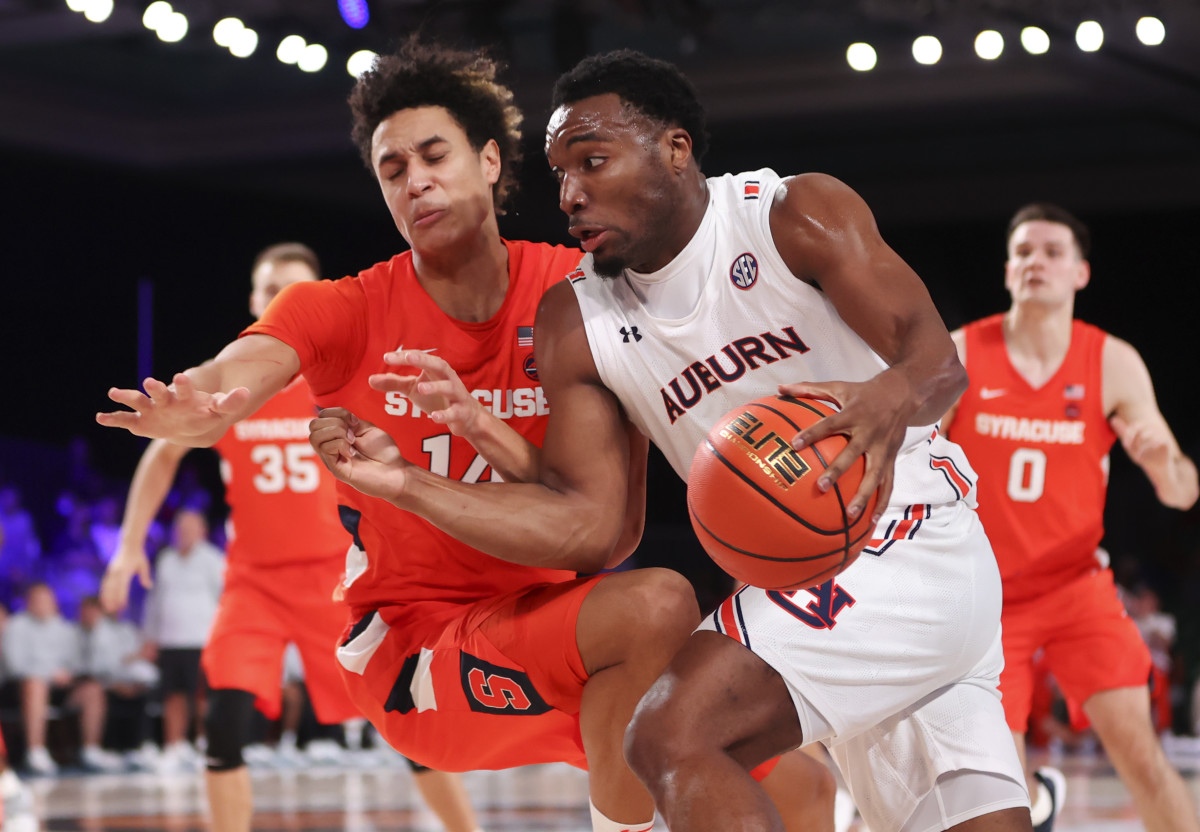
You remember that specific Tuesday night in late November, right? The air was getting that sharp, pre-winter bite. You’d settle onto the couch, flip to ESPN, and there it was—the bright floor of the Breslin Center or the deafening blue mist of Cameron Indoor. It didn’t matter if your team was ranked or rebuilding. For three days, the Big Ten and ACC Challenge was the only thing that existed in the college basketball universe. It was a literal bracket-buster before the brackets even existed.
Then, it just... stopped.
No more Duke vs. Michigan State. No more North Carolina vs. Indiana. It feels like we lost a holiday. Honestly, looking back at the 2026 landscape of "super conferences" and coast-to-coast travel, the demise of this event was the first real indicator that the old-school college sports world was being dismantled for parts. If you're wondering why we can't have nice things anymore, the story of this challenge is basically the smoking gun.
Why the Big Ten and ACC Challenge Had to Die
Money. It’s always money, isn't it? But it wasn't just "general greed"—it was a very specific, messy divorce between the Big Ten and ESPN.
For 23 years, ESPN was the architect and the landlord of the challenge. They owned the broadcast rights. They picked the matchups. They manufactured the drama. But in 2022, the Big Ten signed a monster $7 billion media deal with Fox, CBS, and NBC. They effectively walked away from the "Worldwide Leader in Sports."
ESPN wasn't about to keep promoting a conference that had just dumped them for the competition. Since the network owned the "Challenge" brand, they simply took their ball and went home. Or, more accurately, they took their ball and went to the SEC. That’s how we ended up with the ACC/SEC Challenge. It’s fine, I guess. But it doesn't have that "Rust Belt vs. Tobacco Road" grit that made the original so special.
The Stats Don't Lie: ACC Dominance (Mostly)
If you ask a Big Ten fan, they’ll tell you the league was "catching up." If you ask an ACC fan, they’ll just point at the trophy case.
The Big Ten and ACC Challenge history is a tale of two halves. The ACC won the first 10 years in a row. Ten. It was a bloodbath. Between 1999 and 2008, the Big Ten couldn't find a win if it was gift-wrapped. Duke was the undisputed king of this era, finishing with an insane 19–4 record in Challenge games.
But things shifted. Around 2009, the Big Ten finally found its footing. They went on a run where they won or tied eight of the next fourteen events. By the time the event was euthanized in 2022, the all-time series stood at:
- ACC: 13 wins
- Big Ten: 8 wins
- Ties: 3
It’s kinda funny—the final year actually went to the ACC, 8–6. They got the last word.
The Games We Still Talk About
We didn't watch for the "Commissioner's Cup." Nobody actually cared about the plastic trophy. We watched for the weird, high-stakes non-conference matchups that felt like Final Four previews in November.
Remember 2004? Number 1 Wake Forest went into Champaign to play Number 5 Illinois. Chris Paul was on that Wake team. He was a god. But Illinois—the deep, veteran squad of Dee Brown, Deron Williams, and Luther Head—just dismantled them. They won 91–73 and took over the No. 1 spot in the country. That game set the tone for the entire season.
Then there were the Maryland years. Maryland is the only school to play for both sides of the Big Ten and ACC Challenge. They were 10–5 representing the ACC, but once they moved to the Big Ten, they went a dismal 2–7. Talk about a "grass isn't always greener" situation. The fans in College Park still get heat for that one.
Misconceptions About the Matchups
A lot of people think the "Challenge" was always the best vs. the best. Not really.
Matchups were dictated by TV executives, not a computer. ESPN wanted ratings. That’s why you’d see Duke or UNC play the top Big Ten team almost every single year, while the "bottom feeders" of the conferences were often left out entirely. If you were a mid-tier team like Northwestern or NC State, you might get a fun home game, or you might get totally ignored. It wasn't "fair," but it was great television.
What Most People Get Wrong About the Replacement
The ACC/SEC Challenge is the current successor, but it’s not the same. Why? Because the Big Ten and ACC shared a specific geographical and cultural friction.
The Big Ten was the "slow, physical, grit-and-grind" league (at least that was the stereotype). The ACC was the "fast-paced, elite-talent, flashy" league. It was a clash of identities. The SEC, while great at basketball now, feels more like a mirror of the ACC. It’s just more of the same.
Also, with the Big Ten expanding to 18 teams (adding UCLA, USC, Oregon, and Washington), a challenge would be a logistical nightmare. You’d have Rutgers playing a Tuesday night game in Seattle, then a Challenge game in Miami on Thursday? The kids would be spending more time on Delta flights than in the classroom.
The "Realignment" Hangover
Looking at the state of college sports in 2026, the loss of the Big Ten and ACC Challenge was the first domino.
Everything is fragmented now. We have the "Gavitt Games" (Big Ten vs. Big East) which also faced some cancellation scares. We have these weird "neutral site" tournaments in Vegas or the Bahamas that have zero atmosphere because the fans can't afford the $2,000 plane tickets. The "home-and-home" nature of the Challenge was what made it. There is nothing like a December night in a packed, sweaty Assembly Hall with a blue-blood ACC team trying to survive the noise.
Actionable Insights for the Modern Fan
Since we can't bring the Challenge back, here is how you should navigate the new landscape of college hoops scheduling:
- Track the "Secret Scrimmages": Before the season starts, many of these old rivals still play "closed-door" scrimmages. The results usually leak on Twitter/X. If you want to see how a Big Ten team stacks up against an ACC foe without the ESPN hype, that's where the real data is.
- Prioritize the "MTEs": Multi-Team Events (like the Maui Invitational or the Battle 4 Atlantis) are now the only places you'll consistently see Big Ten vs. ACC matchups. Mark your calendars for Thanksgiving week; it's the new "Challenge" week.
- Watch the NET Rankings: Since there’s no formal challenge, teams are more incentivized to schedule "quadrant 1" non-conference games independently. Keep an eye on mid-December home-and-home series that are scheduled by the schools themselves, rather than forced by a network.
- Support the Women's Game: The Women's Big Ten/ACC Challenge was arguably more competitive than the men's in its final years. While it also shifted to the ACC/SEC format, the rivalries between schools like Iowa, Maryland, and Notre Dame are still intense and often scheduled as standalone marquee games.
The Big Ten and ACC Challenge might be a relic of a simpler time, but the animosity between these two conferences hasn't gone anywhere. It just doesn't have a cool name and a dedicated week on the calendar anymore. You've just got to look a little harder to find the fire.