If you’ve ever seen a highlight reel of "Prime Time" back at Florida State, it’s hard to believe he didn't walk away with every trophy in the building. He was basically a blur in garnet and gold. He had the gold chains, the high-stepping swagger, and the kind of closing speed that made quarterbacks look like they were playing in slow motion.
But here’s the reality: Deion Sanders did not win the Heisman Trophy. He didn't even come close to winning it, at least not in terms of the final point tallies. In 1988, while Deion was shutting down entire sides of the field and returning punts for scores, the Heisman went to a different guy named Sanders. Barry Sanders, the legendary Oklahoma State running back, absolutely scorched the record books that year.
It’s one of those weird sports trivia facts that feels wrong because Deion is such a massive figure in football history. You'd think he'd have a bronze statue on his mantle, but that’s just not how 1988 played out.
The 1988 Heisman Race: Why Deion Was an Afterthought
To understand why Deion didn't win, you have to look at the sheer insanity of the 1988 college football season. It wasn't just a "good" year for players; it was a year of literal legends.
Barry Sanders was putting up numbers that looked like they belonged in a video game. We're talking 2,628 rushing yards and 37 touchdowns. That's not a typo. He was averaging over 200 yards a game. When someone does that, the Heisman race is basically over by October.
Where Deion Finished in the Voting
Deion actually finished eighth in the Heisman voting. Eighth!
It sounds crazy now, but defensive players almost never win the award. Charles Woodson is still the only primarily defensive player to ever take it home, and he had to return punts and play wide receiver to get it done.
Take a look at the guys who finished ahead of Deion in '88:
- Barry Sanders (Winner - RB, Oklahoma State)
- Rodney Peete (QB, USC)
- Troy Aikman (QB, UCLA)
- Steve Walsh (QB, Miami)
- Major Harris (QB, West Virginia)
- Tony Mandarich (OT, Michigan State)
- Timm Rosenbach (QB, Washington State)
Yeah, that’s a heavy-hitter list. You’ve got Hall of Famers like Aikman in the mix. Even Tony Mandarich—the "Incredible Bulk"—was getting more Heisman love than Deion because of how dominant he was on the offensive line.
Prime Time’s Case: Was He Robbed?
Honestly, "robbed" is a strong word when you're talking about Barry Sanders' 2,628-yard season. Nobody was beating Barry that year. But Deion’s 1988 season was still a masterclass in how to play cornerback.
He was a consensus All-American for a reason. He had five interceptions, he led the country in punt return average (15.2 yards per return), and he took two of those punts back for touchdowns. He was the guy who changed the field position of every game he played in.
He did win the Jim Thorpe Award that year, which is given to the best defensive back in the country. That was his "Heisman."
The Stigma Against Defense
Back in the late 80s, the Heisman was strictly an offensive award. If you weren't a quarterback or a running back, you were basically invisible to the voters.
Deion knew this. He’s often talked about how he had to create the "Prime Time" persona just to get people to notice a defensive back. He knew that shut-down defense doesn't show up in a box score the way 300 passing yards does. If a quarterback doesn't throw your way because he's scared of you, you finish the game with zero stats.
Voters in 1988 weren't looking at "expected points added" or "targets against." They were looking at touchdowns.
Deion’s Impact vs. Barry’s Production
The debate between Deion and the Heisman isn't really about talent. Everyone knew Deion was the most athletic person on the field. It was about the award's definition.
Barry Sanders was the "most outstanding player" because he carried the ball 344 times and broke every record in sight. Deion was the "most dangerous player," but he couldn't force the ball into his own hands every play.
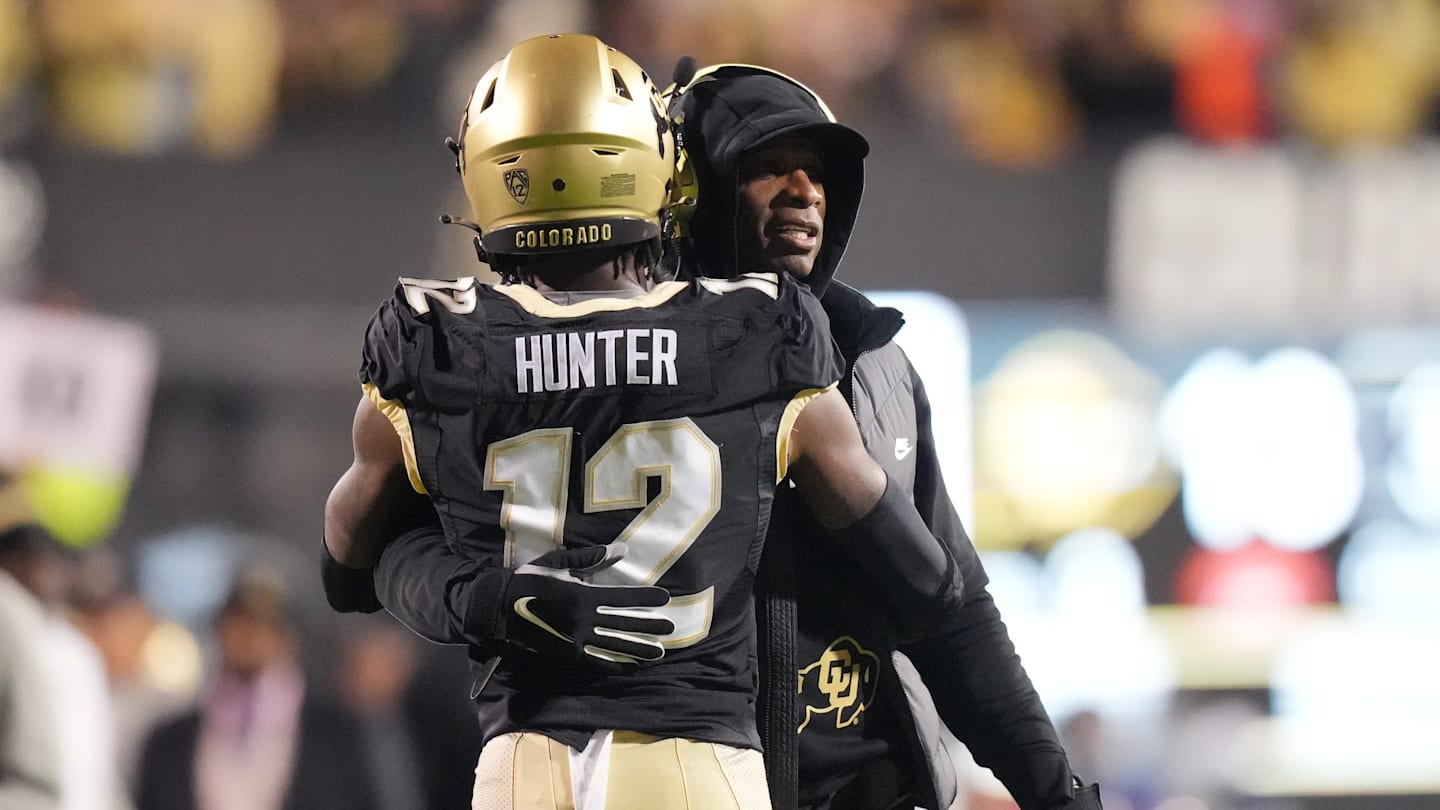
Wait, did Deion play offense? Occasionally, Bobby Bowden would let him sniff the offensive side of the ball, but it wasn't a regular thing like we see today with Colorado's Travis Hunter. If Deion had played 100 snaps a game on both sides of the ball in 1988, he probably would have pushed Barry Sanders a lot harder for that trophy.
The Legacy of the 1988 Snub
Does it matter that he didn't win? Probably not to Deion. He went on to become the only person to play in a Super Bowl and a World Series. He’s in the Pro Football Hall of Fame and the College Football Hall of Fame.
But it does tell us a lot about how we view the Heisman. For decades, it was a "Stats Award."
Interestingly, Deion’s lack of a Heisman has become a talking point again recently because he’s now coaching Travis Hunter at Colorado. Hunter is doing exactly what Deion could have done—playing elite cornerback and elite wide receiver at the same time.
Deion has been very vocal about the fact that Hunter deserves the award, perhaps because he knows exactly how it feels to be the best athlete on the field but get overlooked because you play defense.
What Most People Get Wrong About Deion's College Career
A lot of people assume Deion was just a "return man" who happened to play corner. That's backwards. He was a lock-down defender first.
- Career Interceptions: 14 (returning 4 for TDs).
- Punt Returns: 126 returns for 1,429 yards.
- Versatility: He lettered in three sports (Football, Baseball, Track) at FSU.
He once played a baseball game for FSU in the afternoon, ran a leg on the track team's relay in between innings, and then suited up for a football scrimmage. The dude was a freak of nature.
Summary of 1988 Heisman Facts
- Winner: Barry Sanders (RB, Oklahoma State)
- Deion's Rank: 8th place
- Total Points for Deion: 22 points (Barry had 1,878)
- Primary Award Won: Jim Thorpe Award (Best DB)
If you're looking for the trophy in his case, you won't find it. But you will find a legacy that changed how we think about defensive players. Deion proved that a cornerback could be the biggest star in the country, even if the Heisman voters weren't quite ready to admit it yet.
To dive deeper into how "Prime Time" changed the game, you can look into the history of the Jim Thorpe Award or check out the 1988 Florida State season archives to see just how much real estate he covered on the field.
Actionable Next Steps
If you want to settle a debate or get a better feel for why Deion was so hyped despite not winning the Heisman, here is what you should do:
- Watch the 1988 FSU vs. Clemson highlights. You’ll see the "Punt Return" that basically defined his college career.
- Compare the 1988 voting list to modern years. Notice how many more "all-purpose" players get invited to New York now compared to the QB/RB heavy lists of the 80s.
- Check out the Thorpe Award winners list. You’ll see Deion’s name alongside other legends like Charles Woodson and Patrick Peterson, proving that the defensive specialists have their own "Heisman" history.