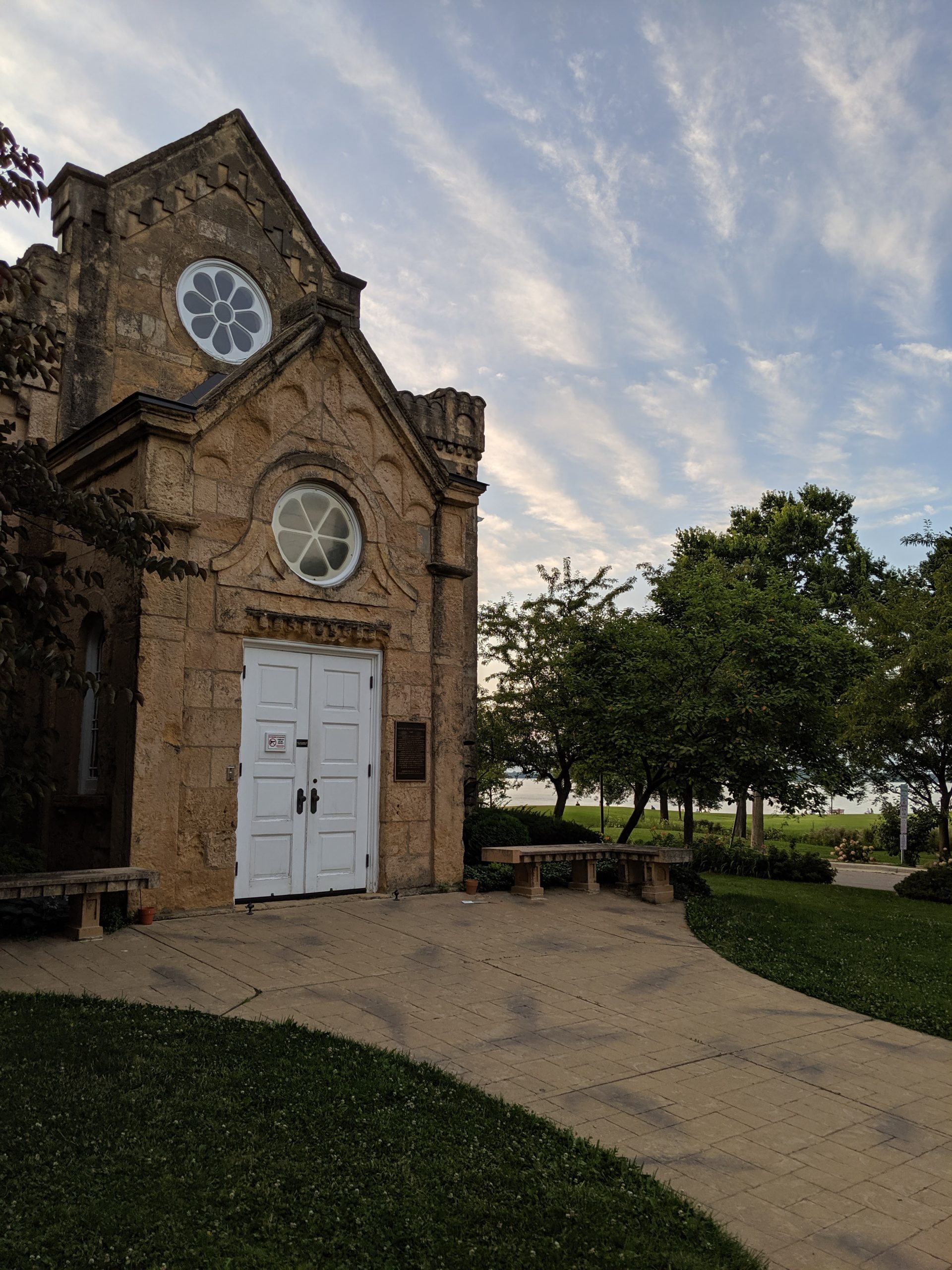
Walk into James Madison Park in Madison, Wisconsin, and you’ll see it. It's small. It's tan. It's made of sandstone that looks like it’s seen a few things—and honestly, it has. The Gates of Heaven Synagogue isn’t just some old building people walk past on their way to the lake; it is a literal survivor. Built in 1863, it holds the title of the eighth-oldest synagogue building still standing in the entire United States. That’s not just "old for Wisconsin." That’s old for the country.
Most people assume these historical landmarks stay put. They don't. This building has been on a literal journey, surviving the threat of the wrecking ball and a slow-motion trip across town. It’s a story about a tiny congregation called Shaare Shamayim and a city that decided some things are just too important to tear down.
The 1863 Origins: A Tiny Room with a Big Name
The mid-19th century in Madison was a wild time. The city was barely a decade old when a small group of German Jewish immigrants decided they needed a permanent home. They hired an architect named August Kutzbock. He was the guy behind the second Wisconsin State Capitol and the Pierce House. Kutzbock didn't go for the massive, towering cathedrals you see in Europe. Instead, he designed the Gates of Heaven Synagogue in the Romanesque Revival style.
It’s simple. Round arches. Symmetric windows. It’s only about 28 feet by 54 feet. You could fit the whole thing inside a modern suburban house today, yet back then, it was the spiritual epicenter for Madison’s Jewish community.
The name Shaare Shamayim literally translates to "Gates of Heaven." But here’s the thing—the congregation didn't actually last that long in the building. By 1879, less than twenty years after the doors opened, the membership had dwindled. People moved. The community shifted. The "Gates" closed as a synagogue, but the building’s second life was just beginning.
When a Synagogue Becomes... Everything Else
What happens to a sacred space when the congregation leaves? In the case of the Gates of Heaven Synagogue, it became a bit of a local chameleon. History isn't always pretty or prestigious. For decades, this architectural gem was used for whatever the city needed at the time.
It was a Unitarian church for a while. Then it was a Women’s Christian Temperance Union meeting hall. Later, it served as a funeral home. At one point, it was even used as a government office and a warehouse. It’s kind of wild to think about people storing crates or filing taxes in a space originally designed for Torah readings and solemn prayer.
By the 1960s, the building was a mess. It was sitting on West Washington Avenue, and developers had their eyes on the land. In 1970, the threat was real: move it or lose it.
The Great Move of 1970
You can’t just pick up a 100-plus-year-old sandstone building and walk away with it. Or can you?
A group of Madison citizens, led by the Gates of Heaven Preservation Fund, raised enough money to save the structure. On a chilly day in 1970, the building was hoisted onto a massive trailer. It moved through the streets of downtown Madison at a snail’s pace. People lined the sidewalks to watch this piece of history roll by. It eventually landed in James Madison Park, overlooking Lake Mendota.
It was added to the National Register of Historic Places that same year. Honestly, if they hadn’t moved it, it would be a parking lot or a condo block right now.
Architecture: Why the Sandstone Matters
Kutzbock used local materials. The buff-colored sandstone gives the Gates of Heaven Synagogue that distinct "Madison look." If you look closely at the walls, you can see the texture of the stone that was quarried right here in the Midwest.
The Romanesque elements are "Lite" versions of the grand European styles. You’ve got:
- The classic arched windows that invite soft light.
- A simple rectangular footprint that maximizes the small lot.
- The iconic circular window above the entryway.
It lacks the ornate gold or towering spires of later synagogues, reflecting the modest means and practical nature of the German immigrants who built it. They weren't trying to show off; they were trying to belong.
Gates of Heaven Synagogue Today: More Than a Museum
If you go there today, you won’t find a regular Saturday morning minyan. It’s owned by the City of Madison Parks Division. It’s a secular space now, but it still feels "heavy" with history.
People use it for weddings. A lot. It’s one of the most popular spots in the city for small ceremonies because the acoustics are surprisingly good and the vibe is unbeatable. It’s also used for memorials, poetry readings, and small concerts. There is something poetic about a building that started as a house of prayer becoming a house for the community at large.
Why It Still Matters in 2026
We live in an era where buildings are often designed to last 30 years before they're replaced by something "more efficient." The Gates of Heaven Synagogue is a middle finger to that philosophy. It represents a few key things that still resonate:
- Pluralism: It’s a physical reminder that the Jewish community was foundational to the development of the American West (and yes, Wisconsin was "the West" back then).
- Preservation: It proves that a small group of determined people can actually stop a bulldozer if they care enough.
- Adaptability: A building doesn't have to die just because its original purpose changed.
Things Most People Get Wrong
People often call it "The Old Synagogue," but it wasn't the only one. It was just the first permanent one. Also, many think it’s a museum you can just walk into any time. You can’t. Since it’s a rental facility managed by the city, you usually have to peer through the windows unless there’s a scheduled event.
Another misconception? That it was always in the park. As we talked about, it lived a whole different life on West Washington Avenue before its 1970 road trip.
Practical Steps for Visiting or Using the Space
If you’re actually planning to head down there or want to use the space, don't just wing it.
If you want to see the interior:
Check the Madison Parks Department calendar. They occasionally have open houses, but your best bet is attending a public event or concert held there. Otherwise, the exterior is fully accessible 24/7 as part of the park.
If you want to get married there:
You need to book way in advance. Because it only holds about 50 to 100 people depending on the setup, it fills up fast for "micro-weddings."
Photography tips:
The "golden hour" at James Madison Park is legit. The sun hits that tan sandstone and makes the whole building glow. If you're a photographer, aim for the hour before sunset. The contrast between the old stone and the blue of Lake Mendota in the background is a classic Madison shot.
Respect the site:
It’s a historic landmark. Don't be the person leaning heavy gear against the sandstone or trying to climb the arches. The stone is porous and fragile.
The Bottom Line
The Gates of Heaven Synagogue isn't just a relic of 1863. It’s a testament to Madison's weird, wonderful habit of keeping its history alive even when it’s inconvenient. It’s a bridge between the German immigrants of the 19th century and the wedding parties of the 21st.
Next time you’re near the lake, stop. Look at the arches. Think about the fact that this building survived a civil war, a dozen different tenants, and a trip across town on the back of a truck. It’s still here.
Actionable Next Steps
- Visit the Site: Head to 302 E. Gorham St, Madison, WI. Walk the perimeter to see the tool marks on the original 1863 sandstone.
- Check the Archives: If you're a history nerd, the Wisconsin Historical Society has the original documents and photos of the 1970 move. It’s worth a deep dive into their digital collection.
- Support Local Preservation: Look into the Madison Trust for Historic Preservation. They often do tours that include the synagogue and other Kutzbock-designed buildings.
- Plan Your Event: Contact the Madison Parks Division if you're looking for a low-cost, high-character venue for a small gathering. It’s one of the most affordable historic venues in the region.