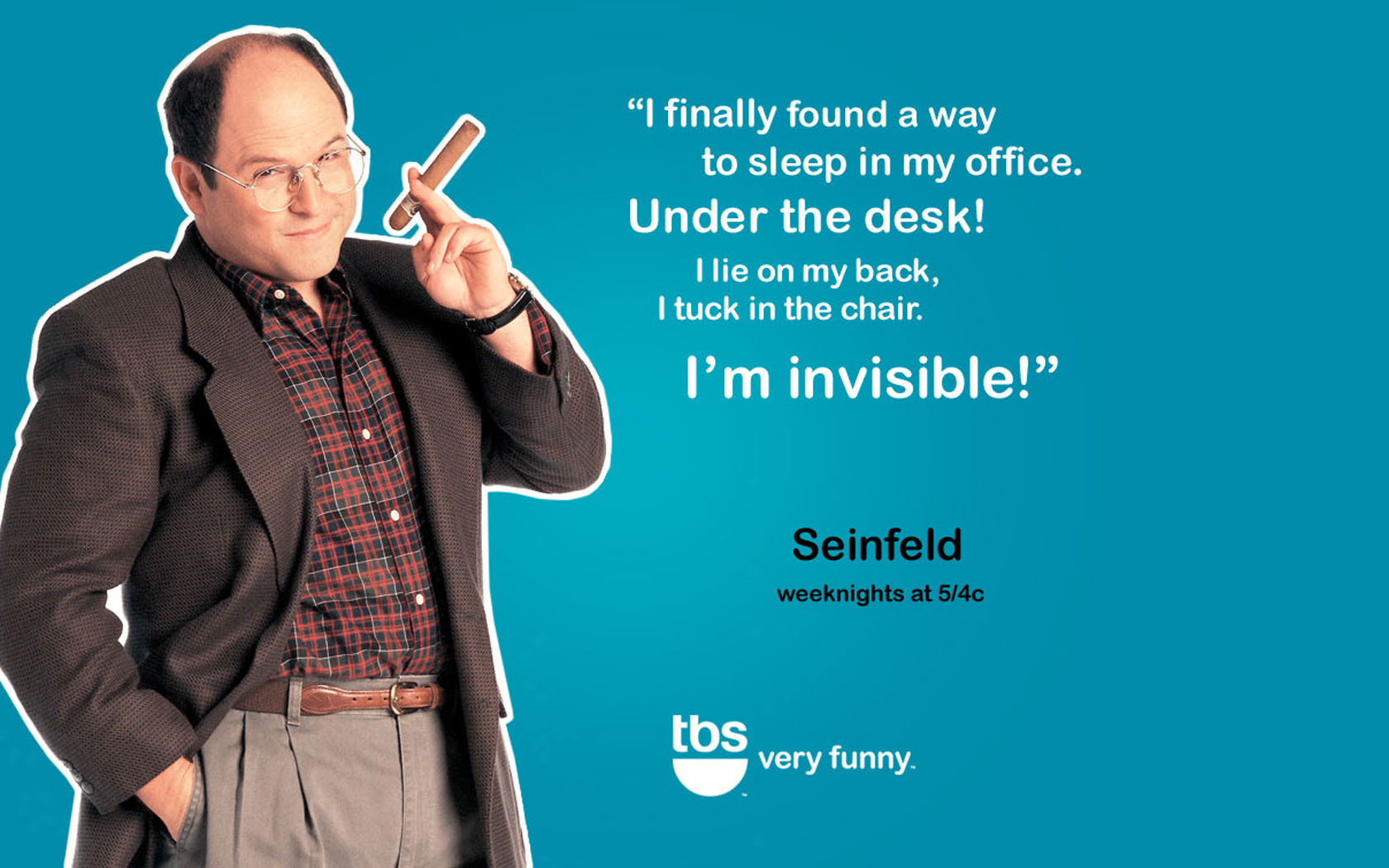
George Costanza is a liar. That’s not a hot take; it’s the fundamental engine of the show. But in the 1994 episode "The Marine Biologist," that lying reaches a sort of peak performance that TV rarely touches anymore. You remember the setup. Jerry meets an old college acquaintance, Diane Itamaura, and for some reason—maybe boredom, maybe malice—he tells her that George is a marine biologist.
Why? Because George isn't doing much. He’s "drifting."
What follows is twenty-two minutes of escalating anxiety that culminates in one of the most famous monologues in sitcom history. It’s the moment where the show’s "no hugging, no learning" rule almost breaks, but stays perfectly intact because the heroism is built on a total sham. Honestly, if you look at the writing by Larry David and Jerry Seinfeld, this specific arc is a masterclass in how to pay off multiple storylines at once without it feeling forced or like a "very special episode."
The Sea Was Angry That Day: Breaking Down the Monologue
The climax of the marine biologist Seinfeld episode happens at the diner. The four of them are sitting in their usual booth, and George is wearing this windbreaker that makes him look like he just stepped off a trawler. He starts telling the story of how he saved a beached whale.
"The sea was angry that day, my friends—like an old man trying to send back soup in a deli."
Jason Alexander delivered that entire speech in one take. According to interviews with the cast, that ending wasn't even in the original script. They realized during filming that they needed a bigger payoff for the Titleist golf ball Kramer had been hitting into the ocean earlier in the episode. Larry David wrote the monologue on the fly, Alexander memorized it in about seven minutes, and the rest is history.
It works because it’s absurd. George is a man who hates physical labor, hates the outdoors, and is generally terrified of everything. Yet, in his retelling, he becomes a Hemingway-esque figure. He describes walking into the surf, the waves crashing over him, and finding the obstruction. It’s the contrast between who George actually is—a guy who once pushed children and old women out of the way to escape a small kitchen fire—and the "Marine Biologist" persona that makes it land.
Why the Science (Sort of) Matters
If you’re a literal marine biologist, you’ve probably spent thirty years yelling at the TV. First off, a real biologist wouldn't just wander into the surf to perform amateur surgery on a blowhole. You’d call NOAA. You’d have a stranding team.
But the show doesn't care.
The "obstruction" turned out to be a Titleist #1. This is the "A" plot and "B" plot colliding in a way that modern sitcoms rarely pull off with such elegance. Kramer’s obsession with hitting golf balls into the Atlantic Ocean seemed like a throwaway gag. It wasn't. It was the "smoking gun." When George pulls the ball out of his pocket at the diner, it’s a moment of pure comedic catharsis.
Interestingly, real-world marine biologists have actually used this episode as a talking point. While you can't save a whale with a putter and a dream, the episode highlighted—albeit unintentionally—the very real issue of ocean debris. Of course, George wasn't worried about the ecosystem. He was worried about Diane finding out he worked in real estate (or didn't work at all).
The Costanza Philosophy of Lying
"It’s not a lie if you believe it."
That’s the mantra George gives Jerry in a different episode, but it’s the soul of the marine biologist Seinfeld plot. George doesn't just tell Diane he’s a scientist; he starts living it. He complains about the "mammals" and the "plankton." He adopts a tone of weary expertise.
You’ve probably met someone like this. Someone who gets so deep into a fabrication that they start to resent the person they're lying to for making them keep up the act. George is annoyed that he has to "work" on his day off by pretending to care about whales. It’s a level of narcissism that is uniquely Seinfeldian.
The Real-World Impact of the Episode
- Cultural Shorthand: "The sea was angry that day" is now a standard phrase for anyone describing a minor inconvenience or a bad day at the beach.
- The Titleist Boost: Titleist actually got a massive amount of "free" advertising from this, even though their product was technically the villain that almost killed a Great Blue.
- The Diner Aesthetic: This episode solidified the Monk’s Diner booth as the "stage" where all great lies are dissected.
Most people forget that the episode also features a subplot with Elaine and a Russian author (a parody of Leo Tolstoy/The War and Peace) and a runaway electronic organizer. But those threads are just the background noise. The heart is George vs. The Ocean.
What Most People Get Wrong About the Ending
People remember the heroics. They remember the applause in the diner. They forget that George actually loses in the end.
After he saves the whale, Diane asks him if he’s really a marine biologist. In a rare moment of—well, not exactly honesty, but perhaps exhaustion—he tells her the truth. She dumps him immediately. This is the "No Learning" rule in action. George did something legitimately brave, something that required him to face his fears and save a living creature, and it didn't change his life at all. He ended up right back in the booth, unemployed and alone.
That’s why the show remains relevant. It refuses to give you the "warm and fuzzy" ending. It acknowledges that even when we do something great, if the foundation is a lie, it’s going to crumble.
How to Apply the "George Method" (Without the Failure)
If you're going to take anything away from the saga of George Costanza, marine biologist, let it be these tactical insights into human behavior and storytelling:
1. Commit to the Bit
If you're telling a story, whether it's in a marketing meeting or a bar, details matter. George didn't just say he liked whales; he talked about the "disturbance in the blowhole." Specificity creates authority. Even if you're out of your depth, knowing one or two highly specific facts can bridge the gap between "faking it" and "making it."
2. Understand the Power of the "Call Back"
The reason this episode is a classic isn't just the acting; it's the structure. If you're creating content or writing, look for the "Kramer’s Golf Ball." What's the small, seemingly insignificant detail you introduced at the beginning that can be the hero at the end? Closing the loop is the most satisfying thing you can do for an audience.
3. Embrace the Absurdity of Modern Life
We all play characters. We have our "LinkedIn persona," our "family dinner persona," and our "friends at the bar" persona. George is just an extreme version of that. Acknowledge the roles you're playing. It makes navigating social situations much easier when you realize everyone else is also just a "marine biologist" trying not to get caught.
4. Know When to Fold
George’s mistake wasn't the lie; it was the confession at the wrong time. Or maybe it was the lie itself. Either way, the lesson is that maintaining a persona requires an immense amount of energy. If the "whale" you're trying to save is actually just a distraction from your real goals, it might be time to head back to the diner and start over.
To truly understand the legacy of this episode, you have to watch the physical acting of Jason Alexander. Look at the way he holds the golf ball at the end—like it’s a precious jewel and a curse at the same time. That is the essence of Seinfeld. We find the treasure, but it’s usually just a piece of junk that someone else threw away.
Next time you’re at the beach and you see the waves crashing, just remember: it’s probably just an old man trying to send back soup.