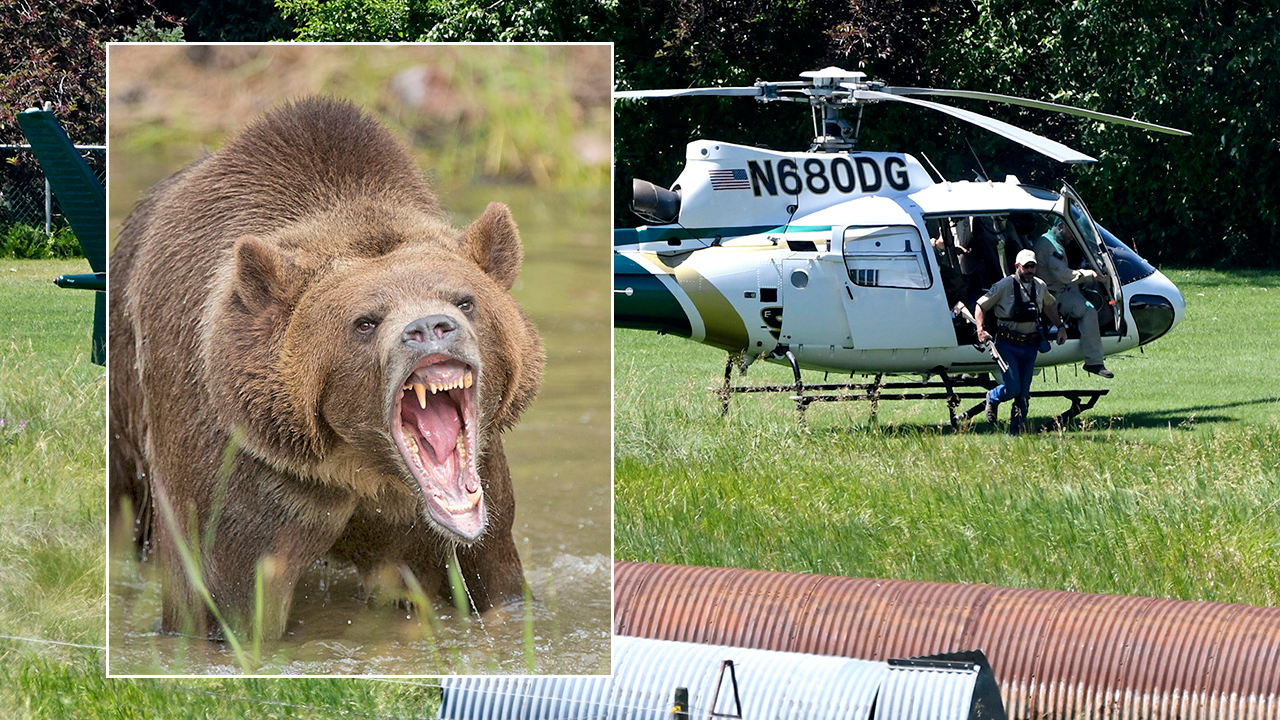
It’s the ultimate playground debate. You’ve probably seen the grainy YouTube thumbnails or those weirdly intense forum threads where people argue about claws versus teeth until they’re blue in the face. But honestly, can a grizzly bear kill a lion? If you’re looking for a quick "yes" or "no," the answer usually leans toward the bear, but it’s never that simple in nature. These animals evolved thousands of miles apart, navigating completely different survival pressures. One is a social strategist from the African savannah; the other is a solitary tank from the North American wilderness. Putting them in a hypothetical ring isn't just about who is meaner. It's about physics, fat, and bone density.
The reality is that these two predators are built for different types of violence. A lion is a precision killer. A grizzly bear is a demolition crew. If they ever met, it wouldn't be a choreographed movie fight. It would be a messy, terrifying display of raw power where the grizzly’s sheer mass usually gives it the edge.
The Physicality of the Grizzly: Why Mass Matters
When we talk about whether a grizzly bear can kill a lion, we have to start with the scale. Size isn't everything, but in a brawl between apex predators, it’s a massive head start. An adult male grizzly (Ursus arctos horribilis) can weigh anywhere from 400 to 800 pounds, though some massive specimens in Alaska push even higher. Compare that to a male African lion, which typically tops out around 420 to 550 pounds.
Bears have this crazy bone density. Their skeletons are thick, designed to support massive muscle attachments for digging, climbing, and pinning down heavy prey like moose or bison. A grizzly’s skull is famously difficult to penetrate; there are stories of bullets literally ricocheting off their thick frontal bones. Lions, while incredibly strong, are built for agility. They have lighter skeletons to facilitate the explosive sprinting needed to catch an antelope. In a face-to-face scrap, the lion is essentially a middleweight boxer going up against a heavyweight powerlifter.
Then there’s the paw. A grizzly’s front limbs are like tree trunks. A single swipe from a bear isn't just a scratch; it’s a blunt-force trauma event. They have non-retractable claws that act like garden rakes made of steel. While a lion’s claws are sharper and better for gripping and shearing, the bear’s paw carry enough kinetic energy to break the neck or back of an animal the lion's size. Honestly, the sheer weight of a bear leaning on a lion might be enough to end the fight before it even gets to the biting stage.
The Lion’s Technical Edge
Don't count the King of the Jungle out too fast, though. Lions are cats, and cats are biologically optimized for the kill. A lion’s primary weapon is its bite. They have a bite force of about 650 PSI, which is actually lower than a grizzly’s 975 PSI, but the lion knows exactly where to put it.
Lions are specialists in the "throat clamp." They kill by suffocation or by severing the spinal cord at the base of the skull. They are faster than bears. Their reflexes are tuned to a different frequency. If a lion could get behind a grizzly—which is a huge "if" given the bear's surprising agility—it could theoretically land a lethal bite.
However, the grizzly has a "built-in" shield: the hump. That massive lump of muscle on a grizzly's shoulders isn't just for show. It powers their digging, but it also protects their neck. It’s hard to get a clean throat grip on a creature that has four inches of fur, fat, and dense muscle guarding its vitals.
Historical Context and Roman Games
Humans have been obsessed with this question for centuries. During the Roman era, emperors actually staged fights between various beasts in the Colosseum. While records are often embellished or translated poorly, there are accounts of "Great Bears" from Northern Europe or the Atlas Mountains facing off against lions.
In most of these historical accounts, the bear came out on top. Why? Because the bear can stand on its hind legs. This is a massive tactical advantage. By standing up, the grizzly can use its weight to "smother" the lion, swiping downward with its claws. The lion, being a quadruped that fights primarily on four legs (even when swatting), finds itself at a height disadvantage.
You’ve also got to consider the "staying power." A lion is an anaerobic athlete. It has a small heart relative to its body size, meaning it tires out quickly after a burst of high energy. Grizzlies are surprisingly durable. They can fight for longer periods without hitting that wall of exhaustion. If the fight lasts more than a couple of minutes, the lion is in serious trouble.
Defense Wins Championships
The grizzly’s skin is remarkably loose. This sounds like a weird detail, but it’s vital in a fight. When a lion bites or claws a bear, the bear's skin can move and slide over the muscle and bone. This prevents the lion from getting a deep, "anchored" grip that would allow it to tear into vital organs.
Lions, on the other hand, have relatively thin skin. A grizzly’s claws can open up a lion’s flank with a single, sweeping motion. It’s essentially a glass cannon versus a tank. The lion has the firepower to hurt the bear, but it can't take the same amount of punishment in return.
Behavioral Psychology: The Will to Fight
Most people forget that animals don't want to fight to the death. It’s bad for business. If an animal gets a broken leg or a deep infection, it dies of starvation. In the wild, if a grizzly and a lion crossed paths, they would likely stare each other down, roar, and back away.
But if they were forced into a conflict?
The grizzly is notoriously "cranky." Especially if it's a mother protecting cubs or a male during the rut. Lions are social. They are used to having backup. A lone lion is a much more cautious animal than a member of a pride. If a single lion faced a grizzly, the lion’s instincts would tell it to retreat because it lacks its brothers to help distract and pin the target.
The grizzly doesn't have a "retreat" button in the same way. When a grizzly feels threatened, its default setting is often "obliterate the threat." This psychological difference can't be overstated. The bear's willingness to absorb pain to land a hit is a terrifying trait in a predator.
What Experts Say
Biologists like Dr. Chris Morgan, who has spent decades studying bears, often point to the bear's versatility. Grizzlies are omnivores, but they are also apex predators that hunt elk and even take down smaller black bears. They are used to grappling.
Lions are used to "trip and grip" hunting. They hunt animals that run away. They aren't as experienced in fighting something that fights back with the same level of aggression and size.
Interestingly, some naturalists suggest that a tiger would have a better chance against a grizzly than a lion would. Tigers are generally larger than lions and are more used to hunting solo. But even then, the grizzly’s sheer bulk and defensive "armor" of fat and muscle make it the favorite in almost every simulation.
Can a Grizzly Bear Kill a Lion? The Verdict
Yes. A grizzly bear can kill a lion, and in a hypothetical 1-on-1 match, it likely would win the majority of the time. The combination of weight, bone density, the ability to stand upright, and superior stamina gives the bear a toolkit that a lion isn't equipped to handle.
The lion's only real path to victory is a "lucky" strike—a perfectly placed bite to the throat or spine early in the encounter. But given the bear's thick neck muscle and defensive hide, that's a very difficult target to hit.
In the end, nature doesn't care about our "who would win" scenarios. Each animal is a masterpiece of evolution for its specific environment. The lion is the master of the open plains and social coordination. The grizzly is the undisputed king of the rugged mountains and dense forests.
Actionable Insights for Wildlife Enthusiasts
If you're fascinated by these apex predators, there are ways to see their power in person (safely and ethically).
- Visit Katmai National Park: If you want to see the true scale of a grizzly (specifically the coastal brown bears, which are the same species), this is the place. Watching them flip 500-pound rocks like they’re pebbles explains everything you need to know about their strength.
- Support Conservation: Both species are facing habitat loss. The African lion population has plummeted in the last 50 years. Supporting organizations like the Lion Recovery Fund or the Vital Ground Foundation (for grizzlies) ensures these animals stay in the wild where they belong.
- Understand the "Pound-for-Pound" Myth: When comparing animals, always look at the skeleton. Muscles are impressive, but bone structure determines how much force an animal can take and deliver.
- Respect the Distance: If you ever find yourself in bear country or on a safari, remember that "cool" doesn't mean "safe." A grizzly can run 35 mph. A lion can hit 50 mph in short bursts. You aren't winning that race.
Basically, the "who wins" debate is fun, but the real winner is anyone who gets to see these creatures thriving in their natural habitats from a safe distance. The grizzly might be the heavyweight champion of the world, but the lion still wears the crown of the savannah for a reason. Both are incredible, both are dangerous, and both deserve our absolute respect.