You’re sitting at a dusty train station in the Ebro River valley in Spain. It’s hot. The sun is oppressive. You’re drinking a beer that tastes like licorice—Anis del Toro—and you’re arguing with someone you’re supposed to love about a "simple" medical procedure that isn't simple at all.
That’s basically the vibe of Ernest Hemingway’s 1927 masterpiece. When people ask Hills Like White Elephants: what is it about, they usually expect a plot summary. But there isn't much plot. It’s almost entirely dialogue. Two people, "The American" and a girl named Jig, are waiting for a train to Madrid. They talk. They drink. They don't listen to each other.
Honestly, it’s one of the most stressful things you’ll ever read because of what isn’t said. Hemingway was the king of the "Iceberg Theory." He believed that 7/8ths of a story should be underwater. You only see the tip. The rest? You have to feel it.
The Elephant in the Room (Literally)
The "white elephant" isn't just a quirky title. In the 1920s, a white elephant was a gift that was physically impressive but cost so much to maintain that it ruined the owner. It’s a burden.
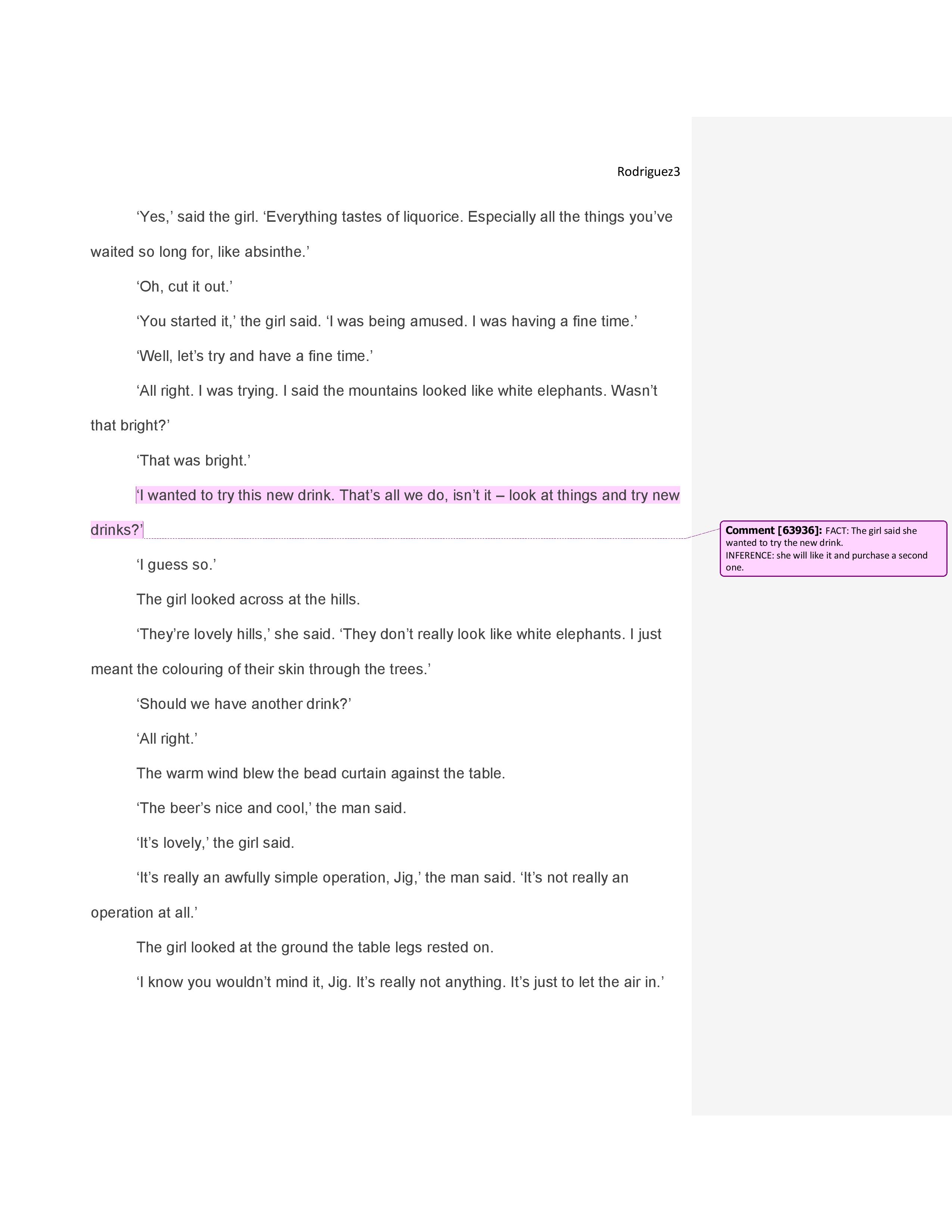
Jig looks at the long, white hills and says they look like white elephants. The American doesn't care. He’s focused on one thing: convincing her to have an abortion. He never says the word. Not once. He calls it an "awfully simple operation" and says it’s "not really an operation at all."
He’s lying. Or at least, he's downplaying the reality of 1920s medicine to get what he wants. He wants his old life back—traveling, staying in hotels, trying new drinks. He wants the "white elephant" (the pregnancy) gone because it’s a burden he can’t afford to carry emotionally.
Why the Landscape Matters More Than You Think
Hemingway wasn't just describing the scenery to fill space. The train station is positioned between two very different sides of the valley.
On one side, you have the "long and white" hills. They are dry. Brown. Barren. This represents the life the American wants—a life without the "burden" of a child, but also a life that is ultimately empty and sterile. On the other side of the tracks, there are fields of grain and trees along the banks of the Ebro. That’s life. Fertility. Future.
Jig stands up and walks to the end of the station to look at that green side. She realizes that "we could have all this," but she also knows that once they go through with the American's plan, they can never go back. The choice isn't just about a procedure; it's about the death of their relationship's innocence.
The Power Struggle of 1927
The American is a classic Hemingway "man’s man" who is actually kind of a coward. He uses "gaslighting" before that was even a common term. He tells Jig he loves her, but only if she does this one thing. He says he doesn't want her to do it if she doesn't want to, but then he brings it up again five seconds later.
It’s exhausting.
Jig, on the other hand, is often misread as weak. She isn't. She’s the only one who sees the truth. When she says, "Would you please please please please please please please stop talking?" she isn't just being dramatic. She is shutting down the manipulation. She realizes that the "fine time" they used to have is already over. The "white elephant" has already changed everything, whether they keep it or not.
What Most People Get Wrong About the Ending
There is a huge debate among scholars about how this ends. The train is coming in five minutes. The American carries the bags to the other side of the tracks. He has a drink at the bar alone, looking at the other people who are "waiting reasonably" for the train.
When he comes back, Jig smiles at him and says, "I feel fine. There's nothing wrong with me. I feel fine."
Some readers think this means she gave in. They think she’s resigned herself to the operation just to keep him. But a lot of modern critics, like those referencing the Hemingway Review, suggest she might be realizing she doesn't need him at all. That smile? It might be the smile of someone who has finally seen through the facade of their partner.
She isn't "fine" because the problem went away. She’s "fine" because she’s detached herself from his pressure.
The Technical Brilliance of the Dialogue
Hemingway uses "he said" and "she said" so sparingly that you can actually get lost in the conversation if you aren't paying attention. This is intentional. It forces you to lean in. You have to track the rhythm of the bickering.
- Repetition: They repeat words like "fine" and "simple" until the words lose all meaning.
- Avoidance: They talk about the taste of the drink (like licorice/absinthe) because talking about the actual problem is too heavy.
- The Girl’s Name: He calls her "Jig." It’s a nickname. It’s diminutive. It shows the power imbalance right from the jump.
Historical Context: 1920s Spain
You have to remember that in 1927, abortion was illegal and dangerous. The American is asking her to risk her life so they can keep "trying new drinks." It’s incredibly selfish, and the "white elephant" metaphor grows heavier when you realize the stakes aren't just a lifestyle change, but a physical and legal risk for the woman involved.
The setting—a station between Barcelona and Madrid—is a "liminal space." It’s a place of transition. They are stuck in the middle, and once they board that train, their destination is fixed.
Actionable Insights for Reading Hemingway
If you’re reading this for a class or just for personal growth, don't look for a "happy" or "clear" ending. Hemingway doesn't give those. Instead, look for these three things:
Track the drinks. Every time they order a drink, it's a way to avoid a difficult sentence. Notice how the drinks change the mood.
Watch the movement. Jig moves toward the fertile land; the American moves toward the baggage. Their physical positions tell you more about their internal desires than their words do.
Listen for the silence. What are they not saying? If you can identify the unspoken fears of both characters, you’ve understood the story.
The reality of "Hills Like White Elephants" is that it's a story about the moment a relationship realizes it has a shelf life. It’s about the realization that you can’t go back to the way things were, no matter how much you "simple" the situation away.
To truly grasp the depth, read the dialogue out loud. You’ll hear the desperation in the American’s voice and the quiet, crushing realization in Jig’s. It’s a masterclass in brevity that says more in four pages than most novels say in four hundred.