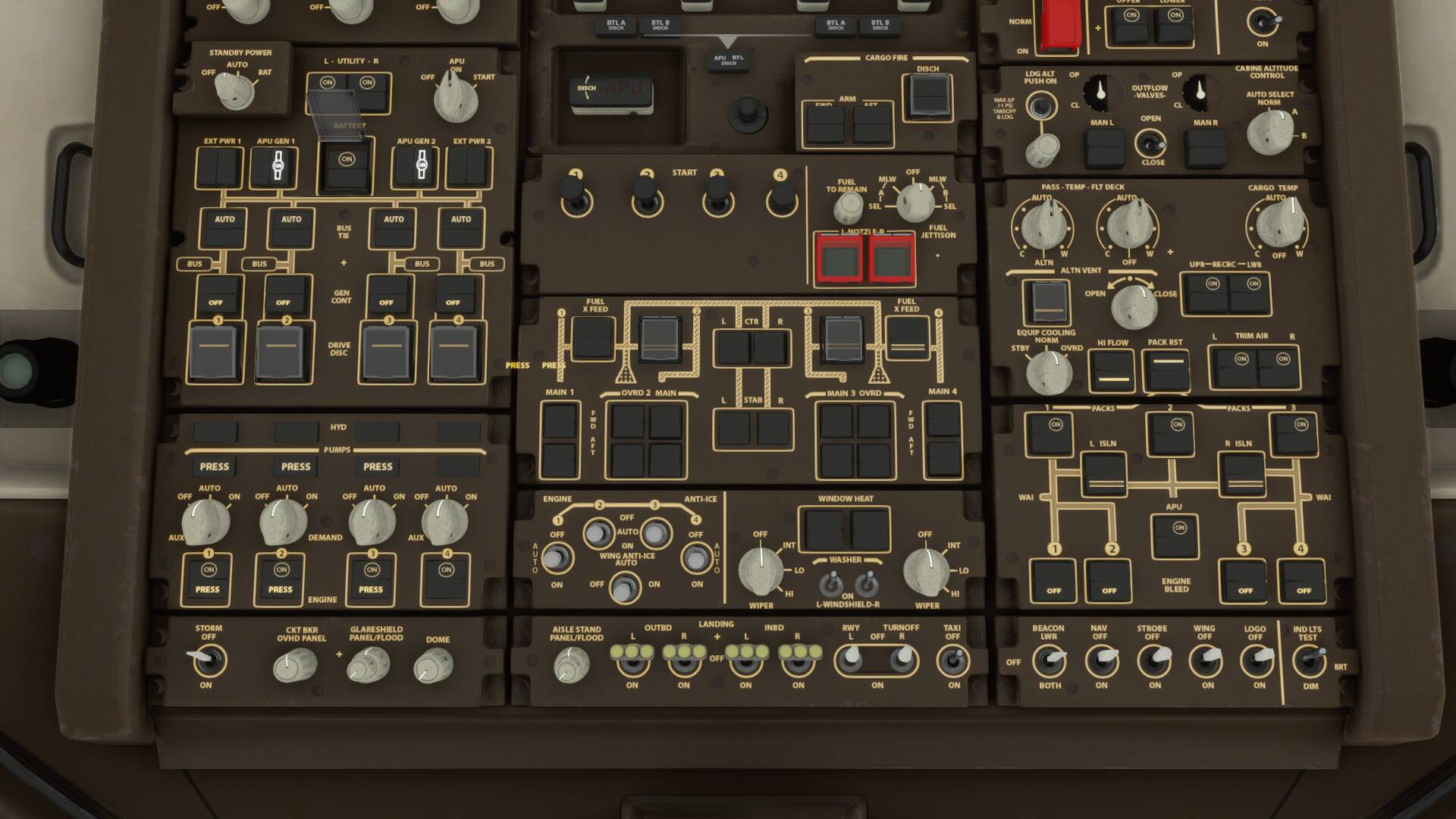
The Boeing 747 is big. You know that. But when you’re standing under the wing of a 747-8, looking up at that massive expanse of aluminum, it’s hard to wrap your head around the fact that you’re basically looking at a flying lake of kerosene. Most people think of airplanes having "tanks" like a car does—little plastic or metal jugs tucked away somewhere.
That's not it at all.
In a Jumbo Jet, the wings are the tanks. The hollow spaces between the structural spars and ribs are sealed up with specialized resins to create "integral" Boeing 747 fuel tanks. It’s a wild bit of engineering. If you filled up a 747-400 to its maximum capacity, you’d be carrying over 57,000 gallons of Jet A-1. That weighs more than 380,000 pounds. To put that in perspective, the fuel alone weighs more than two entire empty Boeing 737s.
Where the Fuel Actually Goes
It’s not just one big bathtub. The fuel system is spread out across the airframe to keep the center of gravity in check and to make sure the engines don't go thirsty during a steep climb or a bumpy landing.
Usually, you’ve got four main tanks in the wings. These are numbered 1 through 4, corresponding to the engines they primarily feed. But there’s more. There are reserve tanks out toward the wingtips. There’s a massive "Center Wing Tank" (CWT) that sits right in the belly of the fuselage, between the wings. Some versions, like the 747-400 or the newer -8, even have a "tail tank" in the horizontal stabilizer.
Why put fuel in the tail? It’s all about balance.
By moving fuel to the rear of the plane, engineers can shift the center of gravity. This reduces the "trim drag" on the elevators. Basically, it makes the plane more aerodynamic and saves a ton of money on gas over a 14-hour flight to Tokyo. As the flight goes on and the wing tanks empty, the plane automatically pumps that tail fuel back forward. It’s a constant, silent dance of weight and balance happening at 35,000 feet.
The TWA 800 Factor and Modern Safety
You can't talk about Boeing 747 fuel tanks without talking about TWA Flight 800. In 1996, a 747 exploded off the coast of Long Island. It changed aviation safety forever. Investigators found that the Center Wing Tank, which was mostly empty but full of volatile fuel vapors, had ignited. A short circuit in a wiring bundle likely sent a spark into the tank.
Because the air conditioning packs sit right under that center tank, they were heating up the leftover fuel, creating a "flammable shroud."
Now, things are different. The FAA eventually mandated the Fuel Tank Flammability Reduction (FTFR) rule. If you fly on a 747 today, there’s likely a Nitrogen Generation System (NGS) on board. This thing strips oxygen out of the air and pumps "nitrogen-enriched air" into the tanks. Since fire needs oxygen to burn, replacing that air with nitrogen means the tanks can’t explode. Even if there’s a spark. Even if the fuel is hot. It basically makes the fuel tanks inert.
The Plumbing is Terrifyingly Complex
If you ever saw the inside of a wing during a heavy maintenance check (a D-check), you’d see a nightmare of tubes, wires, and valves. It’s not just gravity feeding the engines. There are "override/jettison" pumps that can move thousands of pounds of fuel in minutes.
Surge tanks are another clever bit of tech. When the plane maneuvers, fuel sloshes. If it sloshes too hard, it could build up pressure and rupture the wing. The surge tanks—located at the very tips of the wings—act like an overflow vent. They catch the excess and drain it back into the main tanks once the plane levels out.
And then there's the jettison system. If a 747 takes off at its maximum weight and immediately has an engine failure, it’s too heavy to land safely. The landing gear would literally snap. The pilot can flip a switch and spray fuel out of nozzles on the trailing edge of the wings. It’s a controlled dump to get the weight down.
Maintenance: The Hardest Job in Aviation
Imagine crawling into a dark, cramped metal box that smells like kerosene and chemical sealant. That is the life of a fuel tank mechanic. Because the Boeing 747 fuel tanks are integral to the structure, someone has to physically go inside them to inspect for corrosion or leaks.
They use respirators. They use specialized lighting that won't cause sparks. They often have to "sump" the tanks first, which means draining the water that naturally condenses out of the air and settles at the bottom of the fuel. If that water stays there, it can grow "fuel bugs"—a type of microbial fungus that eats the fuel and excretes an acid that dissolves the aluminum. Seriously. Bacteria can eat a jumbo jet if you aren't careful.
Most people don't realize that the fuel also acts as a heat sink. The hydraulic fluid for the flight controls gets incredibly hot. Instead of using a heavy radiator, Boeing engineers run the hydraulic lines through the fuel tanks. The cold fuel absorbs the heat from the hydraulics. It’s an elegant, "two-birds-one-stone" solution that saves weight and complexity.
Moving Forward: Next Steps for Enthusiasts and Pros
Understanding the 747 fuel system gives you a real appreciation for why this plane earned the "Queen of the Skies" nickname. It’s a masterpiece of redundant systems. If you're looking to dive deeper into how these systems are maintained or how they evolved, here are the best ways to get hands-on or technical:
- Download the AMM (Aircraft Maintenance Manual) excerpts: You can find legitimate training materials from organizations like SmartCockpit or similar aviation repositories. Look specifically at "ATA Chapter 28." That’s the universal code for fuel systems. It contains the actual schematics pilots and mechanics use.
- Visit a "Boneyard" or Museum: Locations like the Pima Air & Space Museum or the Museum of Flight in Seattle have 747s on display. If you look closely at the wing underside, you can see the small, round access panels. Each one of those is an entry point for a human to crawl into the tank.
- Study the Nitrogen Generation System (NGS): If you’re interested in the engineering side, look up Parker Aerospace’s documentation on the NGS. It’s the gold standard for how modern airliners prevent the types of tragedies seen in the 90s.
- Monitor Fuel Prices and Logistics: For the business-minded, check out the IATA Jet Fuel Price Monitor. It helps you understand why 747 operators like Atlas Air or UPS spend so much time optimizing the "fuel freeze" point and density of the fuel loaded into these tanks—it’s the difference between a profitable flight and a loss.
The 747 might be fading from passenger service, but its fuel system remains the blueprint for almost every long-haul widebody flying today. It’s a massive, complex, and incredibly safe way to carry 200 tons of flammable liquid across an ocean. Honestly, it’s a miracle it works as well as it does.