You're looking at your paycheck. It's smaller than you expected. Again. Naturally, you start wondering if there's a way to keep more of that cash upfront rather than waiting for a refund check next spring. You've heard people talk about it. They say you can just write "Exempt" on that pesky tax form and—poof—no more federal income tax withholding.
It sounds like a dream. But honestly, it’s a move that can backfire if you don't know the specific rules the IRS has set in stone.
Knowing how to claim tax exempt on w4 isn't just about checking a box; it's about proving you don't actually owe Uncle Sam a dime. Most people assume "exempt" means "I don't want to pay right now." In reality, the IRS sees it as "I legally won't owe anything for the entire year." If you get that wrong, you aren't just looking at a big bill in April; you’re looking at underpayment penalties and a very grumpy tax auditor.
What Does Being "Exempt" Actually Mean?
Let's clear the air. Being exempt from withholding doesn't mean you are exempt from taxes. It just means your employer won't take federal income tax out of your paychecks throughout the year. You’ll still see Social Security and Medicare taxes (FICA) disappear from your gross pay. Those are mandatory. There is no "exempt" for those unless you fall into very specific, rare religious or international categories that don't apply to 99% of workers.
To qualify for an exemption from federal income tax withholding, you have to meet two very strict criteria. First, for the previous tax year, you must have had a right to a refund of all federal income tax withheld because you had no tax liability. Second, for the current year, you expect a refund of all federal income tax withheld because you expect to have no tax liability again.
Basically, if you owed even $1 in total tax last year after all your credits were applied, you technically aren't supposed to claim exempt this year.
It’s a narrow gate.
Think about a college student working a part-time summer job. If they earn less than the standard deduction—which is $15,000 for single filers in 2025—they won't owe federal income tax. They got everything back last year. They’ll earn less than the threshold this year. They are the prime candidates for this. If you're a mid-career professional earning $70k? You probably won't qualify, even if you have a ton of kids and a massive mortgage.
How to Claim Tax Exempt on W4 the Right Way
The IRS redesigned the Form W-4 a few years ago. It used to be all about "allowances." Now, it's more about "credits" and "other income." Interestingly, there isn't a giant, flashing neon sign that says "CLICK HERE FOR EXEMPTION." You have to know where to look.
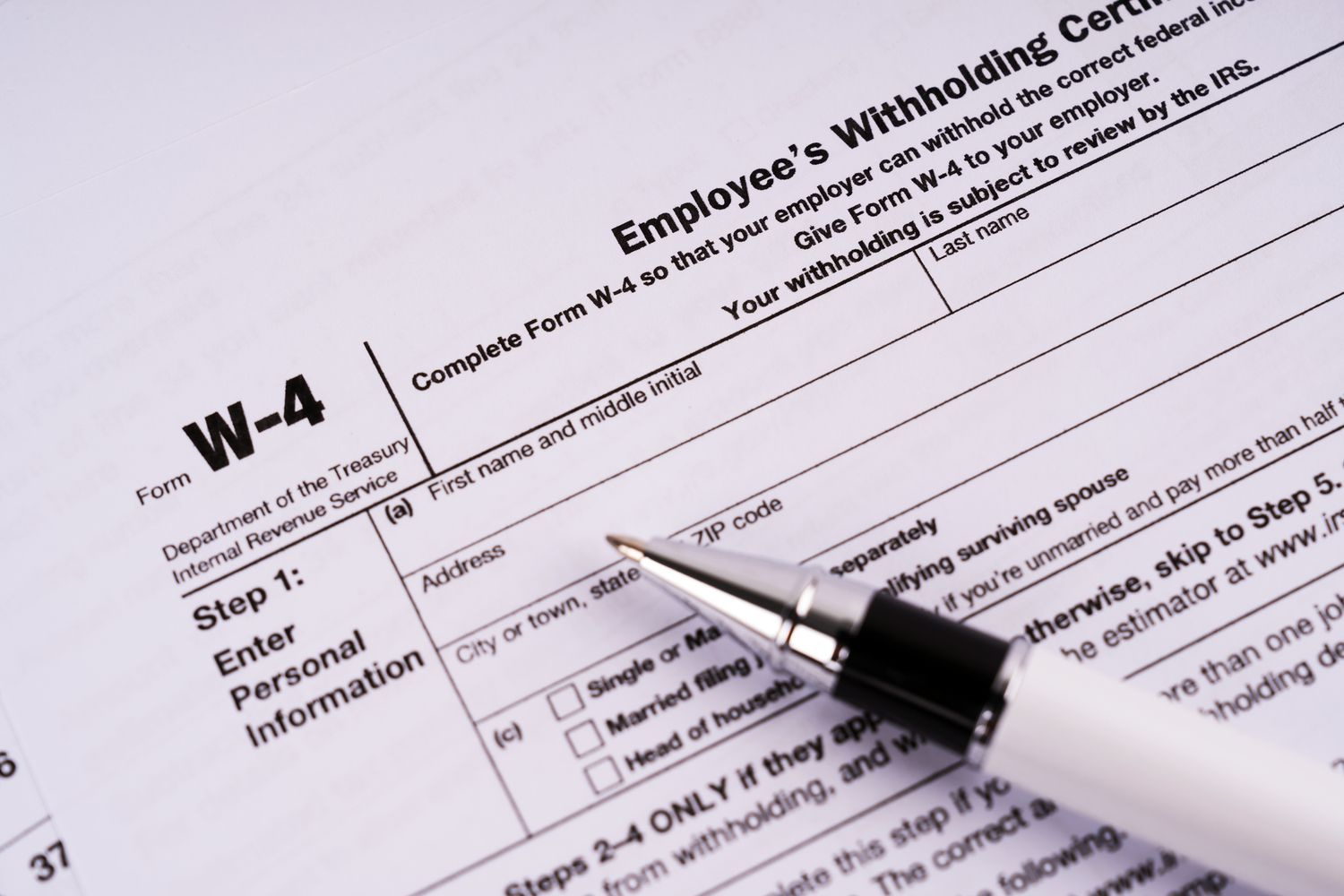
To officially signal your exempt status, you don't fill out the middle sections (Step 2, 3, or 4). Instead, you go straight to the space below Step 4(c). You have to write the word "Exempt" in that white space. You still have to provide your name, address, Social Security number, and filing status in Step 1. Then, you sign and date the form in Step 5.
If you leave the signature off, the form is invalid. Your employer is then required to treat you as "Single" with no other adjustments, which usually results in the highest amount of tax being taken out.
It’s also important to remember that an exemption isn't "set it and forget it." It expires. If you claim exempt in February 2026, that claim is only good until February 15 of the following year. You have to submit a new W-4 every single year to maintain that status. If you don't, your employer has to start withholding tax as if you were single or married filing separately with no other entries.
Why the IRS Might Send You a "Lock-in" Letter
The IRS isn't stupid. They receive a copy of your W-2 at the end of the year. If they see that you earned $80,000 and had $0 withheld because you claimed exempt, their systems are going to flag you.
When the IRS determines a taxpayer doesn't have a reasonable basis for claiming exempt, they issue what’s called a "lock-in" letter. This is a formal notice sent to both you and your employer. It effectively tells your employer: "Do not listen to this person. Withhold at this specific rate, and do not allow them to change it without our permission."
Once you’re locked in, it is incredibly difficult to get out. You’ll have to provide years of tax returns and proof of income to the IRS to justify a change. It's much easier to just fill out the form correctly the first time.
Common Misconceptions About Filing Exempt
A lot of people think that if they have a large family, they should just file exempt. That’s a mistake. Having children provides you with the Child Tax Credit, which reduces your tax liability. But "reducing" isn't the same as "eliminating."
If you have three kids and earn $60,000, you might owe very little tax, but you likely still owe some. Instead of claiming exempt, you should use Step 3 of the W-4. You’d multiply the number of qualifying children by $2,000 and enter that total. The employer then adjusts the withholding downward. You get a bigger paycheck, but you’re still "in the system," which keeps the IRS off your back.
Then there are the seasonal workers. If you work a high-paying job for only three months, you might think you're safe to claim exempt. But the IRS calculates tax based on your annual income. If your three months of pay adds up to $20,000, you’ve exceeded the standard deduction for a single person. You owe tax.
The Risks You Can't Ignore
Honestly, the biggest risk is the "Tax Day Shock."
Imagine you’ve spent all year receiving "fat" paychecks. You didn't pay in a cent. Then April rolls around and your tax software tells you that you owe $4,500. Plus interest. Plus a penalty for underpayment of estimated tax. Most people don't have $5,000 sitting in a savings account ready to be shipped off to the Treasury.
There’s also a civil penalty. If you make a statement on your W-4 that decreases the amount of tax withheld without a reasonable basis, the IRS can hit you with a $500 penalty per instance. It’s not just about paying the tax back; it’s about the cost of the "lie" on the document.
How to Check if You're Safe
If you’re still unsure, the IRS has a tool that is actually quite good: the Tax Withholding Estimator. It’s better than the worksheets on the back of the paper form.
You’ll need your most recent pay stub and a copy of last year’s tax return. You plug in your numbers, and it tells you exactly how to fill out your W-4. It will even give you a slider to choose if you want a big refund, a $0 refund, or if you want to owe a little bit.
Using this tool is the "pro move." It gives you the "human" benefit of more cash in your pocket without the "robotic" risk of a tax audit.
Real-World Example: The "Gap Year" Student
Take Sarah. She graduated in May and starts a full-time job in September 2026. She’ll only be working four months of the year. Her salary is $5,000 a month. Total income for 2026: $20,000.
Since the standard deduction is roughly $15,000, she only has $5,000 in taxable income. Her tax liability will be tiny—maybe a few hundred dollars. If she had a massive tax credit from school, she might actually owe $0. In this specific case, Sarah might be justified in claiming exempt if she had no liability the year before. But even then, it's safer for her to just claim the "Head of Household" status or use the credits section to lower withholding rather than going full "Exempt."
Actionable Next Steps
If you’ve decided that claiming exempt is the right move for your specific financial situation, here is exactly what you need to do:
- Review your last tax return: Look at your "Total Tax" line (usually line 24 on Form 1040). If that number was $0, you've cleared the first hurdle.
- Estimate this year's income: If your total income will be less than the standard deduction ($15,000 for single, $30,000 for married filing jointly), you've cleared the second.
- Get a fresh Form W-4: Don't use an old one from 2019. Download the 2026 version from IRS.gov.
- Fill out Step 1: Enter your personal details and filing status.
- Skip to the bottom: Write "Exempt" in the space below Step 4(c).
- Sign and Submit: Turn it into your HR department or payroll provider.
- Mark your calendar: Set a reminder for January 1st to do this all over again, because your exemption will expire in mid-February.
- Monitor your first paycheck: Make sure the "Federal Income Tax" line item actually drops to $0. If it doesn't, your payroll clerk might have missed your handwritten note.
Claiming exempt is a powerful tool for those who genuinely don't owe taxes, but it’s a trap for those trying to "game" the system. Keep your records clean, stay under the thresholds, and you won't have anything to worry about.