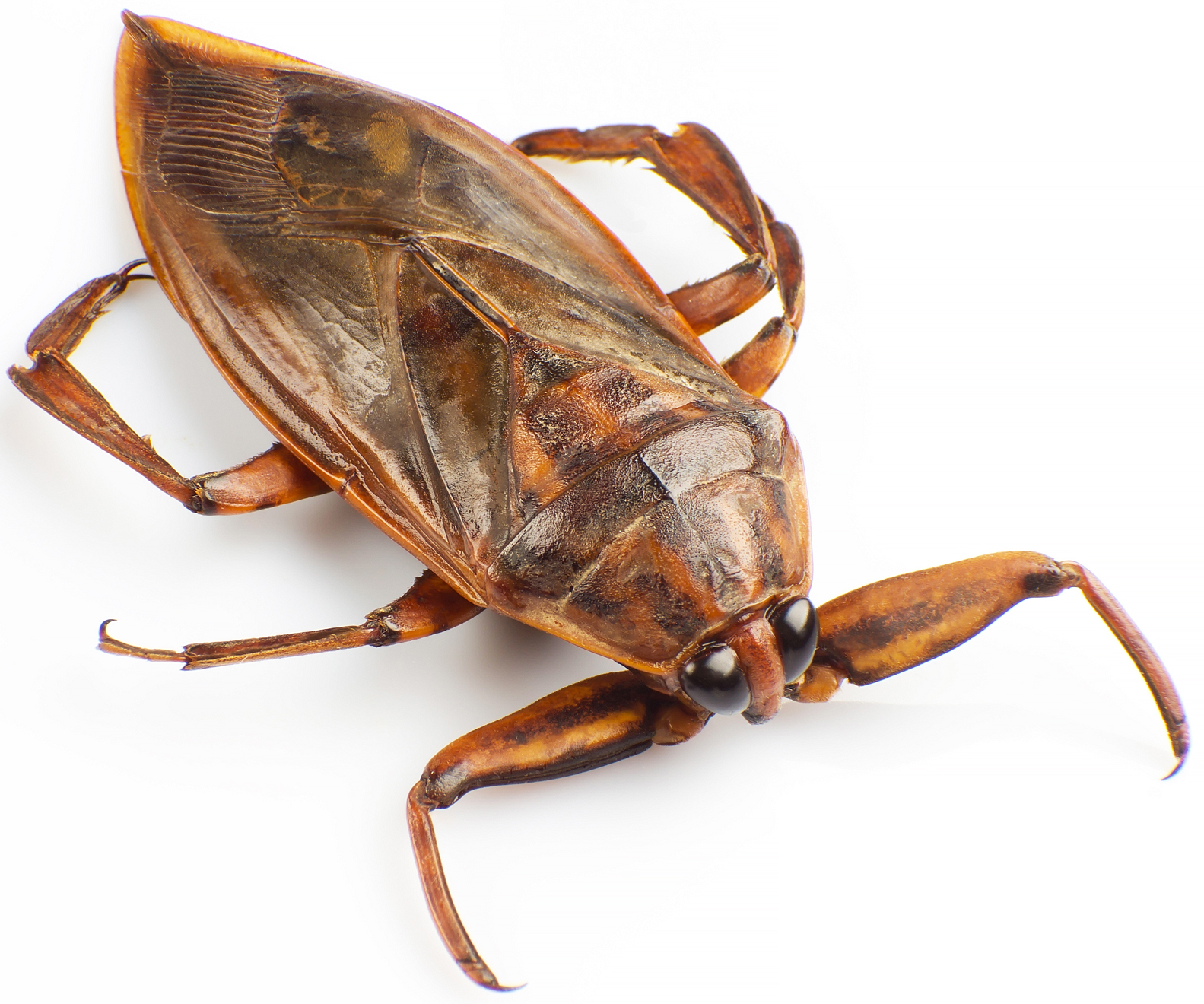
You just saw something move out of the corner of your eye. It was big, flat, and brown. Naturally, you did what anyone with a smartphone does—you snapped a photo and went straight to the internet. But looking at a pic of water bug on your screen versus the thing skittering across your tile floor can be two very different experiences. Most people use the term "water bug" as a catch-all for anything that looks like a cockroach but makes them feel slightly less grossed out. Honestly, though, if you’re trying to identify a pest or a cool aquatic insect, accuracy matters.
Misidentification is everywhere. You’ve probably seen a dozen forum posts where someone shares a blurry image of a German cockroach and everyone in the comments screams "water bug!" to make the homeowner feel better. It’s a polite lie. Real water bugs are fascinating, often predatory, and usually live in the water. Cockroaches just happen to like your damp basement.
The Identity Crisis: Is it a Cockroach or a Giant Water Bug?
Let’s get the big one out of the way. If your pic of water bug shows something with long, thin antennae and a penchant for your kitchen cabinets, it’s probably an Oriental cockroach (Blatta orientalis) or an American cockroach. These are the "water bugs" of urban legend. They love moisture, sure, but they aren’t aquatic. They don't have flippers. They’re just roaches that didn't get the memo about staying outside.
Real water bugs belong to the order Hemiptera. These are "true bugs."
Think about the Giant Water Bug, also known as the "toe-biter." These things are absolute tanks. They can grow up to four inches long. If you find one of these in your pool, you'll know it because they have massive, pincer-like front legs designed to snatch up small fish and frogs. Yes, they eat vertebrates. They’re basically the apex predators of the puddle world. Unlike cockroaches, which scavenge for crumbs, these guys are active hunters that inject a liquefying enzyme into their prey. It's metal as hell.
Why Your Pic of Water Bug Looks Different Than Your Neighbor’s
Lighting is everything, but anatomy is better. Look at the wings. True water bugs have wings that overlap and form a distinct "X" or "V" shape on their backs. Cockroaches have wings that lay flat and parallel, like a folded-up cloak.
Also, look at the head.
A cockroach hides its head under a shield called a pronotum. You usually can't see its "face" from directly above. A true water bug? It has a visible, often pointy snout called a rostrum. It uses this to poke things. If you see a pic of water bug where the insect is carrying a cluster of eggs on its back, that’s a male Abedus herberti. The females glue the eggs to the males, and the dads have to carry them around until they hatch. It’s one of the few examples of dedicated paternal care in the insect world.
Habitat Tells the Story
Where was the photo taken? This is the easiest way to debunk a fake water bug.
- In the kitchen sink? Cockroach.
- In a freshwater pond? Giant Water Bug (Lethocerus americanus).
- On the ceiling of your bedroom? Definitely a cockroach.
- Skating on top of the lake? That’s a Water Strider.
Water striders are often called water bugs, but they’re very different. They use surface tension to literally walk on water. They have specialized hairs on their feet that repel liquid. If you zoom in on a high-quality pic of water bug of this variety, you can actually see the dimples in the water where their legs rest. It’s physics in action.
The "Toe-Biter" Warning
We need to talk about the bite. It hurts.
If you see a pic of water bug and decide you want to catch one for a closer look, be careful. The Giant Water Bug earns the nickname "toe-biter" for a reason. Their bite is widely considered one of the most painful in the insect kingdom. It isn't medically significant in the sense that it’ll kill you, but it’s a searing, burning sensation that can last for hours. They are also known to play dead. You might think you’ve found a dead specimen, pick it up, and—bam. It’s a defense mechanism that works surprisingly well on humans.
In many parts of Southeast Asia, specifically Thailand and Vietnam, these insects are actually a delicacy. Lethocerus indicus is harvested, steamed, or fried. People say they taste like a mix of shrimp and black licorice or citrus. So, while you might be screaming at the sight of one in your pool filter, someone else is probably looking for a recipe.
Identifying Other Common "Water" Insects
Not everything in the water is a "water bug." Sometimes people take a pic of water bug and it turns out to be a Backswimmer or a Water Boatman.
Backswimmers (Notonectidae) are weird because they literally swim on their backs. They look like little rowboats. They have long, oar-like back legs that propel them through the water. They’re also predators and can give you a nasty nip if you handle them.
Water Boatmen (Corixidae) look almost identical to backswimmers but they swim right-side up. They’re mostly herbivores or scavengers, eating algae and detritus. They don’t bite humans. If you’re looking at your photo and the bug is swimming face-down, you’re safe. Face-up? Watch your fingers.
How to Get Rid of Them (If They Aren't Supposed to Be There)
If your pic of water bug was taken inside your home, you don't have an aquatic insect problem; you have a moisture problem.
Oriental cockroaches love dark, damp places. They come up through floor drains or leaky pipes. To stop seeing them, you have to stop the humidity. Buy a dehumidifier. Fix the drip under the sink. Seal the cracks in the foundation. Pesticides work, but they’re a temporary fix if the environment stays soggy.
If the bugs are in your pool, that’s different. Giant water bugs are attracted to lights. They are often called "electric light bugs" because they’ll fly toward porch lights or stadium seating at night and then crash-land into the nearest body of water—your pool.
To clear them out of a pool:
- Turn off your pool lights at night.
- Use a pool cover.
- Keep the chlorine levels balanced (though these guys are tough and can sometimes handle high chemicals).
- Use a skimmer net to physically remove them (don't use your hands!).
Honestly, finding a true water bug is a sign of a healthy ecosystem nearby. They need clean-ish water to survive. If you have them in a local creek, it means the water isn't too polluted.
What to Do Next
If you’ve still got that pic of water bug on your phone and you’re unsure, look for the "pincer" front legs. No pincers? It’s a roach. Huge pincers? It’s a Giant Water Bug.
Check your window screens. These insects are surprisingly good fliers. They can cover miles in a single night looking for a new pond or a mate. If you find one on your driveway, it’s likely just "refueling" or confused by your outdoor lights. Just leave it alone or move it toward some tall grass with a stick.
Stop worrying about "infestations" if it’s a true aquatic bug. They don't want to be in your house. There’s no food for them there. They want minnows and tadpoles, not your leftover pizza.
Take Action:
- Verify the legs: If they look like paddles, it belongs in the water.
- Check the antennae: Long and whip-like means it’s a cockroach.
- Eliminate standing water: If you want them away from your porch, clear out old tires or buckets that collect rain.
- Dim the lights: Swap your outdoor bulbs for yellow "bug lights" to reduce the chance of a Giant Water Bug landing on your doorstep.