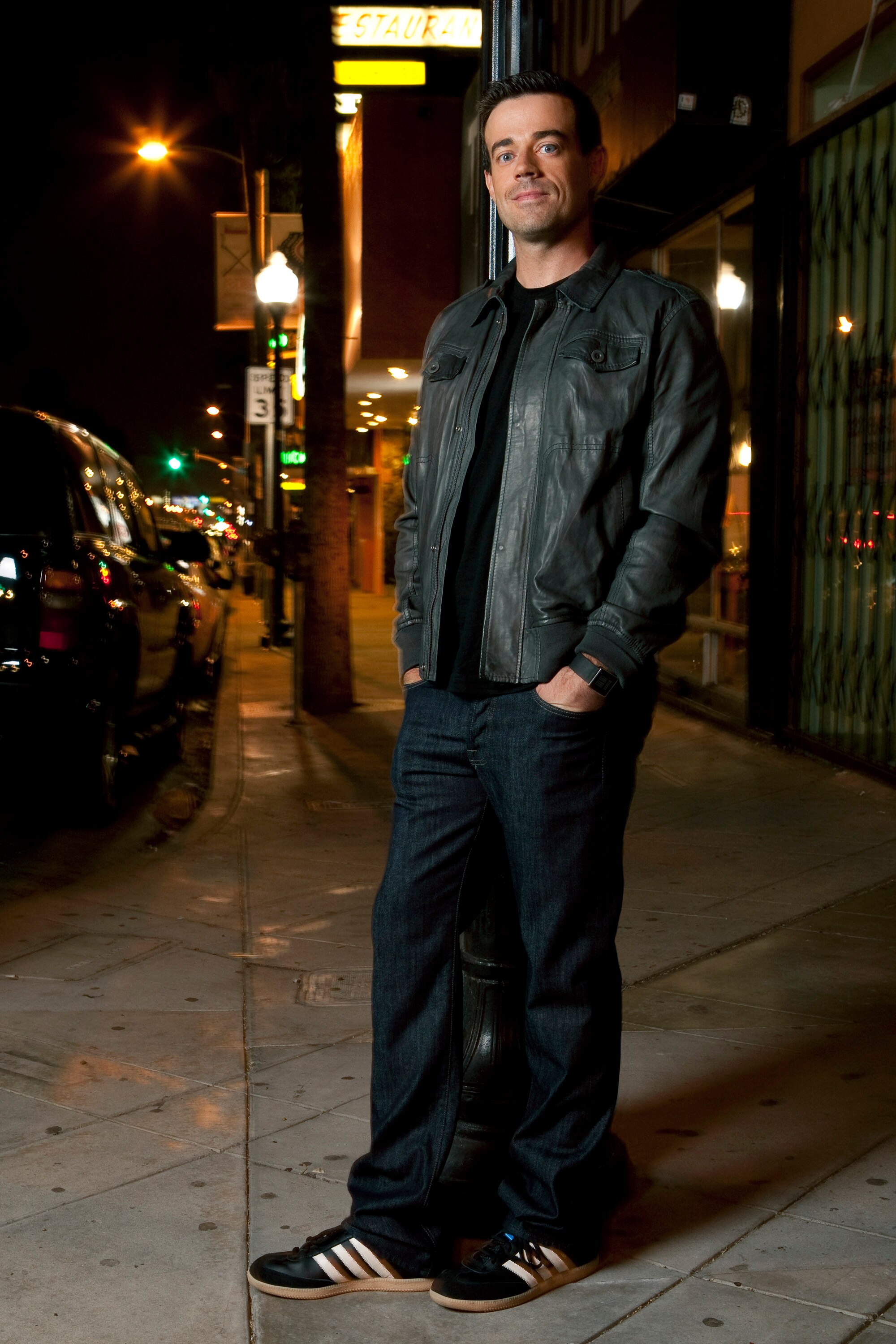
If you were awake at 1:35 in the morning between 2002 and 2019, you probably saw it. That gritty, handheld aesthetic. The feeling that you were crashing a private party at The Viper Room or some dimly lit basement in Brooklyn. Last Call with Carson Daly didn't just fill a time slot; it became a weird, beautiful outlier in a world of polished desks and forced monologues.
Honestly, it shouldn't have worked for 17 years.
By the time it wrapped up its 2,000-episode run in May 2019, the show had evolved from a standard talk show into a documentary-style time capsule. It survived the rise of streaming, the fall of TRL-style stardom, and the total upheaval of how we consume music. While Jimmy Fallon and Jimmy Kimmel were battling for viral clips and high-gloss comedy, Carson Daly was essentially making indie films at two in the morning.
The Shift From Studio to Streets
When Last Call with Carson Daly premiered on January 8, 2002, it looked like everything else. Carson sat behind a desk. There was a studio audience at 30 Rock. It was the "safe" successor to Later.
But by 2009, things got interesting. Budget cuts and shifting creative interests forced a retooling. Instead of fighting for the same A-list actors who had already done three other stops that day, the show went on location. This wasn't just a cost-saving measure; it was a vibe shift.
Suddenly, Carson wasn't just a host. He was a curator.
The show started filming in clubs like The Roxy and Hotel Cafe. The lighting was natural—usually meaning it was dark and moody. The interviews felt like actual conversations between friends in a bar, not a PR-managed script. You've got to admit, there’s something way more authentic about seeing an artist talk about their craft while leaning against a brick wall in an alleyway versus sitting on a sofa in Burbank.
Why the documentary style worked
- Intimacy: The lack of a studio audience removed the "performance" aspect. Guests weren't playing to the rafters; they were talking to the camera.
- Discovery: It became the premier spot for "Who is that?" musical acts.
- Flexibility: Because segments were taped on-location, the production could go anywhere.
The King of the "First Look"
If you look back at the roster of musical guests on Last Call with Carson Daly, it’s a "who's who" of people who became massive stars five minutes later. Kendrick Lamar, Ed Sheeran, Maroon 5, and 21 Pilots all hit that stage before they were household names.
It was sort of a badge of honor. If you were an indie band and you got the call from Carson's team, you knew you were about to break.
The show had this uncanny ability to spot talent early. Part of that was Carson's background in radio and MTV, but part of it was the format itself. The show didn't need a guest to have a "hit" to justify the booking. They just needed to be good. They featured acts like The Killers and Ray LaMontagne when other networks were still trying to figure out if people liked indie rock.
The Weird Controversy You Forgot About
It wasn't all smooth sailing. During the 2007-2008 Writers Guild of America strike, Carson found himself in the crosshairs. Unlike other late-night hosts who went dark or returned without writers later, Daly returned to production relatively quickly.
He wasn't a member of the WGA, which complicated things.
The WGA was not happy. They accused him of soliciting jokes via a telephone hotline and labeled him a "scab." During one taping, WGA members actually infiltrated the audience to disrupt the show. One was removed while trying to interrupt an interview with NFL legend Jerry Rice. It was a messy, public drama that momentarily cracked the show's "cool guy" exterior.
Daly's defense was basically that he was trying to save the jobs of 75 non-striking staff members who would have been fired if the show didn't air. Whether you buy that or not, it was one of the few times the show made headlines for something other than a breakout musical performance.
The Slow Fade and the Transition to Today
By 2013, Carson was the busiest man in show business. He was hosting The Voice and joining the Today show as a social media correspondent.
The "Last Call" workload started to look a bit different.
In a move that most viewers didn't even notice at first, the show shifted its format again. Carson stopped doing the interviews himself. He would film "wraps"—the introductions and the sign-offs—from a studio or on-location, but the actual meat of the interviews was conducted by producers off-camera.
It was a "produced-by" show more than a "hosted-by" show.
This is where the critics started to circle. Some felt the show had become a zombie, just a vessel for NBC to keep its late-night real estate without spending real money. But the ratings held steady enough. People still tuned in for the music and the cinematic feel. It was the ultimate "wind down" show for the night owls.
Why 2019 Was the Right Time to Say Goodbye
When NBC announced the end of the series in February 2019, it didn't come as a shock. Carson’s statement was pretty honest. He mentioned he was in his 40s and wanted to focus on "quality over quantity." He was a dad with multiple high-profile gigs; something had to give.
The final episode aired on May 25, 2019.
It was replaced by A Little Late with Lilly Singh, which was a total 180-degree turn. Singh brought back the studio, the monologue, and the high-energy YouTube-influenced sketches. While Singh's show only lasted two seasons, its arrival marked the definitive end of the "Daly Era" of late night—that specific, moody, 1:35 a.m. aesthetic that felt like a secret club.
What We Can Learn from the Show's Legacy
Looking back, Last Call with Carson Daly was a masterclass in adaptation. It survived because it wasn't afraid to get smaller. Most shows die when their budget gets cut; this show just changed its clothes and went outside.
It proved that late-night TV doesn't always need a desk and a band to feel important.
If you're a content creator or a musician today, the lesson is clear: authenticity beats production value every single time. People stayed with Carson not because he had the funniest monologue (he didn't really do one) but because the show felt like a genuine discovery.
Actionable Takeaways for the Late-Night Obsessed
- Dig into the Archives: Many of the early musical performances from the "location era" are on YouTube. Watch the 2012-2015 era to see how they used natural light and handheld cameras to create a high-end look on a shoestring budget.
- Appreciate the "Gateway" Effect: Realize that "Last Call" was the bridge between the old-school MTV era and the modern "discovery" era of Spotify. It was the last place on network TV where a band could be weird and still get 15 minutes of fame.
- Watch the Finale: Carson's goodbye is a rare moment of genuine vulnerability from a guy who spent decades being the "coolest" person in the room.
The show might be gone, but its DNA is all over modern music documentaries and low-fi YouTube interviews. It wasn't the loudest voice in late night, but it was often the most interesting one to listen to.