You’ve seen the photos by now. Tyler, The Creator standing next to Pharrell Williams, both of them looking like they just stepped out of a high-end cartoon set in the French Alps. When Louis Vuitton announced that Tyler would be designing a standalone capsule for Spring 2024, the internet didn't just break—it collectively exhaled.
Finally.
This wasn’t some boardroom-mandated "synergy" project. It felt like a natural graduation. Tyler has been circling the Maison for years, notably composing the soundtrack for the late Virgil Abloh’s final show in 2022. But this? This was his own world.
The Louis Vuitton Tyler the Creator collection is, at its heart, a rejection of the "logo-slap" culture that plagues modern luxury. Instead of just putting a rapper's name on a t-shirt, Pharrell basically handed Tyler the keys to the workshop and told him to go nuts. The result is a "Craggy Monogram" that looks hand-drawn because it actually was. It’s got intentional wobbles. It’s got character.
The Craggy Monogram and Why It Matters
Most brands treat their logos like sacred relics. You don't touch the LV. You don't mess with the proportions. Tyler basically took a marker to it.
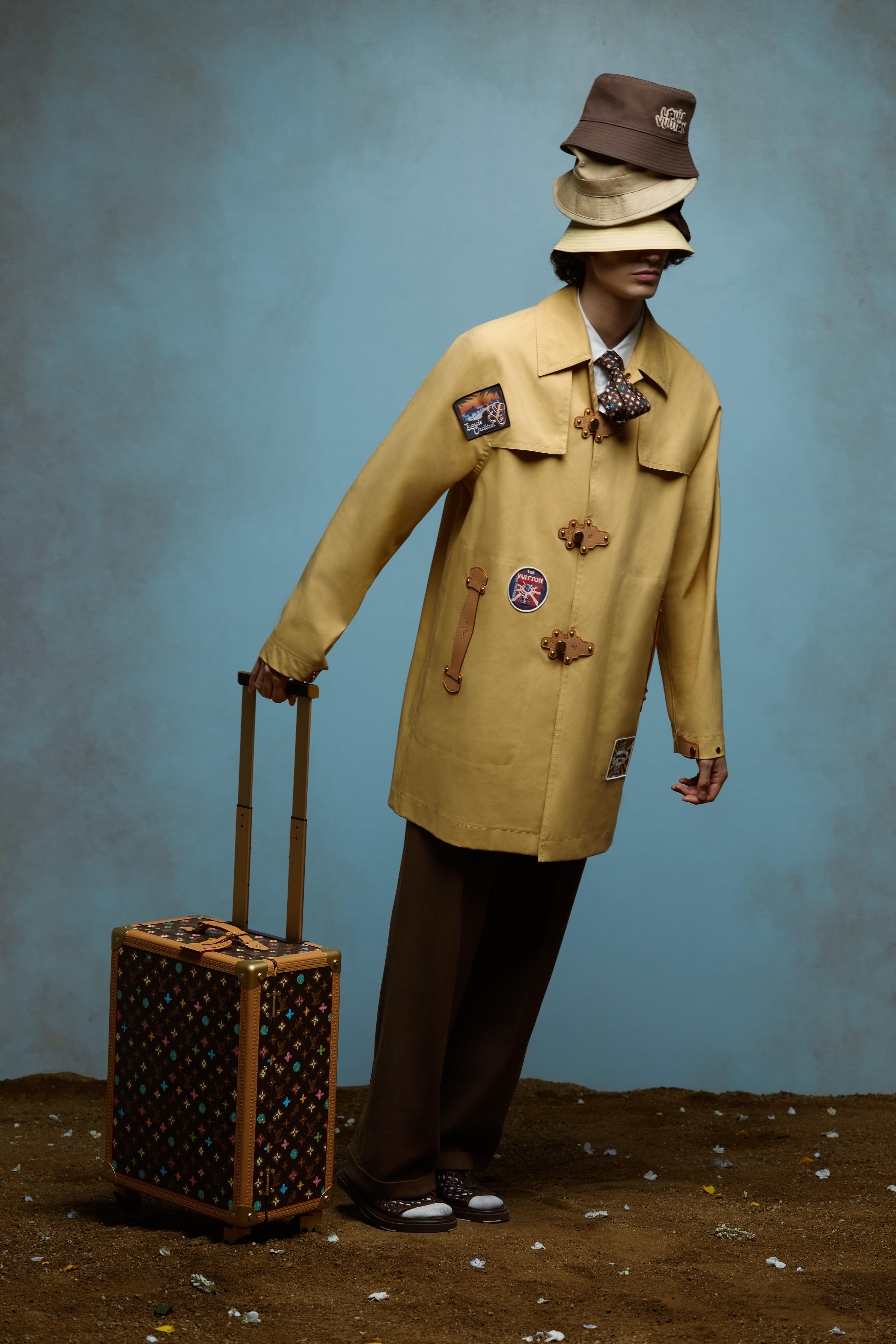
The "Craggy Monogram" is the soul of this collaboration. If you look closely at the chocolate-brown and vanilla-cream canvases, the standard fleurs-de-lis are joined by two newcomers: daisies and Airedale Terriers. These are huge motifs in Tyler's own brand, Golf le Fleur, but seeing them integrated into the $3,400 Keepall 50 is a different kind of flex.
It’s personal.
Tyler famously said he wanted to make things he’d wear to a meeting or a grocery store. He doesn't do "costumes." That authenticity is why the secondary market is currently screaming. You aren't just buying a bag; you're buying a piece of his specific, pastel-colored brain.
Not Just Clothes: The Cereal Bowl Factor
We have to talk about the weird stuff.
While most designers are focused on the perfect leather jacket, Tyler decided Louis Vuitton needed a $590 cereal bowl. And a matching spoon.
It sounds ridiculous until you see it. The bowl features the Craggy Monogram and looks like something you’d find in a Wes Anderson film. There’s also a $68,000 Courrier Lozine 110 trunk and a $18,800 chessboard with "melted" pieces.
- The Chess Set: Tyler calls it one of the greatest things he’s ever made.
- The Golf Kit: Grass-green Damier pattern that makes a standard golf bag look boring.
- The Waffle Slide: A sandal that literally looks like a waffle with a pat of butter on top.
This level of playfulness is rare in luxury. Usually, "luxury" means "serious." Here, it means "fun."
How the Pharrell Connection Changed Everything
Pharrell Williams taking over as Men’s Creative Director was a polarizing move for some fashion purists. They wanted a "trained" couturier. But Pharrell’s "LVERS" philosophy is about community. He isn't trying to be the lone genius in the ivory tower.
By bringing in Tyler, he proved that Louis Vuitton could be a platform for the best creators in the world, regardless of their formal background. They are friends. They have a shared history of making "weird" cool.
The collection feels like a conversation between two people who really like clothes. The "Dandy" silhouette Pharrell has been pushing—wide trousers, short jackets, sophisticated prep—is the perfect canvas for Tyler’s "Le Fleur" aesthetic.
Pricing and Availability: The Cold Hard Truth
Look, it’s still Louis Vuitton.
The prices are eye-watering. A simple pocket organizer will set you back about $615. If you want the varsity jacket with the blooming logo, you’re looking at several thousand dollars.
Most of the "hype" items sold out almost instantly when they dropped on March 21, 2024. If you’re looking for them now in 2026, you're likely hitting Grailed or StockX. The "Vanilla" colorway items tend to hold their value better than the "Chocolate" ones, mostly because that off-white, hand-drawn look is so distinct from the classic LV brown.
What Most People Get Wrong About This Collab
People think this was a "streetwear" collaboration.
It wasn't.
Streetwear is hoodies and tees. This collection was about tailoring, knitwear, and high-end luggage. It was "preppy sophistication." We saw cable-knit jumpers, pleated chinos, and fringe-trimmed loafers.
If you call this streetwear, you’re missing the point. Tyler is obsessed with the "old world" of luxury—the trunks, the craftsmanship, the items that last fifty years. He just wants those items to have a little more color and maybe a dog on them.
Actionable Insights for Collectors
If you’re trying to track down pieces from the Louis Vuitton Tyler the Creator run, here is how to handle it without getting burned.
- Check the Lining: The grass-green Damier pieces (like the golf bags) have a specific Airedale Terrier motif lining. Fakes often miss the saturation of this green or the detail in the dog's face.
- Feel the "Crag": The print on the Craggy Monogram should have a slight texture change. It’s not just a flat screen print; it’s supposed to feel like a deliberate, slightly raised application.
- The Small Goods are the "Entry Point": If the trunks are out of reach, the "Eclair" pouch or the "Waffle" slides are the pieces that people actually remember. They have the most "Tyler" energy.
- Watch the Resale Premium: Don't FOMO into a 300% markup. Because this was a capsule, prices spiked early, but they tend to stabilize. Wait for a "Used - Excellent" listing rather than a "Brand New" one if you actually plan on wearing the stuff.
This collaboration changed the trajectory of Louis Vuitton’s menswear. It proved that the brand can be whimsical without losing its prestige. It wasn't a one-off marketing stunt; it was a blueprint for how luxury houses should collaborate with artists. Tyler didn't just design clothes; he built a world. And it’s a world that actually looks like a place you’d want to live.
If you’re hunting for these pieces, prioritize the items with the hand-drawn elements. Those are the ones that will be in museums in twenty years. The "standard" shapes are fine, but the Craggy pieces are history.