Let’s be real. If you just look at the back of a baseball card, you're missing half the story. The 2025 season just wrapped up, and looking at the major league batting leaders, it’s pretty clear that the old-school "batting average is everything" crowd is having a tough week.
Numbers don't lie, but they sure can be weird. We saw a guy win a batting title with a .304 average.
Seriously.
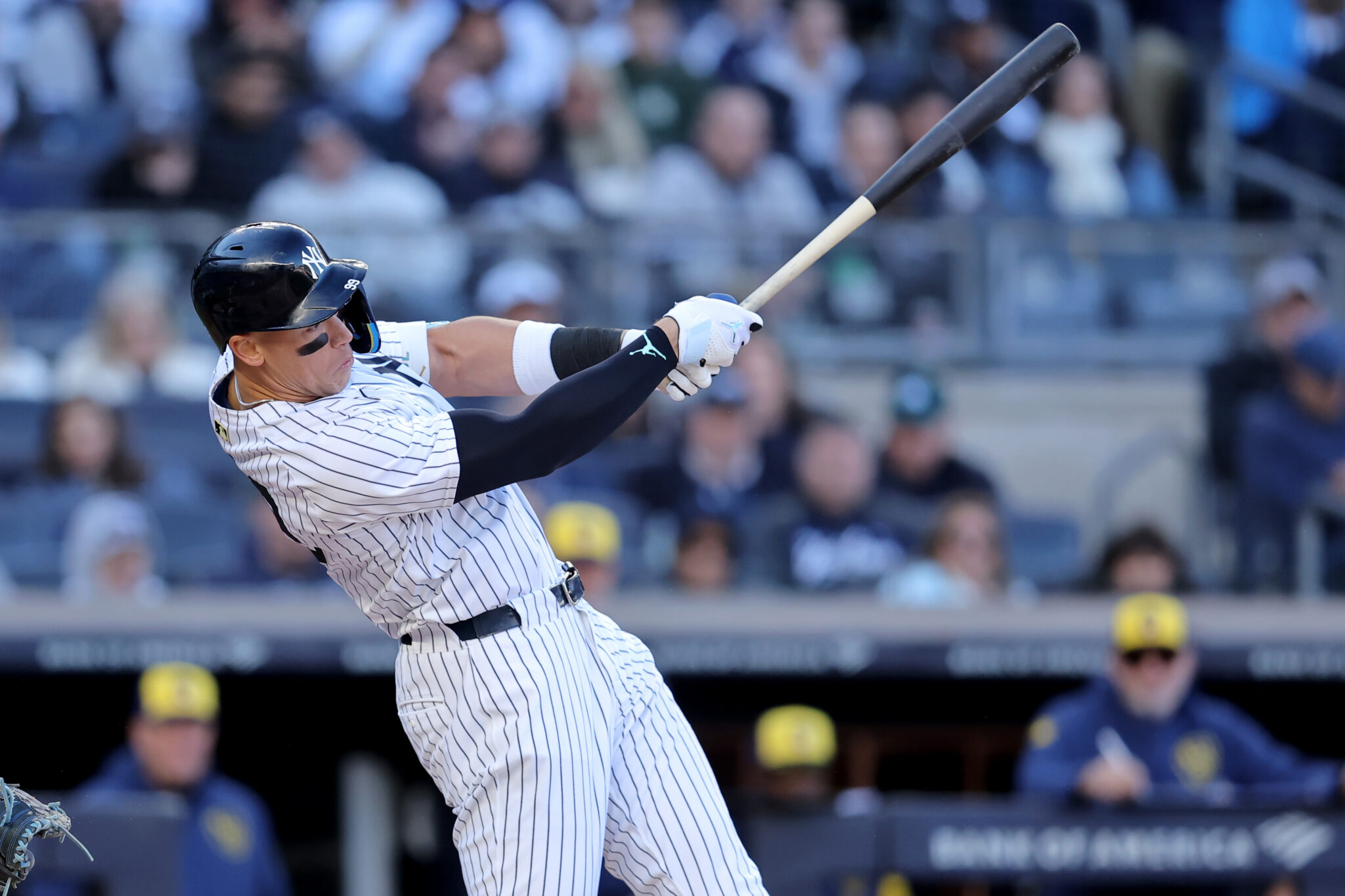
Trea Turner of the Philadelphia Phillies took home the National League crown with a .304 mark, which is actually the lowest average to ever win an NL batting title. It’s wild. For years, we thought Tony Gwynn’s "low" years were the floor, but Turner just lowered it. Meanwhile, in the American League, Aaron Judge was busy playing a different sport entirely. He finished at .331.
Judge didn't just lead; he dominated. If you're a Yankees fan, you've probably been screaming about his 1.144 OPS from the rooftops. You should. It's the kind of production that makes modern analytics experts drool and old-time scouts nod their heads in silent respect.
The Power Shift: Why Home Runs Look Different Now
We need to talk about Cal Raleigh. Most people think of "Big Dumper" as just a solid defensive catcher who can hack, but he led the entire world with 60 home runs in 2025.
Sixty.
He's the first catcher to hit that milestone. It’s honestly hard to wrap your brain around. While everyone was watching Shohei Ohtani (who finished with 55) and Kyle Schwarber (56), Raleigh was quietly—well, maybe not quietly—launching balls into the Seattle night.
Breaking Down the Top Sluggers
It wasn't just a three-man race. The 2025 major league batting leaders in the power categories showed a weirdly deep field. Eugenio Suárez found some fountain of youth in Seattle and cranked out 49 homers.
Junior Caminero? The kid is for real. He hit 45 for Tampa Bay.
If you look at the RBI leaders, it’s a similar story of "usual suspects" mixed with total surprises. Kyle Schwarber drove in 132 runs. He’s basically a walking run-producer at this point. Pete Alonso was right behind him with 126, proving that even as the Mets fluctuate, the Polar Bear stays consistent.
The Batting Average Myth and the Rise of the "Pure" Hitter
There is a massive misconception that the "pure hitter" is dead. People say everyone just swings for the fences now.
That's sorta true, but guys like Luis Arráez and Bobby Witt Jr. are keeping the art of the hit alive. Witt Jr. actually led the majors with 184 hits. He’s fast, he’s aggressive, and he’s exactly what the game needs.
Bo Bichette and Jacob Wilson both finished at .311 in the American League. Wilson, playing for the Athletics, is a name you’re going to hear a lot more of. His ability to put the ball in play is almost nostalgic. He’s not trying to hit it 500 feet; he’s trying to hit it where they aren't.
Why OBP Matters More Than You Think
Honestly, if you aren't looking at On-Base Percentage, you aren't looking at the right major league batting leaders. Aaron Judge posted a .457 OBP. To put that in perspective, he was basically on base every other time he walked up to the plate.
George Springer had a massive bounce-back year for Toronto, finishing with a .399 OBP. He’s 35-ish now, right? You wouldn't know it by the way he worked counts. Juan Soto (.396) and Ohtani (.392) were right there, too.
These guys aren't just "hitters." They are "baserunner creators."
The Speed Element: Stolen Bases and Total Bases
Speed returned to the game in a big way a few years ago, and 2025 solidified it.
The battle for the stolen base crown was a sprint—literally. José Ramírez and Chandler Simpson both swiped 44 bags. It’s kind of funny seeing a veteran like Ramírez still outrunning the kids.
But total bases? That’s where you see who the true monsters are. Shohei Ohtani led the majors with 380 total bases.
380.
Think about the amount of running that involves. Every double, every home run, every triple (he had several, including some in the postseason) adds up. Judge was close behind at 372. These two are the definitive major league batting leaders when it comes to sheer offensive impact.
What the Numbers Actually Tell Us About the Future
If 2025 taught us anything, it’s that the "three true outcomes" (walks, strikeouts, homers) might be peaking, but the "contact" guys are finding a niche.
You’ve got a catcher leading in homers. You’ve got a shortstop leading in hits. You’ve got a DH (Ohtani) leading in runs scored with 146.
The game is diversifying.
It's also getting younger in some spots and older in others. Seeing George Springer and Eugenio Suárez at the top of leaderboards in their mid-30s tells you that experience still counts for something when pitchers are throwing 102 mph.
Actionable Insights for Fans and Analysts
If you want to actually understand who the best hitters are, stop looking at the BA column first.
Start with OPS+ or wRC+ if you want the deep stuff, but for a quick glance, look at Total Bases and OBP. Those tell you who is actually putting pressure on the defense.
Check out the "Contact Rate" for guys like Jacob Wilson. It's a predictor for who will stay at the top of the major league batting leaders list next year. Consistency in contact is harder to maintain than a hot streak of power.
- Watch the Athletics. Jacob Wilson is the real deal and will likely be a perennial .300 hitter.
- Don't bet against Aaron Judge. Even as he ages, his strike zone discipline is getting better, which is terrifying for the rest of the league.
- Keep an eye on Cal Raleigh's workload. Sixty homers as a catcher is a massive physical toll; see how his 2026 starts before assuming he'll repeat it.
- Value the "run scorers." Shohei Ohtani scoring 146 times is a testament to both his power and his ability to be on base for the guys behind him.
The 2025 season was a statistical anomaly in some ways—especially with that record-low NL batting title—but it's the new reality of baseball. Power is up, but the value of a high-OBP "table setter" has never been higher.
Keep tracking the 2026 early-season splits. Pay attention to how the new wave of pitchers adjusts to guys like Raleigh and Caminero. The cat-and-mouse game never stops.