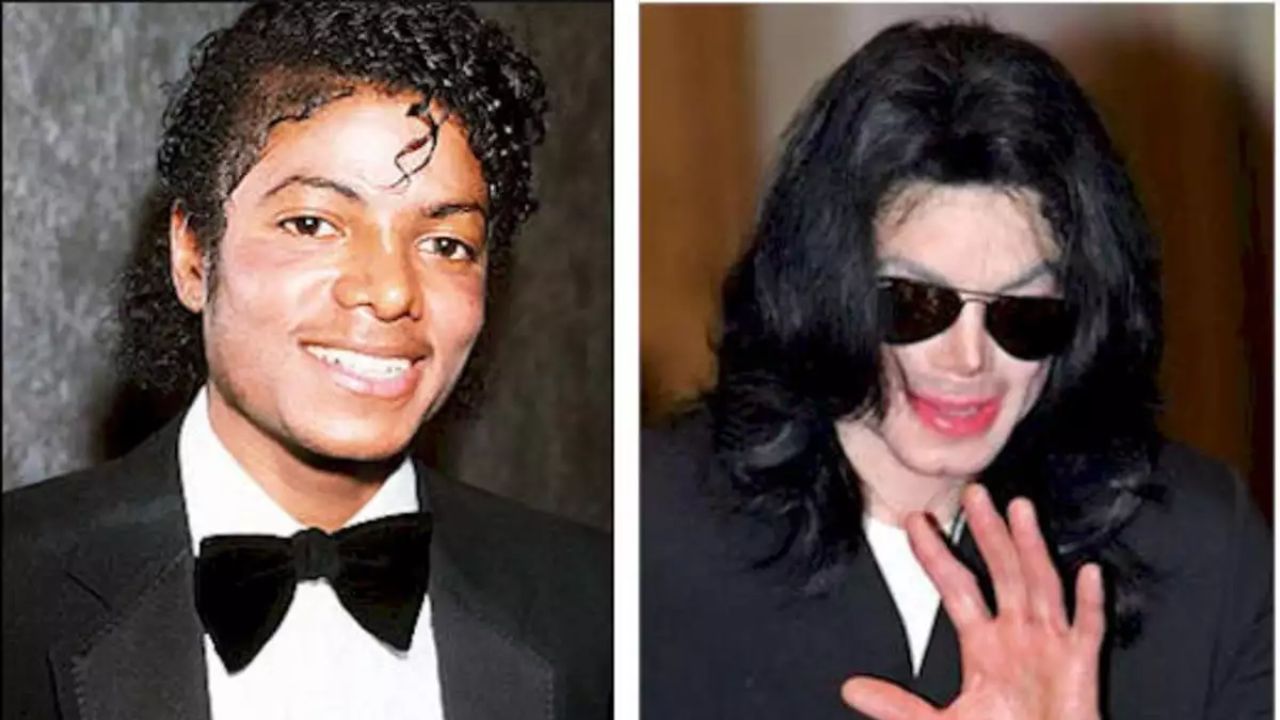
When you think of Michael Jackson, which face comes to mind? For a lot of people, it’s the porcelain-skinned, sharp-featured version from the Bad era or the later years of the 1990s. But there is a whole generation—and a massive archive of footage—that remembers Michael Jackson pre plastic surgery as a kid with a wide smile and a completely different silhouette. He was the face of Motown. He was the "bubblegum soul" prodigy with a face that quite literally charmed the world.
Honestly, the transformation wasn’t just about aesthetics. It became a global obsession. People dissected his nose, his chin, and his skin color like it was a national security matter. But if you strip away the tabloids and the "Wacko Jacko" headlines of the 80s, you find a young man who was grappling with a very public puberty while carrying the financial weight of his entire family.
The Jackson 5 Era and the Natural Look
Young Michael was objectively a handsome kid. During the Diana Ross Presents The Jackson 5 years, he had what many fans call his "original" face. Round cheeks. A broad, African American nose. A massive, healthy Afro. He looked like the kids he grew up with in Gary, Indiana, just with a lot more stage presence.
People forget how much he was bullied. Joe Jackson, Michael’s father, was notorious for his "tough love," which often crossed the line into psychological abuse. Michael famously recounted in his 1988 autobiography, Moonwalk, how his father would tease him about having a "big nose." He’d call him "Big Nose" to his face. Imagine being the most famous teenager on the planet and having your primary caregiver mock your most prominent feature. It leaves a mark. It creates a psychological dent that no amount of platinum records can fill.
By the time he hit his late teens, the "cute" factor was fading. He was dealing with severe acne. If you look at footage from the The Jacksons variety show in the mid-70s, you can see him trying to hide his face. He was self-conscious. This wasn't some vanity project starting out; it was a deeply insecure young man trying to find a way to like the person in the mirror.
The Off The Wall Transition
1979 was the turning point. This is the era many purists point to as Michael’s "peak" look. He had just released Off the Wall. He was 21. He looked like a leading man.
But this is also when the first documented surgery happened.
Michael had a rhinoplasty in 1979. The official story? He broke his nose during a complex dance rehearsal. He fell. It’s a common story in Hollywood, but in Michael’s case, there was some truth to the breathing issues it caused. He complained that his breathing was restricted, which affected his ability to hit high notes. This first surgery was subtle. If you compare the Off the Wall album cover to the Thriller cover from 1982, the bridge of his nose is slightly thinner, the tip a bit more defined.
It looked good. Most people would have stopped there.
The Thriller Peak and the Changing Silhouette
By 1982, Michael Jackson pre plastic surgery—at least the version people considered "original"—was gone, replaced by a more chiseled, "superstar" version. This was the Thriller era. This was the moment he became a god.
His cheekbones looked higher. His jawline was sharper.
In Moonwalk, Michael only admitted to two rhinoplasties and the creation of a cleft in his chin. He was very insistent about that. "I have had no cheekbone surgery, no eye surgery, no lip surgery," he wrote. Whether you believe that depends on how much you trust your own eyes versus his testimony. Medical experts, like Dr. Wallace Goodstein who practiced in the office where Michael had several procedures, later claimed the number of surgeries was much higher. But Michael's own narrative was one of minimalism, even as the world saw a radical shift.
Then came the fire.
In 1984, while filming a Pepsi commercial, a pyrotechnic mishap set Michael’s hair on fire. He suffered second and third-degree burns to his scalp. This is a massive piece of the puzzle that often gets skipped in the "vanity" conversation. The trauma from those burns led to multiple reconstructive surgeries. It also exacerbated his issues with pain medication and, some argue, his obsession with the medical process of "fixing" himself.
Vitiligo and the Skin Tone Shift
You can't talk about Michael Jackson pre plastic surgery without talking about his skin. By the mid-80s, he was noticeably lighter. The tabloids went wild, claiming he was "bleaching" his skin because he wanted to be white.
The truth was more medical. Michael had Vitiligo.
For the uninitiated, Vitiligo is an autoimmune disorder where the body attacks its own pigment cells. It results in white patches. For a Black man in the spotlight, this was a nightmare. He used heavy, dark makeup to cover the white spots for years. But eventually, the white patches became so widespread that it was easier to use a depigmenting cream (monobenzone) to even out the skin to the lighter shade.
His dermatologist, Dr. Arnold Klein, confirmed the diagnosis. Even the autopsy report from 2009 confirmed it. He wasn't trying to change his race; he was trying to hide a disfiguring skin condition. But because the skin change happened alongside the facial structure changes, the public lumped it all together into one big "transformation" narrative.
What Most People Get Wrong About the Early Years
There's a common misconception that Michael hated being Black. If you listen to his music from the late 70s and early 80s, it’s a love letter to R&B, soul, and funk. He was deeply rooted in the Black experience.
The tragedy of the Michael Jackson pre plastic surgery era isn't that he changed; it’s that he felt he had to. He was a perfectionist. He viewed his face like he viewed his dance moves or his vocal tracks. If it wasn't perfect, it needed to be edited.
He once said in an interview with Oprah Winfrey that he was "painfully shy." He used his changing appearance as a mask. The more famous he got, the more he wanted to hide behind a face that didn't remind him of the "Big Nose" kid from Gary.
The Nuance of the 1980s Glow-Up
If we look at the timeline objectively:
- 1958-1975: Totally natural. The Jackson 5 years.
- 1976-1979: Late teens. Severe acne, growing resentment toward his natural features due to bullying.
- 1979: First rhinoplasty.
- 1981-1984: The "Golden Era." Subtle changes, mostly focused on the nose and chin.
- Post-1984: The Pepsi fire and the onset of significant Vitiligo. This is where the "pre-surgery" look truly ends and the "reconstructive" era begins.
The Bad album (1987) showed a man who looked almost nothing like the kid from I Want You Back. The nose was pointier, the skin was pale, and the eyes looked different. This is the version of Michael that the younger generation knows best. But for the historians of pop culture, the Off the Wall version—the bridge between the boy and the icon—remains the most fascinating.
Understanding the Legacy of a Face
It's easy to judge from the outside. It's easy to look at the 2000s-era Michael Jackson and feel a sense of loss for the 1970s Michael. But Michael was a person, not a museum exhibit. He dealt with body dysmorphia, a condition that wasn't widely understood or discussed during his prime.
When people search for Michael Jackson pre plastic surgery, they are usually looking for a glimpse of the "soul" they felt was lost. They want to see the kid who could sing Who's Lovin' You with the wisdom of a 40-year-old man. They want the raw, unedited version of a talent that comes around once a century.
The reality is that Michael Jackson was always Michael Jackson. The talent didn't change with the nose. The work ethic didn't change with the skin color. But the face... the face became a canvas for his internal struggles.
Actionable Takeaways for Fans and Researchers
If you're looking to dive deeper into this specific era of pop history, don't just look at Pinterest photos. Those can be filtered or edited.
- Watch the Destiny Tour footage (1979): This is the best way to see Michael in his "natural" prime. He’s energetic, his face is expressive, and you can see the features that defined his youth before the heavy interventions of the 80s.
- Read Moonwalk: Even though he’s selective about what he admits, his descriptions of his childhood and his father's insults provide the psychological context for why he did what he did.
- Check the Autopsy Report: It’s morbid, but if you want the facts on his skin condition, the 2009 report is the only definitive scientific proof of his Vitiligo. It puts the "bleaching" rumors to rest once and for all.
- Listen to the Off the Wall demos: Sometimes the voice tells you more than the face. The raw, unpolished vocals from this era match the "original" face—honest, soulful, and vibrant.
Michael Jackson’s physical journey was a reflection of a man who never quite felt comfortable in his own skin, literally and figuratively. By understanding the "pre-surgery" era, we get a better look at the human being behind the myth—a kid from Indiana who just wanted to be perfect.