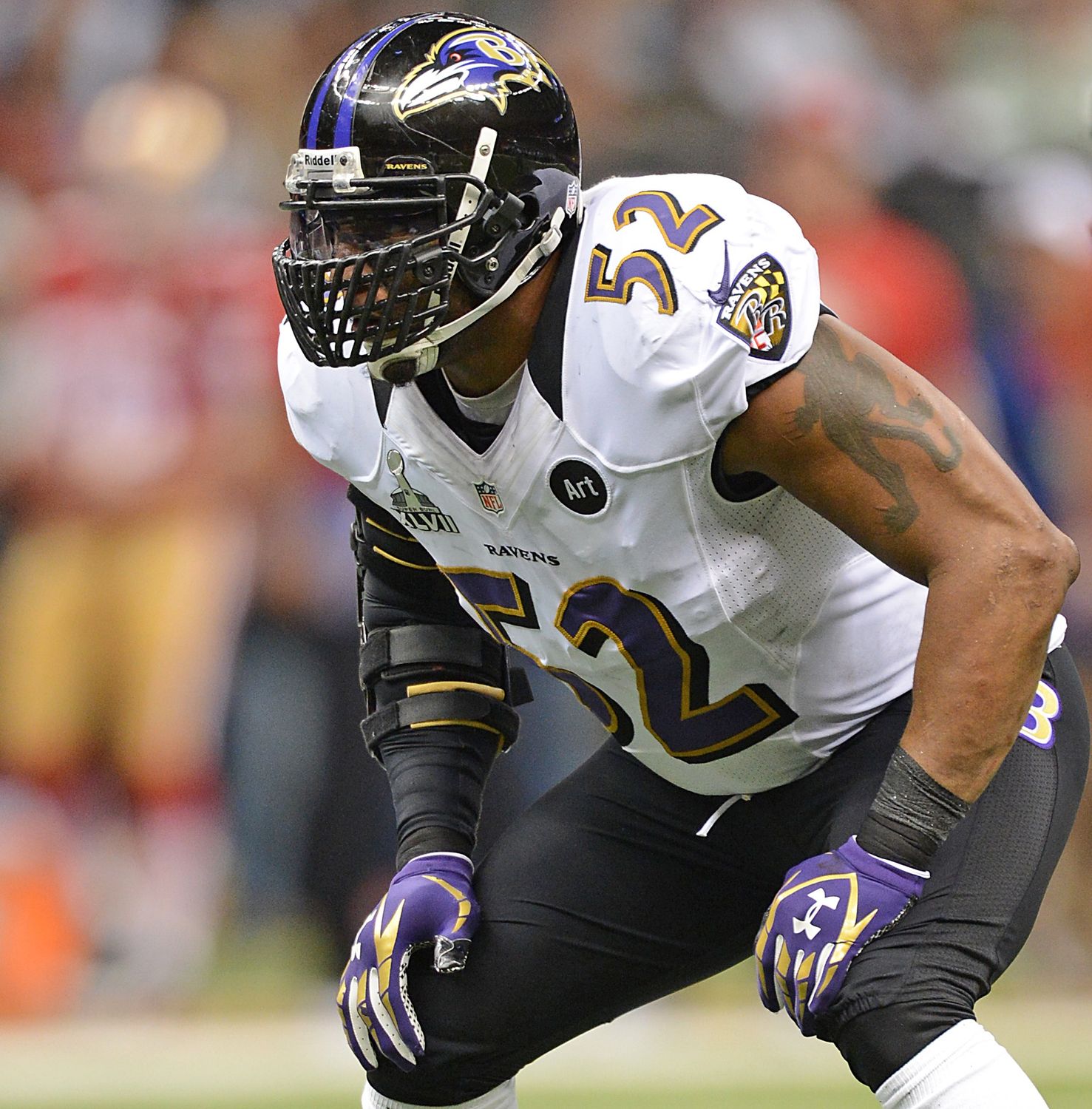
You’ve seen the dance. You’ve heard the gravelly, preacher-like speeches that could make a stone wall want to run through a brick building. But before the statues in Baltimore and the gold jacket in Canton, there was a skinny—well, relatively skinny—kid from Bartow, Florida, who almost didn't even get a scholarship to the University of Miami.
Honestly, the Ray Lewis Miami Hurricanes story is kind of a miracle of timing. He was the very last guy to get a scholarship in the 1993 recruiting class. Imagine that. The greatest middle linebacker to ever pull on a helmet was an afterthought. A "Plan B."
The Scholarship That Almost Wasn't
The 1990s in Coral Gables were different. It was "The U." The swagger was at an all-time high, and the competition for a roster spot was basically a gladiator pit. When Ray Lewis arrived in 1993, he wasn't the headliner. He was a 6-foot-1, 215-pound kid from Kathleen High School who people thought was too small to play the middle in a major conference.
He proved them wrong in about five minutes.
By the end of his freshman year, he wasn't just playing; he was starting. He took over the middle for the final five games of the '93 season and racked up 81 tackles. Two sacks. Two tackles for loss. People started realizing that while he might have lacked "prototypical" height, his lateral speed was terrifying. He didn't just tackle people; he hunted them.
Year Two: The Big East Takeover
If 1993 was the introduction, 1994 was the hostile takeover. Ray Lewis basically decided the Big East was his personal playground. He led the entire conference in tackles with 153. Think about that number for a second. That is nearly 14 tackles every single Saturday for three months straight.
He was the engine of a defense that ranked number one in the country. Miami only allowed 11.9 points per game that year. You don't do that without a middle linebacker who can cover the sidelines like a safety and hit like a truck. This was the year he earned First-team All-American honors, and suddenly, those "too small" comments disappeared.
Why Ray Lewis Miami Hurricanes Stats Still Break Brains
People talk about "empty stats" in football, where a guy makes a tackle five yards downfield after the damage is done. Ray wasn't that guy. His 1995 season—his junior year—is still the gold standard for linebacker play at Miami.
- 160 Total Tackles: This remains a staggering number.
- 95 Unassisted Tackles: This is the one that coaches still point to. He was finding the ball carrier and finishing the job alone.
- Back-to-Back All-American: He wasn't just a flash in the pan; he was consistent.
He finished his three-year career with 388 total tackles. That ranks him sixth all-time in Hurricanes history, which is wild when you realize everyone ahead of him played four years. Ray did it in three. He averaged 129 tackles per season. If he had stayed for his senior year? He would have absolutely shattered the school record held by Dan Connors (441).
The Nebraska Heartbreak
You can't talk about Ray's time at Miami without mentioning the 1995 Orange Bowl (at the end of the '94 season). It was for the National Championship. Miami was up 17-7 against Tom Osborne’s Nebraska. Ray and that defense were suffocating the Huskers.
Then the fourth quarter happened. Nebraska wore them down. Miami lost 24-17. It’s one of the few times you saw the legendary Miami swagger actually look human. Ray has talked about that game for years; it was a lesson in finishing that he clearly took with him to the NFL.
The "Too Small" Myth and the 1996 Draft
When Ray Lewis decided to skip his senior year, some scouts were still skeptical. They looked at his frame—which had bulked up to about 225-230 pounds—and worried he’d get washed out by NFL guards.
The Baltimore Ravens didn't care. They had the 26th pick in the 1996 draft. They had already taken offensive tackle Jonathan Ogden at number four. Taking Ray at 26 is arguably the greatest "first-round double-dip" in the history of the league. Two picks, two first-ballot Hall of Famers.
The Legacy of the 52
Why does Ray Lewis still matter to Miami fans? It’s because he bridged the gap. He represented the transition from the "Decade of Dominance" in the 80s to the legendary 2001 team. Even though he wasn't on that 2001 squad, he was the guy who taught those players—guys like Ed Reed and Jonathan Vilma—what it meant to be a Hurricane.
He wasn't just a player; he was the culture. He was the guy who stayed in the film room until the lights went out. He was the guy who treated every practice rep like it was the Super Bowl.
What most people get wrong
A lot of fans think Ray Lewis won a National Championship at Miami. He didn't. He played during a "down" stretch by Miami standards—if you can call 27-8 over three years a "down" stretch. But his individual dominance was so loud that it felt like they were winning titles every year. He was the Jack Harding MVP of the team in 1995 for a reason.
Actionable Insights for Fans and Athletes
If you're looking to understand the Ray Lewis impact or apply his "U" mentality to your own life, here’s how to look at it:
- Don't obsess over "measureables": Ray was told he was too short. He responded by becoming the most productive tackler in Big East history. If you have the speed and the "eye," the inches don't matter as much as the heart.
- Study the 1994 Miami Defense: If you're a coach or a player, watch the tape of the '94 Hurricanes. Notice how Ray plays "downhill." He doesn't wait for the play to come to him; he meets the pulling guard in the backfield.
- The "Last Scholarship" Mentality: Treat every opportunity like you were the last person picked. Ray never forgot that he was almost left out of the '93 class. That chip on his shoulder stayed there for 20 years.
The Ray Lewis Miami Hurricanes era was short—just three seasons—but it changed the position of middle linebacker forever. He turned it into a "sideline-to-sideline" role rather than just a "plug the hole" role. Whether you love the Canes or hate them, you have to respect the fact that for three years in the mid-90s, the best football player in America was wearing orange and green in South Florida.
To dive deeper into this era of football, you should look into the 1996 NFL Draft scouts' notes on Lewis; it's a fascinating look at how "experts" can totally miss the boat on a generational talent.