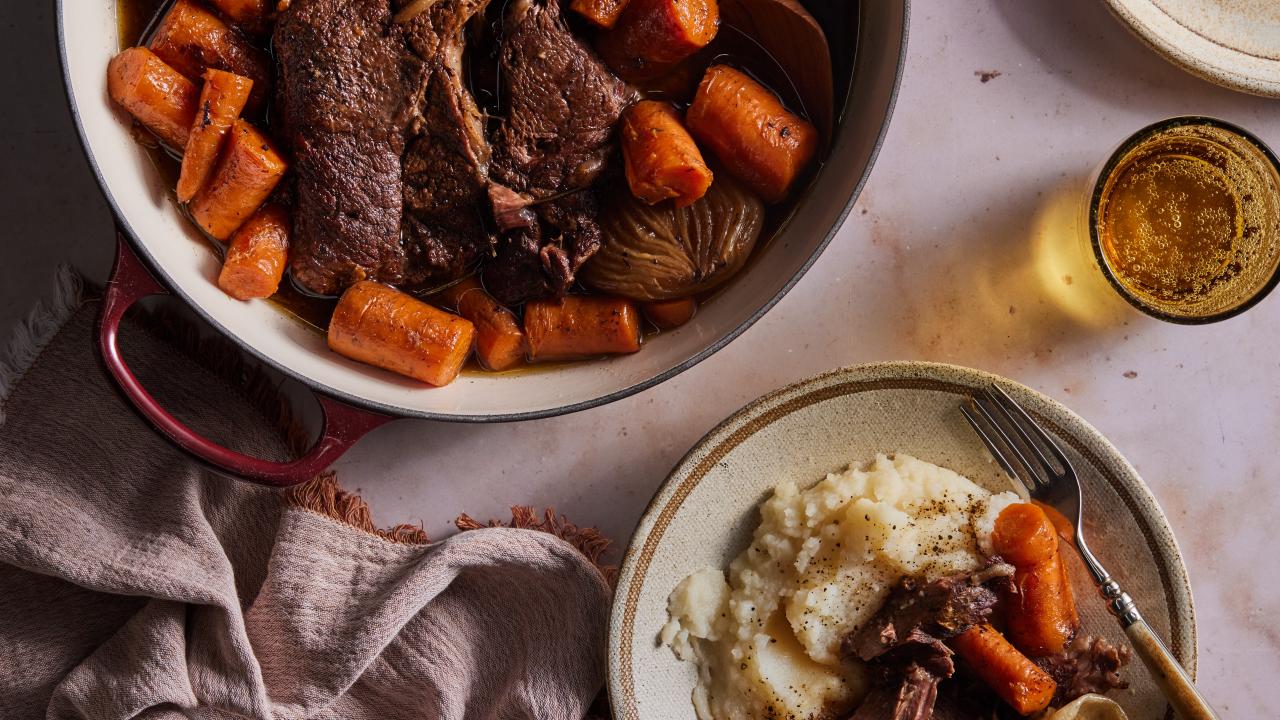
Pot roast is the ultimate "set it and forget it" comfort food, but honestly, it’s surprisingly easy to ruin. You’ve probably been there—anticipating a fork-tender masterpiece only to pull a gray, leathery brick out of the oven. This is exactly why the Ree Drummond perfect pot roast has become such a cult classic. It isn’t just a recipe; it’s a method that fixes the fundamental mistakes most home cooks make without even realizing it.
Most people think pot roast is just "meat in a pot." It's not. If you treat it like a chore, it tastes like one. Ree’s approach works because it respects the science of tough meat.
The Secret Isn't the Seasoning (It’s the Sear)
Listen, you can dump a gallon of herbs into that pot, but if you skip the sear, your roast will be boring. Period. Ree Drummond emphasizes a heavy-duty sear that most people are too scared to do. You want that oil hot. Not just warm—shimmering.
When that chuck roast hits the Dutch oven, it should scream. You aren't "cooking" the meat here; you’re creating the Maillard reaction. This is where those deep, caramelized flavors come from. If your meat looks gray when you pull it out to deglaze, you didn't go long enough. One minute per side is the standard, but use your eyes. It should be a rich, dark brown.
Why Potatoes Are (Controversially) Missing
Here is where the Ree Drummond perfect pot roast divides the internet. Ree doesn't put potatoes in the pot. I know, it feels like a betrayal. We grew up with those mushy, brown-tinted potato chunks soaking in the juice.
But she’s right.
Potatoes cooked for four hours in beef broth often turn into what she calls a "mealy mess." They lose their structural integrity and, frankly, they steal the spotlight from the meat. Instead, she advocates for serving the roast over a mountain of creamy mashed potatoes. This keeps the textures distinct. The silky mash acts as a landing pad for the rich, thin gravy. It's a game-changer for the mouthfeel of the entire meal.
What You'll Actually Need
- 3 to 5-pound chuck roast: Look for heavy marbling. Fat is flavor.
- 2 whole onions: Peeled and halved.
- 6 to 8 carrots: Cut into 2-inch chunks (don't even peel them, just wash them).
- Beef broth: Enough to cover the meat halfway.
- Fresh Rosemary and Thyme: Do NOT use dried stuff if you can help it.
- Red wine (Optional): About a cup for deglazing.
The Low and Slow Math
Temperature is the hill most pot roasts die on. People get impatient. They crank the oven to 350°F thinking it’ll be done faster. It won't. It'll just be tough.
The Ree Drummond perfect pot roast lives at 275°F. Why? Because the connective tissue (collagen) in a chuck roast doesn't just melt. It needs a slow, gentle heat to transform into gelatin. That transformation is what gives the meat that "melt-in-your-mouth" texture. If you rush it, the muscle fibers tighten up and squeeze out all the moisture before the collagen can break down. You end up with dry, stringy meat.
The timing is pretty simple:
- 3-pound roast: 3 to 3.5 hours.
- 4 to 5-pound roast: 4 hours.
Basically, if you can't shred it with a dull fork, it's not done. Put the lid back on and walk away for another thirty minutes.
Deglazing: Don't Leave the Good Stuff Behind
After you sear the meat and brown the onions and carrots, the bottom of your pot is going to be covered in blackish-brown bits. That is culinary gold. Ree uses red wine or beef broth to deglaze.
You pour the liquid into the hot pot while it's still on the stove and scrape like your life depends on it. Those bits dissolve into the liquid, creating a base that is infinitely more complex than plain broth. If you skip this, your gravy will be thin and one-dimensional.
Common Mistakes People Still Make
Even with a perfect guide, things go sideways. One big one? Not using enough salt. A five-pound hunk of meat is a lot of surface area. You need to salt it aggressively—more than you think is reasonable.
Another mistake is the pot choice. You need a heavy-bottomed Dutch oven with a tight-fitting lid. If the lid is loose, the moisture escapes, the liquid level drops, and the top half of your roast dries out. If your lid isn't airtight, throw a piece of foil over the pot before putting the lid on to create a better seal.
Actionable Next Steps for Your Sunday Dinner
To get the most out of this recipe, start by selecting the right meat. Walk past the "stew meat" and the "bottom round." Find the chuck roast with the most white flecks of fat.
- Prep ahead: Chop your carrots and onions the night before so you can just sear and go.
- The "Fork Test": At the 3-hour mark, don't just look at it. Take a fork and try to twist a small piece. It should give way with zero resistance.
- Rest the meat: Let the roast sit in its juices for 10-15 minutes after it comes out of the oven before you start shredding. This lets the fibers reabsorb some of that liquid.
If you follow the low-temperature rule and don't skimp on the sear, you'll see why the Ree Drummond perfect pot roast is the gold standard for home cooks. It’s about patience over technique.