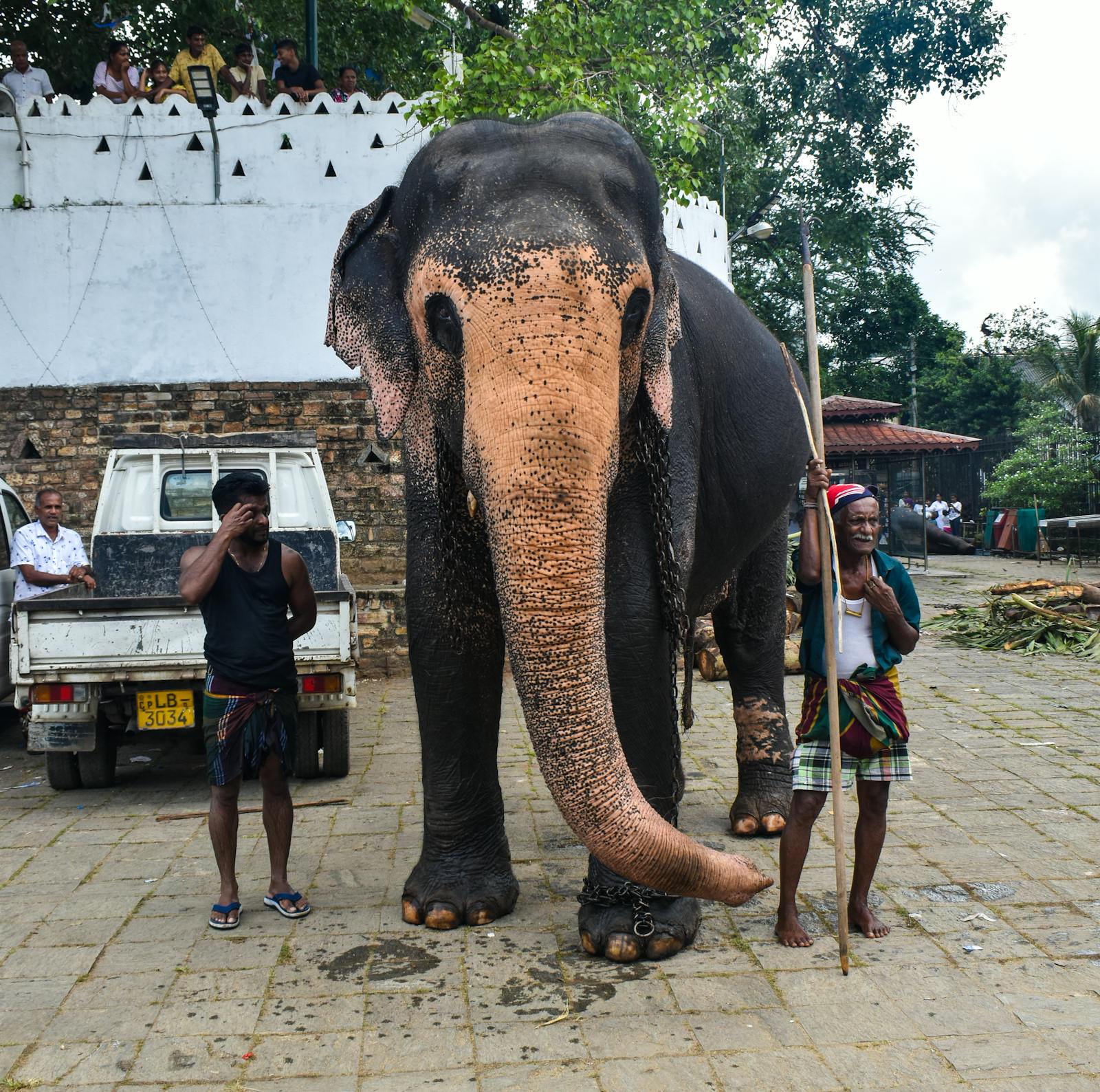
Elephants are everywhere in Sri Lanka. Seriously. You’ll see them plastered on ginger beer bottles, carved into the granite of 2,000-year-old temples, and, if you aren't careful, blocking traffic on the B350 near Habarana. But there’s a massive gap between seeing an elephant and actually understanding the Elephas maximus maximus. That’s the scientific name for the Sri Lankan elephant, a distinct subspecies that’s actually the largest and darkest of all Asian elephants.
People come here expecting a Disney movie. They want the "orphanage" photos and the majestic processions. The reality is much grittier. It’s a story of a shrinking island where 22,000 square miles have to accommodate 22 million humans and roughly 6,000 elephants. It’s messy. It’s loud. And if you’re planning a trip to see the elephants of Sri Lanka, you need to know that the "must-visit" spots on Instagram are often the places you should avoid the most.
The Myth of the "Orphanage" and the Pinnawala Problem
Let's get the uncomfortable stuff out of the way first. If you search for elephants of Sri Lanka, Pinnawala Elephant Orphanage is usually the first result. It sounds lovely, right? Rescuing babies from the jungle. Feeding them milk. It was started in 1975 by the Sri Lanka Department of Wildlife Conservation, and at one point, it really was a beacon of hope.
Things changed.
Today, many conservationists, like those at the Born Free Foundation and various local NGOs, view it more as a captive breeding facility than a true sanctuary. You’ll see elephants chained. You’ll see them being prodded by mahouts (handlers) to pose for photos with tourists. It’s a spectacle. If you want to see a wild animal behaving like a wild animal, this isn't it. Real rescue work is quiet. It’s hands-off.
If you actually care about welfare, head to the Elephant Transit Home (ETH) in Udawalawe instead. Supported by the Born Free Foundation, the ETH is the real deal. They take in orphaned calves, provide medical care, and—this is the crucial part—they release them back into the wild. Human contact is strictly minimized. You watch them from a wooden platform during feeding times, but you don't touch them. No selfies. No trunk-hugging. Just watching a bunch of rambunctious toddlers shove each other out of the way for a bottle of milk. It’s chaotic and wonderful.
Where the Wild Things Actually Are
Sri Lanka has one of the highest densities of elephants in Asia. You don't need to go to a zoo. You just need to pick the right park at the right time.
Minneriya and the "Gathering"
This is the big one. Between July and September, as the water holes in the north-central province dry up, hundreds of elephants migrate to the Minneriya Tank. This isn't a "tank" like a scuba tank; it’s an ancient man-made reservoir built by King Mahasen in the 3rd century. It’s an engineering marvel that still functions today.
The "Gathering" is probably the greatest wildlife show in Asia. You can see 200, 300, even 400 elephants in a single afternoon. They aren't just standing there. They play. They fight. The matriarchs lead the herds with an iron trunk. It’s a social hub. However, be warned: the jeep traffic can be insane. Sometimes there are more Land Rovers than elephants, which is a major management issue the Department of Wildlife Conservation (DWC) is currently struggling to solve.
Udawalawe: The Year-Round Guarantee
If you aren't visiting during the dry season, go to Udawalawe National Park. It’s basically guaranteed sightings. The park is mostly open grassland and scrub, which makes spotting them a lot easier than in the dense jungles of Yala.
Yala: The Leopard Shadow
Yala is famous for leopards, but its elephants are equally impressive. Because Yala borders the ocean, you sometimes get these surreal views of elephants walking along the dunes with the Indian Ocean crashing in the background. It’s visually stunning, but the park gets incredibly crowded.
Why "Pocketed" Elephants are a Warning Sign
You’ll often see a lone bull elephant standing by the side of the road, especially near the borders of Yala or on the road to Kataragama. Locals might call him "Rambo" or some other cute nickname. People throw him fruit from their car windows.
Don't do this.
Feeding these "roadside" elephants is a death sentence for them and a huge risk for you. These are "pocketed" elephants—bulls that have been cut off from their traditional migratory routes by farms and electric fences. They’ve learned that humans equal easy calories. But an elephant that loses its fear of humans is a dangerous elephant. When the fruit runs out, they get frustrated. They smash cars. They raid nearby villages. This is the heart of the Human-Elephant Conflict (HEC), which kills nearly 400 elephants and over 100 people in Sri Lanka every single year.
Dr. Prithiviraj Fernando, one of the leading elephant experts at the Centre for Conservation and Research, has spent years arguing that electric fences are often put in the wrong places. Instead of fencing elephants in to parks they don't want to stay in, he suggests fencing people and crops out. It’s a subtle shift in thinking, but it’s the only way the elephants of Sri Lanka survive the next century.
The Cultural Weight: From Temples to War
You can't talk about these animals without talking about Buddhism. In Sri Lanka, the elephant is sacred. They are the "bearers" of the Sacred Tooth Relic of the Buddha during the Esala Perahera in Kandy. This is a massive festival where a lead tusker, draped in elaborate silks and lights, carries a golden casket through the streets.
It's a point of intense pride for Sri Lankans.
But it’s also a point of intense controversy. Animal rights groups point to the noise, the chains, and the stress of the crowds. Proponents argue it’s a thousand-year-old tradition that honors the animal’s status. It’s a complex, deeply ingrained cultural tug-of-war.
Historically, elephants were also the tanks of the ancient Sri Lankan kings. During the battle of Wijithapura, elephants were used to batter down city gates. They were even trained as executioners. This long history of co-existence—sometimes violent, sometimes spiritual—is why the locals have such a complicated relationship with them today. They respect them, they fear them, and sometimes, they have to protect their livelihoods from them.
Practical Logistics: How to Visit Respectfully
If you're heading out to see the elephants of Sri Lanka, don't just book the first tour you see on a flyer in Ella or Colombo.
- Check the Season: Minneriya/Kaudulla is best from July to September. Udawalawe is great all year. Yala is best from January to July (but avoid the October/November monsoon).
- The Jeep Driver Matters: A good driver stays on the path and keeps a respectful distance. If your driver is "off-roading" or revving his engine to get the elephant to move for a photo, tell him to stop. It stresses the animal out.
- Time of Day: Early morning (6:00 AM) or late afternoon (3:30 PM) are the golden hours. Elephants are most active when it's cool. At noon, they’re usually hiding in the shade of the deep bush.
- Look for Tuskers: Fun fact—only about 7% of male Sri Lankan elephants actually have tusks. This is a genetic quirk compared to their African cousins. If you see a tusker in the wild, you’re looking at something incredibly rare.
What's Next for the Giants?
The future isn't guaranteed. Development is eating up the "elephant corridors"—those thin strips of forest that connect one national park to another. When a corridor is blocked by a new banana plantation or a hotel, the elephants don't just disappear. They try to walk through the plantation. The farmers fight back.
Conservationists are now using satellite collars to track these movements in real-time. By knowing exactly where the herds go, they can lobby the government to protect specific paths. It’s a race against time.
Actionable Steps for Your Trip:
- Skip the Rides: Never, under any circumstances, ride an elephant. Their spines aren't built for it, and the training process (called phajaan or "crushing") is brutal.
- Support the ETH: Visit the Elephant Transit Home in Udawalawe. Your entry fee directly funds the milk and medical care for calves being prepped for the wild.
- Stay in Eco-Lodges: Look for accommodations that are "elephant-friendly"—meaning they don't use aggressive electric fencing that blocks ancient paths.
- Report Abuse: If you see an elephant being mistreated at a temple or a roadside attraction, voice your concern to the local DWC office or post about it on travel forums. Public pressure works.
Sri Lanka is one of the few places on Earth where you can still see these massive beings in a state of relative freedom. It’s a privilege, not a right. When you stand in a jeep in Minneriya and a herd of sixty elephants walks past, silent despite their weight, you realize how small we really are. That feeling is worth protecting. Go see them, but do it in a way that ensures they’ll still be there when your grandkids decide to visit the Pearl of the Indian Ocean.