When you talk about massive California tremors, everyone immediately jumps to the big ones. 1906 San Francisco. 1989 Loma Prieta. 1994 Northridge. But there is a weird, often overlooked gap in the public memory regarding the 1993 earthquake in California. Or, more accurately, the series of earthquakes that rattled the state that year.
It wasn't just one event.
Most people honestly get the timeline mixed up. They think the Northridge disaster happened in '93 because the early 90s felt like one long, continuous vibration for those living in the Golden State. But 1993 was its own beast. It was a year of "warning shots" and localized chaos that fundamentally changed how we look at seismic risk in places like the Santa Cruz Mountains and the far northern coast.
The most significant event of that year hit on January 16, 1993. It was a magnitude 5.4 strike-slip quake centered near Scotts Valley. For those living in the Bay Area, it was a terrifying reminder that the scars from the '89 Loma Prieta quake hadn't fully healed. It wasn't a "world-ender," but it was a violent, jarring wake-up call that sent chimneys tumbling and nerves fraying across Northern California.
What Actually Happened During the January 1993 Scotts Valley Shake?
The ground didn't just roll; it snapped.
Centering just a few miles north of Santa Cruz, the January 16 earthquake struck at 7:44 AM. Most people were just reaching for their first cup of coffee. Because the depth was relatively shallow—about 11 miles down—the surface acceleration was intense. It basically felt like a massive truck had slammed into the side of every house in the county.
The U.S. Geological Survey (USGS) later confirmed it occurred on a secondary fault line, likely the Zayante fault or a nearby splinter of the San Andreas system. If you were in the Santa Cruz Mountains, the sound was actually worse than the shaking. It’s that low-frequency roar that starts in your bones before the walls start screaming.
The Damage Nobody Mentions Anymore
While it didn't level skyscrapers, the damage was localized and expensive.
- Chimney Failures: Hundreds of brick chimneys in the Santa Cruz and Watsonville areas, many of which had been repaired just three years prior, simply collapsed again.
- Infrastructure Stress: Over 50 homes in the immediate vicinity of the epicenter were ruled uninhabitable or required major structural retrofitting.
- The Psychological Toll: This is the part scientists don't always track in spreadsheets. After the 6.9 magnitude Loma Prieta quake in '89, the 1993 earthquake in California acted as a massive PTSD trigger. Business owners who had just finished rebuilding their storefronts in downtown Santa Cruz found themselves staring at new cracks in the plaster.
It's sorta fascinating how a "moderate" 5.4 can feel like a catastrophe when it hits a community that is already structurally and emotionally vulnerable.
The Eureka Swarm: Northern California's 1993 Seismic Nightmare
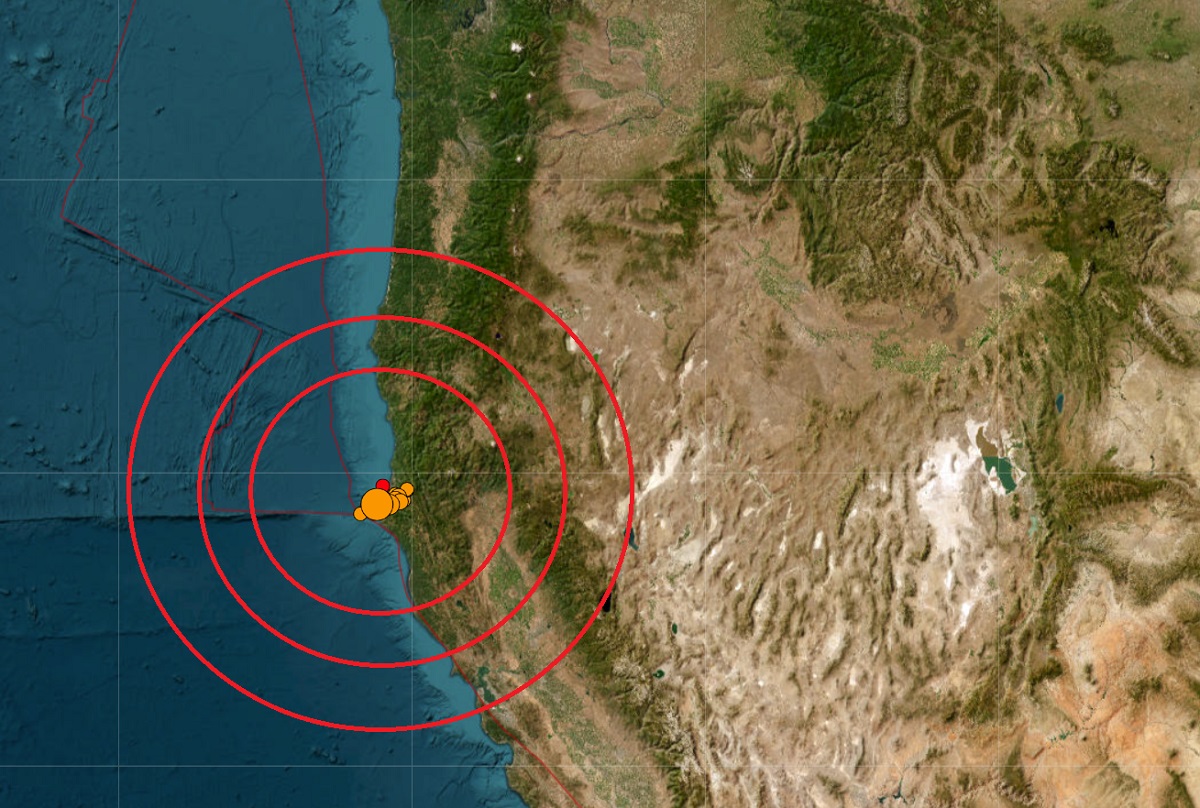
If you move your eyes up the map to Humboldt County, 1993 looks even more active. People forget that the Mendocino Triple Junction—where three tectonic plates meet—is basically the most seismically active spot in the lower 48.
Throughout 1993, the Eureka area was basically a giant vibrator.
In August of that year, a series of quakes, including a notable magnitude 5.3, rocked the North Coast. It wasn't a one-and-done situation. It was a "swarm." For weeks, residents in Eureka and Arcata were living out of "go-bags." Power lines swayed, windows shattered, and the local economy, already struggling with changes in the timber industry, took another hit as insurance premiums began to climb.
The sheer frequency of the 1993 earthquake in California activity in the north showed that the Gorda Plate was feeling particularly restless. Geologists like Gary Carver from Humboldt State University were sounding the alarm during this era, pointing out that these "smaller" 5.0 and 6.0 events were mere symptoms of the Cascadia Subduction Zone's massive potential.
Why 1993 Was the "Silent Teacher" Before the 1994 Northridge Disaster
Looking back, 1993 was the year of the "missed opportunity" for many homeowners.
Because the January and August quakes didn't result in a massive body count or billions in federal disaster aid, a lot of people ignored the signs. They didn't bolt their foundations. They didn't secure their water heaters. Then, exactly one year and one day after the Scotts Valley quake, the 6.7 Northridge earthquake hit Southern California on January 17, 1994.
The contrast was staggering.
1993 was the dress rehearsal that most people slept through. In the geological community, though, 1993 was a goldmine. The data collected from the Scotts Valley sensors helped refine the "ShakeMap" technology we use today. It taught engineers that secondary faults—the ones that don't have the famous "San Andreas" name—can be just as destructive to local communities because they are often closer to the surface and directly beneath residential zones.
The Misconception of "Small" Quakes
There’s this dangerous idea that a 5.0 magnitude quake "releases pressure" and prevents a big one.
Expert seismologists like Dr. Lucy Jones have spent decades debunking this. A 5.0 quake releases about 1,000 times less energy than a 7.0. You would need thousands of these 1993-sized events to actually bleed off the stress of a major plate movement. Instead of "releasing pressure," the 1993 earthquake in California events were actually loading stress onto adjacent segments of the fault lines.
How the 1993 Shakes Changed Building Codes (Without You Noticing)
You’ve probably seen those "Bolted and Braced" stickers on houses for sale in California.
A lot of that momentum started in the early 90s. The 1993 events proved that even moderate shaking could displace a house from its "mudsill" if it wasn't properly anchored. After '93, the California Earthquake Authority (CEA) started looking closer at how to incentivize homeowners to retrofit.
It wasn't just about the "Big One." It was about surviving the "Frequent Ones."
If you own a pre-1980s home in California today, the reason your insurance company asks about your foundation bolting is largely due to the data gathered during the 1992-1993 seismic cycle. We learned that wood-frame houses are incredibly resilient, but only if they stay attached to the concrete.
Actionable Steps: What You Should Do Based on the 1993 Data
History is useless if you don't use it. The 1993 earthquake in California teaches us that "moderate" earthquakes are actually the most common threat to your bank account and safety.
- Check Your Mudsill: Go into your crawlspace. Look at the wooden plate that sits on your concrete foundation. Are there bolts every 4 to 6 feet? If not, you are living in a 1993-style risk zone. A retrofit costs a few thousand dollars; a new house costs half a million.
- The Gas Shut-Off Myth: Don't just wait for a quake to buy a wrench. Install an automatic seismic shut-off valve. In the '93 Eureka quakes, several fires were narrowly avoided because of manual intervention, but you might not be home when the next one hits.
- Secure the "Killers": In the Scotts Valley quake, injuries didn't come from collapsing ceilings. They came from falling bookshelves and flying kitchen cabinet contents. Use museum wax on your valuables and L-brackets on your tall furniture.
- Review Your "Loss of Use" Coverage: Most people check their earthquake deductible but forget "loss of use." If a 5.4 makes your house unlivable for three months while a contractor fixes the chimney and foundation, you need a policy that pays for your rental.
1993 wasn't the year of the "Big One," but it was the year California proved that even the "Small Ones" have a long memory. If you live in a seismic zone, treat the history of 1993 as your personal checklist. The Earth doesn't care if it's a "major" event or a "moderate" one when your water heater is leaking through your floorboards. Stay prepared, stay bolted, and keep your shoes under the bed.