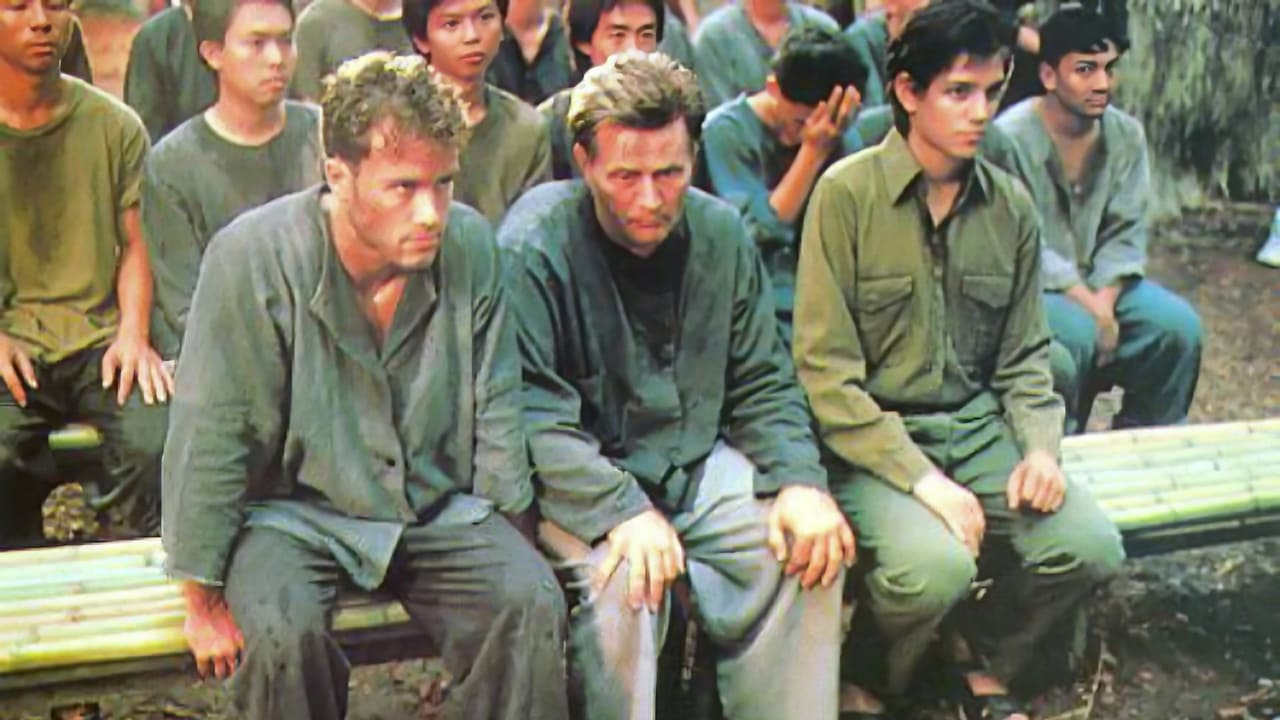
History is usually written by the winners, but in the case of Robert "Bobby" Garwood, it was written by the suspicious. You’ve probably heard the term "The Last POW." It’s a heavy title. It implies a lonely hero waiting for a rescue that never came, a Rambo-esque figure holding out in the jungle long after the helicopters stopped buzzing over Saigon.
But the reality of The Last POW: The Bobby Garwood Story is way more complicated than a simple war movie. It’s messy. It’s controversial. Honestly, it’s one of the most polarizing chapters in the entire Vietnam War.
Bobby Garwood didn't come home with the 591 prisoners during Operation Homecoming in 1973. He didn't even come home in 1974 or 1975. He didn't step foot back on American soil until 1979, fourteen years after he first vanished near Da Nang. When he finally walked into a Finnish diplomat's arms in a Hanoi bar, he wasn't greeted with a parade. He was greeted with a court-martial.
What Actually Happened in 1965?
Bobby Garwood was a 19-year-old Marine motor pool driver when he disappeared on September 28, 1965. He had ten days left on his tour. Ten days. He was driving a Jeep alone—something you basically never did in a combat zone—to pick up an officer. He got lost. Or he was ambushed. Or, as some of his accusers later claimed, he just drove away.
The North Vietnamese captured him. For the next several years, Garwood’s life becomes a blur of conflicting testimonies.
Garwood says he was tortured, broken, and kept in a cage. He says he was driven to the brink of insanity by "coercive persuasion." But other POWs who were held in the same camps told a very different story. They remembered a man who wore a North Vietnamese uniform. They remembered a man who carried a Soviet-made rifle and lived in the guards' quarters. They called him a "crossover."
The Trial That Divided the Corps
When Garwood returned in 1979, the Marine Corps didn't see a victim. They saw a traitor. His court-martial at Camp Lejeune was the longest in Marine history at the time. It was a media circus.
The prosecution brought in former POWs like David Harker and Gustav Mehrer. They testified that Garwood had interrogated them, hit them, and even participated in "re-education" sessions where he urged Americans to lay down their arms. They said he spoke Vietnamese fluently and hummed their songs.
- The Charges: Desertion, solicitation of U.S. troops to defect, and collaborating with the enemy.
- The Verdict: He was found not guilty of desertion. However, the jury of five Vietnam veterans found him guilty of collaborating with the enemy and assaulting a fellow prisoner.
- The Sentence: No jail time. He was reduced to the rank of private, forfeited all back pay (nearly $150,000), and received a dishonorable discharge.
It’s kind of a weird sentence, right? If he was truly a traitor who helped the enemy, why no prison? Some think the military just wanted the headache to go away. Others believe the jury recognized that fourteen years in a jungle prison—even if you "cross over" to survive—is a punishment in itself.
The 1984 Bombshell: Live Sightings
Just when the world was starting to forget about Bobby Garwood, he dropped a bomb. In 1984, he went to the Wall Street Journal and claimed he had seen other American POWs still being held in Vietnam as late as 1979.
This changed everything.
Suddenly, the "traitor" was the hero of the POW/MIA activist community. If Garwood was telling the truth, it meant the U.S. government had knowingly left men behind. He claimed he saw dozens of Americans in various camps, describing specific buildings and even naming a few names.
The Defense Intelligence Agency (DIA) went into overdrive. They interviewed him for hundreds of hours. They sent task forces to Vietnam to find these "masonry buildings" he described.
The result? They found nothing. The buildings weren't where he said they were. The locals hadn't seen any white men. The DIA basically labeled him a "stay-behind" who was making up stories to rehabilitate his image.
Why The Last POW: The Bobby Garwood Story Still Matters
You can't talk about Garwood without talking about the trauma of Vietnam. Was he a "white Vietnamese" who betrayed his brothers? Or was he a kid from a broken home who did what he had to do to breathe another day?
Even the 1993 TV movie starring Ralph Macchio couldn't quite decide. The film was actually delayed because the government was worried it would hurt morale during the Persian Gulf War. That tells you how much weight this story still carries.
Garwood remains the only Vietnam-era POW to be court-martialed for collaboration. That fact alone makes his story an anomaly. Whether you see him as a victim of "Stockholm Syndrome" or a cold-blooded opportunist, his case highlights the impossible choices people make in the most extreme conditions imaginable.
Actionable Insights from the Garwood Case:
- Question the Narrative: The Garwood story shows that "official" accounts and "personal" accounts often clash. When researching military history, look for the gaps between what the government says and what the veterans on the ground remember.
- Understand "Survival Behavior": Psychologists often point to Garwood as a case study in survival. In high-stress environments, the line between "collaboration" and "coping" is incredibly thin.
- The Importance of Documentation: The lack of a clear paper trail in 1965 is what allowed the controversy to fester for 60 years. Modern military record-keeping is designed specifically to prevent "disappearances" from becoming decades-long mysteries.
If you're looking into the history of the Vietnam War, don't just look at the battles. Look at the people who fell through the cracks. Bobby Garwood didn't just fall through a crack; he fell into a canyon, and we're still arguing about what he found at the bottom.
To learn more about the technical side of the investigation, you can review the archived DIA reports on the POW/MIA issue, which detail the exhaustive (and often frustrating) search for the men Garwood claimed to see.