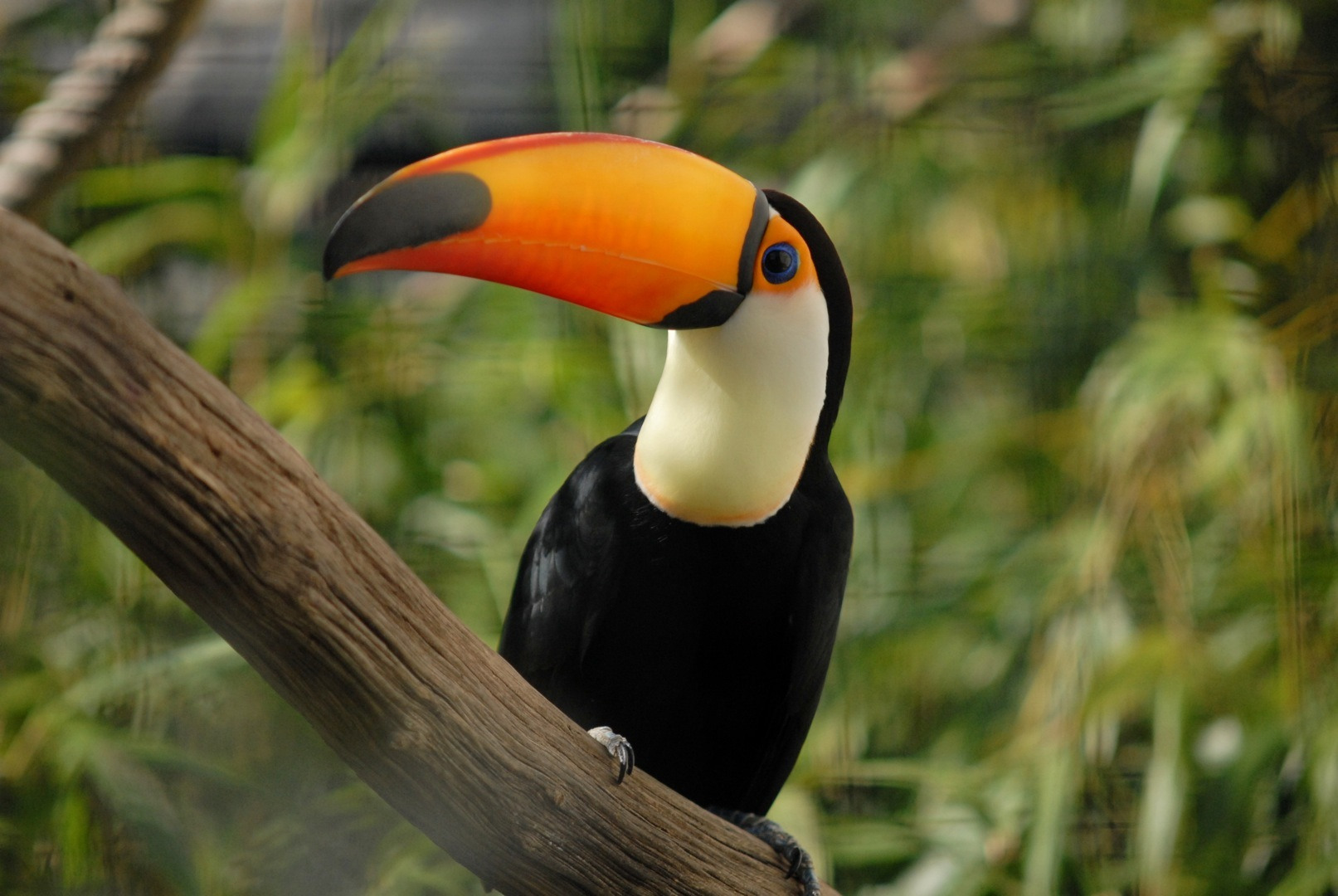
Close your eyes and imagine the Amazon. Most people picture a lush, green canopy vibrating with the melodic, flute-like whistles of exotic birds. Then a toucan opens its beak, and the illusion shatters. Honestly, if you’re expecting a song, you’re going to be disappointed. These birds don't sing. They croak.
What sound do toucans make exactly? It depends on the species, but "frog-like" is the description most ornithologists, like those at the Cornell Lab of Ornithology, settle on. It's a rhythmic, mechanical sound. It’s loud. It’s persistent. If you've ever heard a Wood Frog in a pond, you're halfway to identifying a Toco Toucan in the wild.
The Toco Toucan, the one with the famous orange beak you see on cereal boxes, has a voice that sounds less like a tropical bird and more like a rusty gate or a very large toad. They produce a deep, guttural cree-cree-cree or rr-rr-rr sound. It isn't musical. It’s a communication tool designed to cut through the thick humidity and dense foliage of the South American rainforest.
The Grunting Giants of the Canopy
When you look at that massive, lightweight bill, you might expect a resonance chamber that produces deep, booming echoes. Instead, the sounds are remarkably sharp and repetitive.
Toucans are social creatures. They live in small flocks. Because of this, their vocalizations aren't just about marking territory; they are about keeping the group together. A Keel-billed Toucan—often called the "sulfur-breasted" toucan—makes a sound that many birders compare to a cricket or a small machine. It’s a dry, raspy rrrit-rrrit-rrrit.
It’s weirdly rhythmic.
You’ll often hear one bird start, and then the rest of the flock joins in, creating a chaotic chorus that can be heard over half a mile away. Scientists who study Neotropical birds note that these calls change frequency based on the bird's excitement level. If a predator like a hawk or a snake is spotted, the croak becomes faster, more agitated. It’s a warning system.
Not Just Croaking: The Bill-Clacking Phenomenon
Vocal cords aren't the only way these birds make noise. Toucans are famous for "bill-clacking."
Think of it as a percussion instrument. They snap the upper and lower mandibles together rapidly. This produces a sharp, wooden clicking sound. They do this during social interactions, often when they are agitated or during courtship rituals. It’s a physical sound. You can feel the vibration if you're close enough.
In species like the Emerald Toucanet, which is much smaller and greener than its famous cousins, the vocalizations are even higher pitched and more "bark-like." They sound like tiny, yapping dogs high up in the trees. It’s bizarre to see a beautiful, regal bird emit a sound that belongs in a kennel.
Why Do They Sound So... Ugly?
Evolution doesn't care about aesthetics. The rainforest is a noisy place. Between the constant rain, the buzzing of millions of insects, and the howling of monkeys, a soft melody would get lost instantly.
Toucans evolved a vocal range that occupies a specific frequency "niche." By making low-frequency, harsh sounds, they ensure their calls don't get drowned out by the high-pitched whistles of tanagers or the hum of cicadas.
- Toco Toucans: Low, frog-like croaks.
- Keel-billed Toucans: Consistent, cricket-like rasps.
- Aracaris: (Smaller cousins) High-pitched squeaks and sharp barks.
Interestingly, toucans are also capable of some mimicry, though not to the extent of parrots. In captivity, some keepers have reported toucans imitating basic environmental noises, but in the wild, they stick to the script. Their anatomy is built for those guttural pulses.
The bill itself acts as a massive heat radiator. Research published in the journal Science by Glenn Tattersall and colleagues demonstrated that the toucan’s bill is one of the most efficient thermal regulation organs in the animal kingdom. While the bill is busy shedding heat to keep the bird cool, the syrinx—the bird's vocal organ—is busy pushing out those dry, rattling notes.
The Mystery of the "Talkative" Toucan
If you ever find yourself in the cloud forests of Ecuador or the lowlands of Brazil, pay attention to the timing. Toucans are most vocal at dawn and dusk. This is the "dawn chorus." While the songbirds are trying to out-sing each other with complex melodies, the toucans are just there to hold the beat.
They also have a "purr."
Yes, like a cat. When they are preening each other or sitting close to a mate, they emit a very low-frequency vibration. It’s a sound of contentment. It’s almost impossible to hear from the ground; you usually only catch it in specialized recordings or if you’re working in a rescue center like the Toucan Rescue Ranch in Costa Rica.
Comparing the Calls
| Species | Primary Sound | Vibe |
|---|---|---|
| Toco | Deep Croak | Grumpy Toad |
| Keel-billed | Rhythmic Rasp | Mechanical Cricket |
| Chestnut-mandibled | Loud Yelp | Excited Puppy |
| Many-banded Aracari | High Squeak | Rusty Hinge |
How to Spot One Using Your Ears
If you're trying to find a toucan in the wild, don't look first. Listen.
Most travelers make the mistake of looking for the bright colors. But the rainforest is a wall of green, and the shadows are deep. You will hear a toucan long before you see it. Listen for a repetitive, grating sound that doesn't quite fit the "bird" category in your brain.
Once you hear that rrrit-rrrit, look at the very tops of the tallest trees (the emergents). Toucans love to sit on the highest dead branches to call out. They want the sound to carry.
They also tend to "swing" their bills while calling. A calling toucan will often jerk its head up and down or side to side with every croak, acting like a feathered conductor. This physical movement helps throw the sound in different directions, making the small flock seem much larger and more intimidating to potential territory invaders.
What Most People Get Wrong About the Toucan Sound
The biggest misconception is that they "talk" like parrots. They don't. You won't find a wild toucan saying "hello" or mimicking your whistle. Their vocal structures are different. While parrots have a highly flexible tongue and syrinx for complex modulation, toucans are more limited.
Another myth is that they are quiet. They are actually some of the loudest birds in the forest. It’s just that their sound is so "natural" and earthy that many people mistake it for a frog or a large insect.
Actionable Takeaways for Bird Enthusiasts
If you're fascinated by the sounds of the canopy, here is how you can put this knowledge to use:
- Download the Merlin Bird ID app: It’s run by Cornell and has a massive database of toucan sounds. You can play them back to train your ear before a trip.
- Visit at dawn: If you are in a tropical region, the window between 5:30 AM and 7:00 AM is your best bet for hearing the full range of toucan vocalizations.
- Watch for the "toss": Toucans often make a specific clicking sound right before they eat. They toss their food into the air and catch it in the back of their throat. The bill-snap during this process is a distinct sound of its own.
- Don't ignore the croak: If you hear something that sounds like a frog in a tree, it’s almost certainly a toucan. Follow the sound to the canopy.
Understanding what sound do toucans make changes how you experience the tropics. It moves you from being a passive observer to an active participant in the forest's hidden language. Next time you see that iconic silhouette, listen for the rasp. It’s the true pulse of the rainforest.