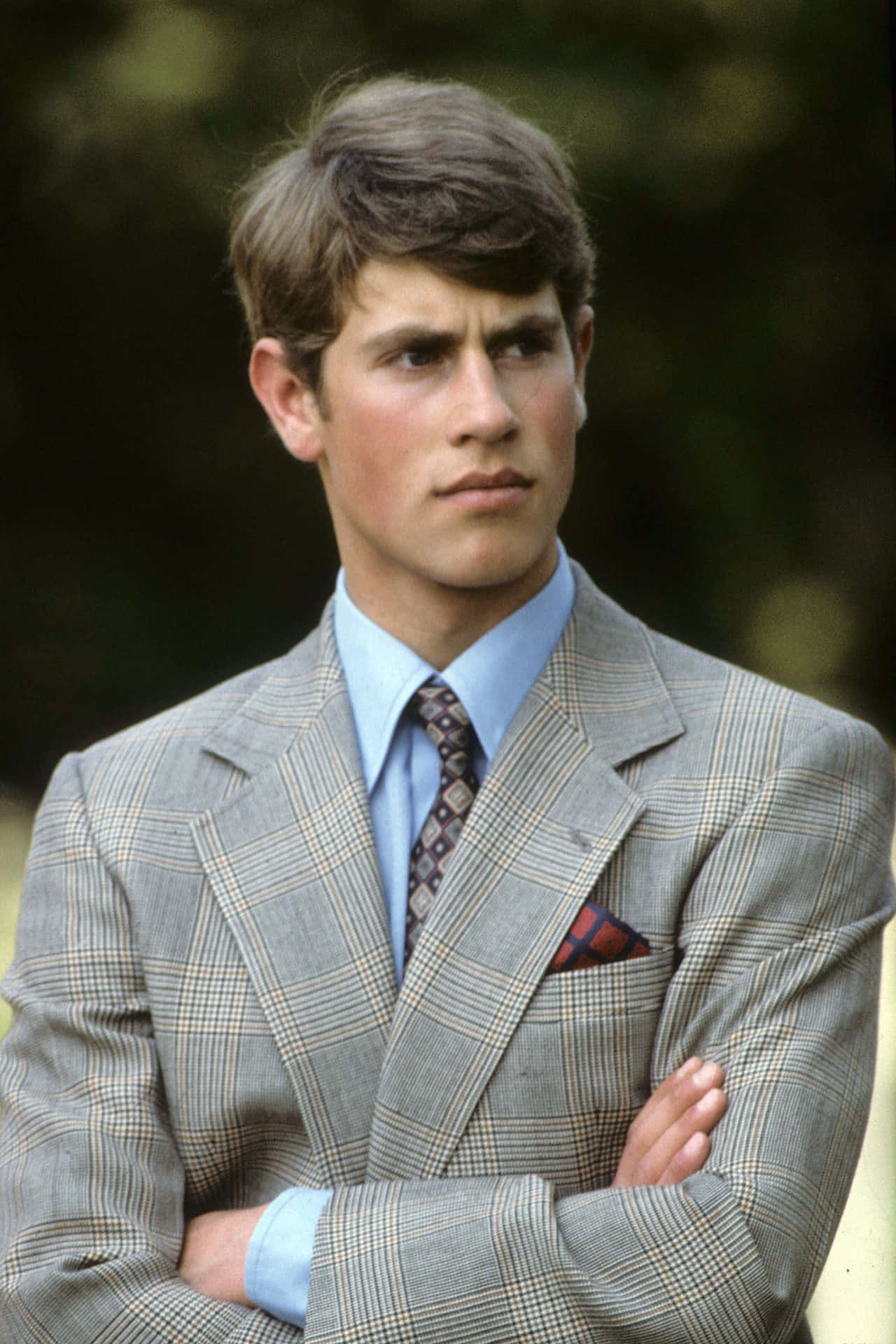
He’s the one you usually don't hear about. While the British tabloids spend decades dissecting every sneeze from Prince William or every flight taken by Harry and Meghan, the youngest son of Queen Elizabeth II just... works. If you’re asking who is Prince Edward, you’re looking at a man who successfully transitioned from being the "theatrical" outlier of the House of Windsor to its most dependable anchor.
He didn't have it easy at first.
Edward Antony Richard Louis, born March 10, 1964, was once the royal family's biggest question mark. He dropped out of the Royal Marines. He tried to make it in the cutthroat world of TV production. He was the "artsy" one in a family of military stoics. Fast forward to 2026, and he is now the Duke of Edinburgh—a title he inherited after his father, Prince Philip, passed away, and his brother, King Charles III, finally granted the request.
The Early Years and the Marines "Scandal"
Edward was the baby of the family. There’s a massive gap between him and Charles—sixteen years, actually. Because of that, his upbringing was a bit different. By the time he was a teen, the stifling protocols of the 1950s had softened. He went to Gordonstoun, just like his father and brothers, but he wasn't a natural athlete or a military man by grit.
Then came the 1987 "incident."
Edward had joined the Royal Marines as an officer cadet. It’s a brutal, grueling pipeline. Only a few weeks in, he quit. In the late 80s, this was a massive deal. The press called him "weak." There were rumors that Prince Philip was livid, though royal biographers like Ingrid Seward have since clarified that Philip was actually the most understanding family member, telling Edward to do what made him happy.
It was a turning point. It showed he wasn't going to just play the part if his heart wasn't in it.
The Television Experiment: Ardent Productions
After the Marines, Edward did something truly weird for a royal: he got a job. He worked for Andrew Lloyd Webber’s Really Useful Theatre Company. He loved the stage. He eventually formed his own company, Ardent Productions, in 1993.
Honestly, it wasn't a huge success.
Ardent made documentaries about royal history, which felt a bit like "self-dealing" to the British press. The company struggled financially for years. There was a particularly messy moment in 2001 when an Ardent film crew reportedly broke a media blackout regarding Prince William while he was at university. It caused a huge rift between Edward and Charles. By 2002, Edward stepped down from the company to become a full-time working royal.
He realized that you can't really be a private businessman and a Prince at the same time. The two worlds kept colliding, and the "firm" always won.
Sophie Rhys-Jones: The Secret Weapon
You can’t talk about who is Prince Edward without talking about Sophie, the Duchess of Edinburgh. They met at a real tennis event (a quirky, older version of the game) in 1993. She was in PR. They married in 1999 at St George's Chapel.
Unlike the explosive marriages of Charles and Diana or Andrew and Sarah Ferguson, Edward and Sophie stayed. They just... worked.
Sophie became incredibly close to Queen Elizabeth II. Some say she was the Queen’s favorite daughter-in-law. They shared an interest in military history and often spent Saturday afternoons together at Windsor Castle looking over old documents. This stability changed Edward’s public image. He went from being the "failed" producer to a stable, dedicated family man.
They have two children: Lady Louise Windsor and James, Earl of Wessex. You'll notice they don't have Prince or Princess titles. That was a conscious choice by Edward and Sophie to give them a "normal" life. It worked. Lady Louise is often praised for her work ethic and her close bond with her late grandfather, Prince Philip, inheriting his love for carriage driving.
The Duke of Edinburgh: A Title Earned
For years, people wondered if Edward would ever actually get his father’s title. When Philip died in 2021, the title technically reverted to the Crown. It was up to Charles to hand it out.
On Edward's 59th birthday, it finally happened.
Becoming the Duke of Edinburgh wasn't just a shiny new name. It was a massive responsibility. He took over the Duke of Edinburgh’s Award (DofE), a global youth achievement program that operates in over 130 countries. If you’ve ever hiked through the rain for a bronze medal, you know the DofE. Edward spends a huge chunk of his year traveling the world to meet these kids.
He isn't doing it for the cameras. Often, he’s in small town halls in the Midlands or remote schools in Canada, away from the paparazzi.
Why He Matters Right Now
The Royal Family is "slimmed down." That was Charles’s big plan. But with the King’s health battles and the Princess of Wales taking time for her own recovery, the bench of "working royals" got very short, very fast.
Edward and Sophie are the ones filling the gap.
They are the "safe pair of hands." You won't find Edward giving bombshell interviews to Oprah or writing tell-all memoirs. He’s the guy opening a new hospital wing or attending a commonwealth dinner.
- He represents continuity. He’s the bridge between the old guard of the Queen and the new era of King Charles.
- He handles the "un-glamorous" stuff. While others want the high-profile state visits, Edward is happy focusing on the arts and youth development.
- He’s a peacemaker. Within the family, Edward is often seen as the one who stays out of the drama, maintaining ties even when things get rocky between other members.
Common Misconceptions About Prince Edward
People think he’s boring. That’s the most common "take" on the Duke. But if you watch him in interviews, he’s actually quite witty—dry, British humor at its finest. He’s also incredibly passionate about the Paralympics and the arts.
Another myth is that he’s "distanced" from the throne. While he’s currently 14th in the line of succession (behind his brothers, their children, and their grandchildren), his importance to the daily functioning of the UK government is much higher. He is a Counselor of State, meaning he can step in for the King if Charles is ill or abroad.
He’s not the spare. He’s the support beam.
What You Can Learn From the Duke’s Path
Edward’s life is actually a decent blueprint for anyone trying to find their footing in a family business they didn't ask to join. He tried to do his own thing, failed publicly, took the hits, and then pivoted to find a way to make the "family role" his own.
He didn't try to be Charles. He didn't try to be Andrew. He carved out a niche in the Duke of Edinburgh Award and the arts, and he waited for the respect to follow.
It took forty years, but he got there.
How to Follow the Duke's Current Work
If you want to keep up with what he’s actually doing—rather than just the gossip—the official Royal Diary is the place to look. You’ll see him popping up in places like South Africa, Scotland, and small community centers across the UK.
- Check the Royal Circular for daily updates on his engagements.
- Look into the Duke of Edinburgh’s Award website if you’re interested in the charity work that defines his legacy.
- Watch the documentary The Duke: In His Own Words for a rare glimpse into his philosophy on service.
Edward has proven that being "quiet" isn't the same as being "inactive." In a world of loud personalities, he’s the one simply showing up.
Actionable Insight: When researching the modern monarchy, look past the headlines of the "top four" royals. Understanding the roles of the Duke and Duchess of Edinburgh gives you a much more accurate picture of how the British monarchy actually survives on a day-to-day basis. They are the operational core. If you're interested in youth development or the arts, Edward’s patronages are where the real work is happening. Focus on his speeches regarding the "non-formal education" sector—it’s where he’s making his most significant impact.