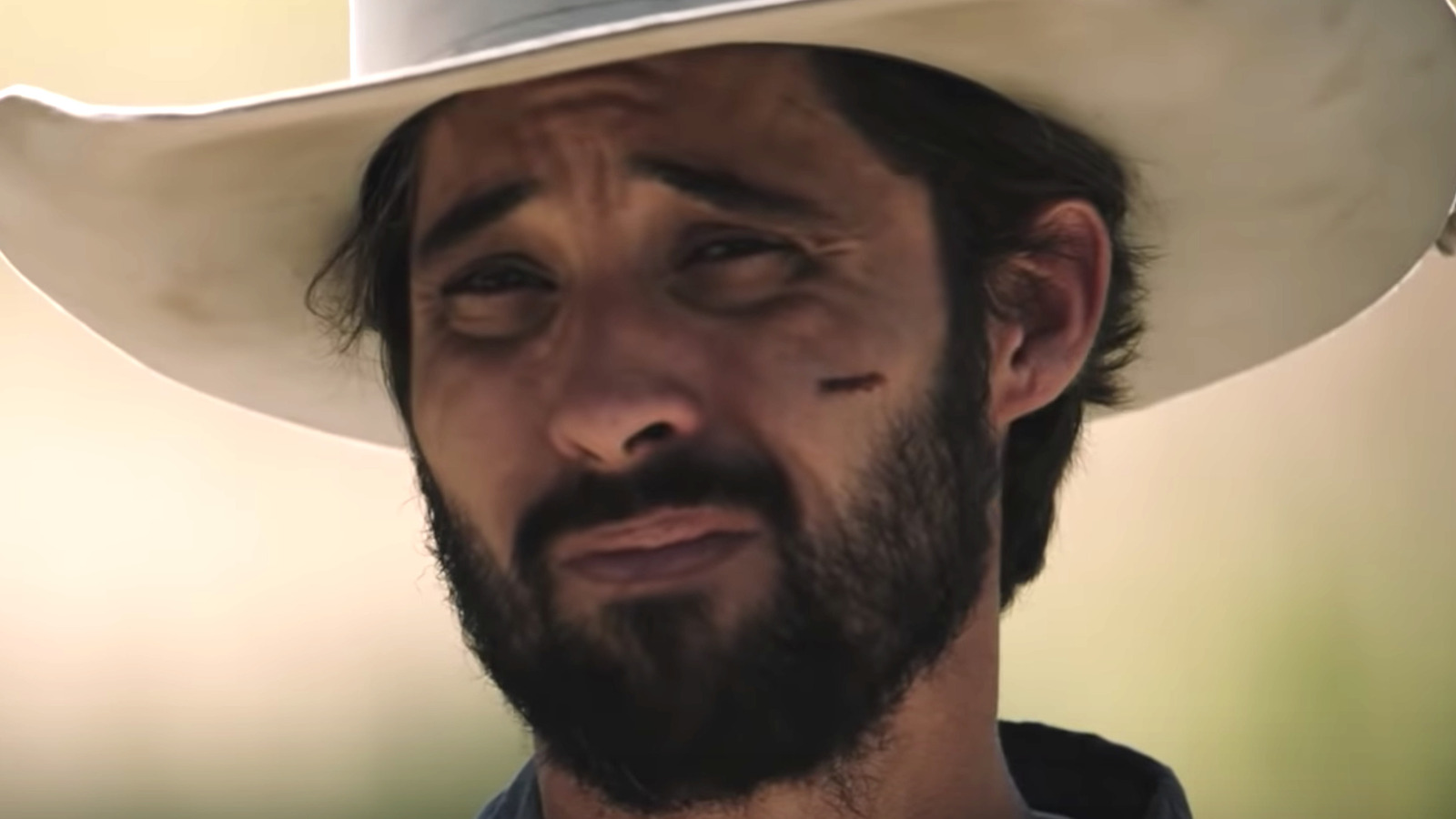
You know that guy with the guitar and the prison tattoo on his neck who makes Rip Wheeler’s blood boil every time he opens his mouth? That’s Walker. He’s the resident "philosophical cowboy" of the Dutton ranch, a man who seems to belong more to the open road than the brutal bunkhouse hierarchy. But if you’ve been watching the show and thinking his singing voice sounds a little too good to be just an actor faking it, you’re onto something.
So, who plays Walker on Yellowstone? The answer is Ryan Bingham.
He isn't just some Hollywood actor who took a crash course in riding horses. Honestly, it’s the other way around. Ryan Bingham is a Grammy-winning, Oscar-winning singer-songwriter who spent years on the actual rodeo circuit before Taylor Sheridan ever called him up. He’s the real deal. When you see him sitting on the fence post strumming a guitar, he isn’t lip-syncing to a studio track recorded by a session musician. That’s his life.
How an Oscar Winner Ended Up in the Bunkhouse
It’s a weird story. Most actors spend decades clawing their way into a hit show like Yellowstone. Bingham basically back-doored his way into the cast. Originally, Taylor Sheridan—the mastermind behind the whole Yellowstone universe—reached out to Bingham about writing some music for the show. Sheridan knew Bingham’s work from the film Crazy Heart, for which Bingham wrote the theme song "The Weary Kind."
That song didn't just win an Oscar; it defined a specific kind of gritty, modern Western melancholy.
Sheridan, being a guy who values authenticity over everything, found out Bingham had a background in rodeo. He didn't just want his songs; he wanted his vibe. He reportedly told Bingham that if he could ride a horse, he’d write him a part. Bingham’s response was basically, "Yeah, I can ride." And just like that, Walker was born.
He was initially supposed to be a small, guest-starring role. Maybe a few episodes. But fans (and Sheridan) loved the friction he created. Walker is the antithesis of the "loyal to the death" branded men. He’s a guy who just wants to do his job and go home, which makes him a massive liability in a world where the Duttons require you to bury bodies in "the train station."
The Authentic Background of Ryan Bingham
To understand why Walker feels so different from characters like Lloyd or Colby, you have to look at where Ryan Bingham actually comes from. He isn't from LA. He grew up in New Mexico and Texas, drifting between small towns.
By the time he was in his late teens, he was competing in professional bull riding.
Think about that for a second. While most actors are taking improv classes, Bingham was getting slammed into the dirt by 2,000-pound animals. That’s where the "Walker" swagger comes from. It’s a quiet, weathered confidence that you can’t really teach in an acting workshop. He’s lived the life the show depicts, albeit with fewer murders and more actual ranch work.
His music reflects that too. If you listen to albums like Mescalito or Junky Star, you hear the dirt and the diesel. It’s why his presence on Yellowstone feels so grounded. When he sings "Hallelujah" or "The Wolf" in the bunkhouse, it shifts the entire tone of the scene from a soap opera to a folk tale.
Why Rip Wheeler Hates Him So Much
The dynamic between Walker and Rip (played by Cole Hauser) is easily one of the best subplots in the series. It isn't just about ranch hierarchy. It’s philosophical.
Rip is the ultimate company man. He lives by a code of absolute, violent loyalty. Walker, on the other hand, represents the "drifter" archetype. He’s seen the inside of a prison cell—specifically Joliet—and he has no interest in going back or selling his soul to a family that doesn't own him.
This creates a constant, simmering tension. Every time Walker questions an order or shows a bit of humanity toward a victim of the Duttons, Rip sees it as a weakness that needs to be cut out. There’s that famous scene where Kayce is supposed to kill Walker but lets him go instead. When Walker eventually comes back, the look on Rip’s face is pure, unadulterated loathing.
The Music of Walker: More Than Just Background Noise
One of the coolest things about having Ryan Bingham play Walker is how the show integrates his actual discography. Usually, when a character sings in a show, it feels forced. Like a "musical episode" or a cheap gimmick. In Yellowstone, the music is the dialogue.
- "All Choked Up Again": A raw look at the transience of life.
- "Snake Eyes": Perfect for a guy who knows his luck is running out.
- "The Weary Kind": Even though this was from Crazy Heart, it looms over his entire persona.
Bingham has mentioned in interviews that he often doesn't know what Walker is going to do next until he gets the script. He’s just as surprised as we are when Walker survives another season. But the music allows him to bridge the gap between his two careers. It’s a rare synergy where the actor’s real-world talent makes the fictional world feel ten times more expensive and lived-in.
What Most People Get Wrong About the Character
People often think Walker is "soft." They see him complaining about the violence and think he’s a coward. Honestly? He’s probably the most logical person on the ranch.
In a world where everyone else is drinking the Dutton Kool-Aid and committing felonies for a piece of land they don't even own, Walker is the only one saying, "Hey, maybe we shouldn't kill people?"
He’s the moral compass of the bunkhouse, even if that compass is a little bit broken and cynical. He doesn't want to be a hero. He just wants to play his guitar and stay out of trouble. That’s what makes him a "gray" character in a show that is mostly black and white when it comes to loyalty.
Where Can You See Ryan Bingham Next?
Beyond the ranch, Bingham is still a touring musician. If you ever get the chance to see him live, do it. He’s got this raspy, whiskey-soaked voice that sounds even better in person.
As for the future of Yellowstone, things are always up in the air given the drama surrounding Kevin Costner’s exit and the shifts in the final episodes. However, Walker has become such a staple of the bunkhouse crew that it’s hard to imagine the series ending without some sort of closure for him. Will he finally get his "happily ever after" with Laramie, or will the ranch finally claim him?
How to Follow the Actor Behind the Character
If you want to keep up with the man behind the guitar, here’s what you should do:
- Listen to "American Love Song": This album shows the breadth of his songwriting beyond the Yellowstone vibe.
- Check out The Bingham Cup: He’s involved in various Western and rodeo events that keep him connected to his roots.
- Watch the 6666 Spin-off news: There have been rumors for years about which characters might migrate to the Texas-based spin-off. Given Walker’s history and Bingham’s own Texas ties, it wouldn't be shocking to see him show up there.
Basically, Ryan Bingham is the heart of the Yellowstone soundtrack and the soul of its more reflective moments. He’s the guy who reminds us that while the Duttons are fighting for power, there’s a whole world of people just trying to get by.
To fully appreciate the performance, go back and watch the scenes where Walker is forced to do something he hates. Look at Bingham’s eyes. That’s not just acting; that’s a guy who knows exactly how much weight a man can carry before he breaks. Whether he’s singing a ballad or dodging a punch from Rip, Ryan Bingham has made Walker an indispensable part of the greatest modern Western on television.