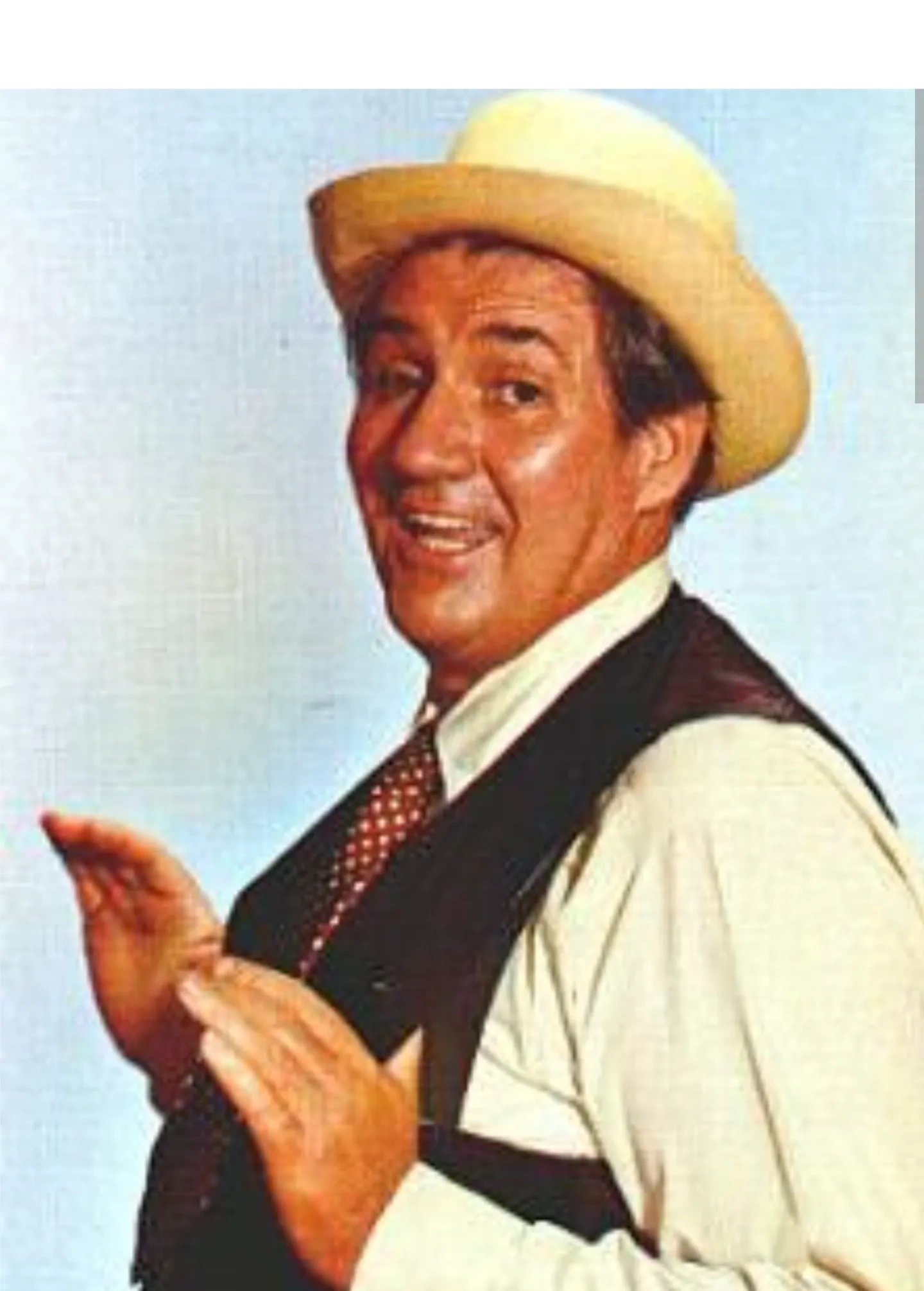
You know that feeling when you're buying something on a secondhand marketplace and you just know you’re getting fleeced, but the guy selling it is so charming you almost don't mind? That’s the legacy of Mr. Eustace Haney. Pat Buttram played the character with a wheezy, high-pitched drawl that basically defined the "traveling salesman" trope for an entire generation. Mister Haney Green Acres fans remember him as the man who sold Oliver Douglas a broken-down farm, but if you look closer, he was actually a genius of low-stakes psychological warfare.
He wasn't just a side character. He was the catalyst for every single disaster that happened in Hooterville.
The Art of the Hooterville Hustle
Mister Haney didn't just sell things; he sold "opportunities." Usually, those opportunities involved items that should have been in a landfill decades prior. When Oliver and Lisa Douglas moved from New York City to that dilapidated farmhouse, Haney was there before the dust even settled. He sold them the farm for a price that was clearly a robbery, and then, in a stroke of pure hustle, he spent the rest of the series trying to sell them back the very things he'd stripped from the property before they arrived.
That’s cold.
But here’s the thing: you can’t help but respect the grind. Haney wasn't some corporate shark. He was a guy with a truck—a 1924 Dodge Brothers truck that somehow ran on hopes and prayers—and a never-ending supply of "rare" artifacts. His business model was built entirely on the fact that Oliver Douglas was a "big city" intellectual who thought he was smarter than the locals. Haney knew better. He knew that Oliver’s ego was his biggest weakness.
Why the Character Worked
Pat Buttram brought something to the role that wasn't on the page. Before Green Acres, Buttram was Gene Autry’s sidekick. He had this authentic, gravelly voice that sounded like he’d swallowed a handful of Hooterville dirt. When he spoke, it sounded honest, even when he was trying to sell you a "genuine" antique that was clearly a rusted bucket.
The comedy worked because it was repetitive but always slightly skewed. You knew the truck would pull up. You knew the music—that distinct, bouncy "Haney Theme"—would play. You knew he was going to offer Oliver something absurd, like a "self-milking cow" or a "pre-owned thunderstorm." And yet, the delivery was always so earnest. It was the perfect contrast to Eddie Albert’s increasingly frustrated, red-faced reactions.
The Economics of a Mister Haney Sale
Let's break down how Haney actually operated. He was a master of the "Bundle."
He never just sold a tractor. He sold a tractor with a "custom" steering wheel (which was a hula hoop) and a "vintage" engine (which was a squirrel in a cage). He understood the concept of perceived value long before marketing gurus started writing books about it. In the world of Green Acres, Mister Haney was the only person who understood that money was a fluid concept.
- He identified a need (usually one he created).
- He presented a solution that was 90% garbage.
- He used high-pressure sales tactics masked as "neighborly advice."
- He disappeared the second the check cleared.
Honestly, if Haney were around today, he’d be running a multi-level marketing scheme or selling "exclusive" NFTs of farm equipment. He was a man ahead of his time. The way he could pivot from selling life insurance to selling "genuine moon rocks" in the span of thirty seconds is a masterclass in sales agility.
The Mystery of the Haney Truck
We have to talk about that truck. It was a character in its own right. Most people don't realize that the vehicle Haney drove was a 1924 Dodge. It was perpetually overloaded with everything from rocking chairs to live poultry. It represented the chaotic energy Haney brought to every scene.
You've probably wondered how he kept it running. The show never explained it. It was just another part of the Hooterville magic. It defied the laws of physics and mechanics, much like Haney’s logic defied the laws of common sense.
A Legacy of "Buyer Beware"
What most people get wrong about Mister Haney is thinking he was a villain. He wasn't. In the ecosystem of Hooterville, he was a necessary balance. Oliver Douglas wanted to play "gentleman farmer," which is an inherently elitist fantasy. Haney was the reality check. He was the tax that Oliver had to pay for trying to colonize a rural town with his Park Avenue ideas.
Green Acres was a satire of the "back to the land" movement, and Haney was the sharpest edge of that satire. He reminded the audience—and Oliver—that the "simple life" is actually incredibly expensive if you don't know what you're doing.
Beyond the Screen: Pat Buttram’s Genius
It’s impossible to separate the character from the man. Pat Buttram was a legendary wit. He once famously said of his own voice, "I have a voice that sounds like a handful of gravel thrown into a blender." That self-awareness is what made Haney so likable. You knew he knew he was full of it.
After Green Acres ended in 1971, Buttram became the go-to voice for Disney. If you grew up in the 70s or 80s, you heard Mister Haney’s voice in The Aristocats (Napoleon the hound), Robin Hood (the Sheriff of Nottingham), and The Fox and the Hound (Chief). He brought that same "shady but lovable" energy to every role.
But Haney remained his masterpiece.
The Technical Reality of Hooterville
To understand the impact of Mister Haney Green Acres segments, you have to look at the production. The show was produced by Filmways, the same company behind The Beverly Hillbillies. There was a specific "look" to these shows—saturated colors, high-key lighting, and a certain surrealism.
Haney’s appearances were often the most surreal moments of the show. He would appear out of nowhere, often in the middle of a field where Oliver was trying to plow. He didn't just walk; he materialized. This contributed to the feeling that he was less of a human and more of a recurring supernatural entity designed to test Oliver's patience.
Why We Still Watch
Why does a character from a 60-year-old sitcom still resonate?
Because everyone knows a Mister Haney. Maybe it’s the guy at the local car dealership who calls you "pal" a little too often. Maybe it’s the "influencer" trying to sell you a course on how to get rich quick. The archetype of the silver-tongued huckster is eternal.
But Haney was different because he wasn't trying to destroy Oliver. He just wanted a piece of the pie. There was no malice in his scams, only a deep, abiding commitment to the hustle. He was a survivor of the Great Depression era, and that "make a buck however you can" mentality was baked into his bones.
Actionable Takeaways from the Haney Method
If you're looking to apply some of Haney's "wisdom" (at your own risk), here is what his character teaches us about the world of business and human interaction:
- Understand your audience: Haney knew Oliver was a sucker for anything that sounded "authentic" or "traditional." He tailored his scams to fit Oliver’s specific brand of snobbery.
- The power of the "add-on": Never sell one thing when you can sell a dozen related (and useless) items.
- Persistence pays off: No matter how many times Oliver kicked him off the property, Haney came back the next day with a smile and a new "deal."
- Charm is the best lubricant: People are much more likely to forgive a bad deal if they enjoyed the person they made it with.
Mister Haney was the king of the side hustle long before the term existed. He turned a broken-down town into his personal marketplace. While Oliver Douglas was busy looking at the dirt and seeing "potential," Mister Haney was looking at Oliver and seeing a gold mine.
If you want to revisit the brilliance of Pat Buttram, start with the early seasons of Green Acres. Watch the way he uses his physical presence—leaning out of that truck, tip-toeing through the farmhouse—to dominate every scene. He didn't need a lot of screen time to leave a massive impression. He just needed a captive audience and a briefcase full of nonsense.
Next Steps for Fans:
- Check out the "Great Deals" compilation on YouTube to see Haney's best pitches.
- Listen for Pat Buttram’s voice in classic Disney films to see how the "Haney drawl" translated to animation.
- Pay attention the next time someone tries to sell you something "one-of-a-kind"—you might just be talking to a modern-day Eustace Haney.