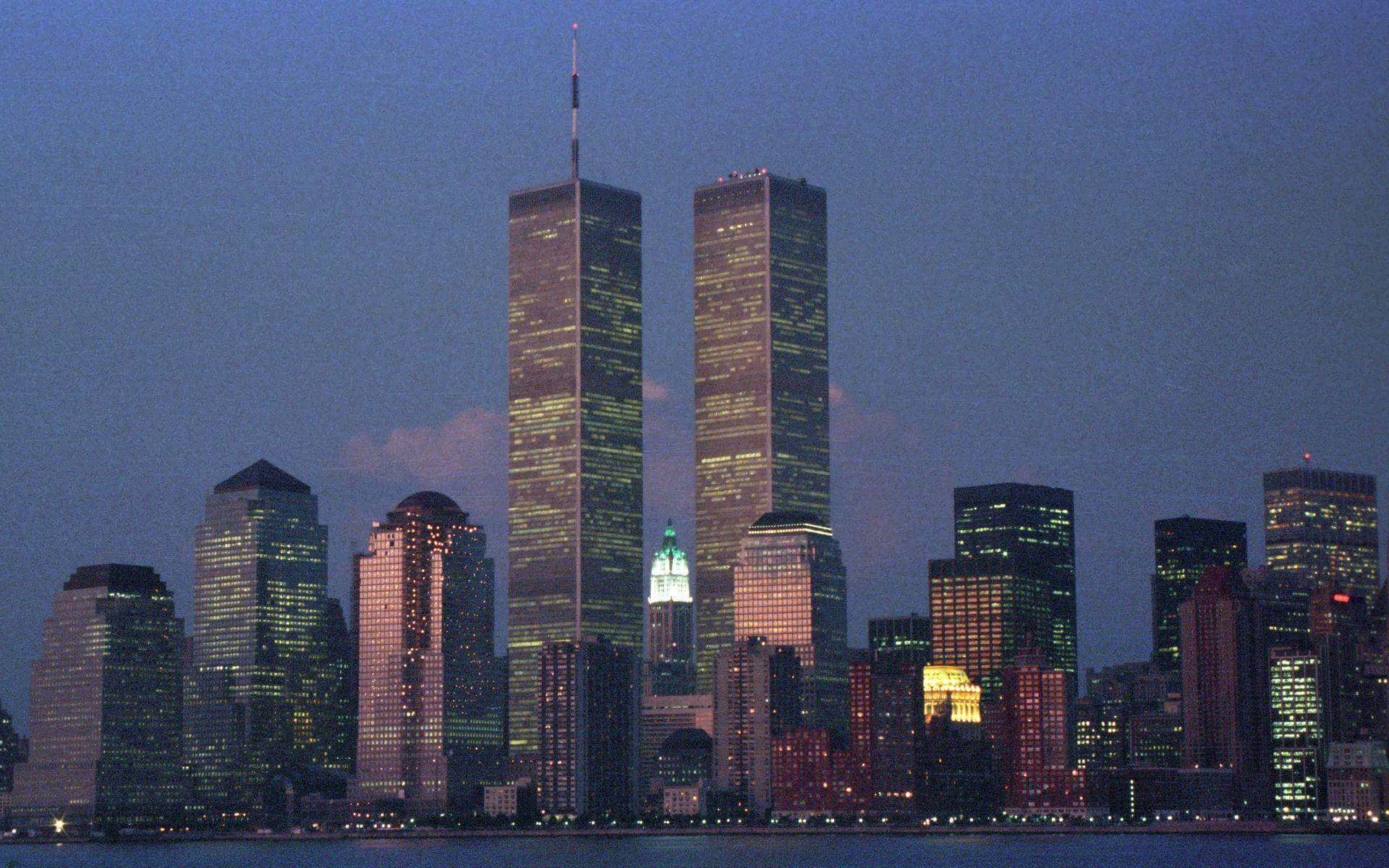
We’ve all seen them. Most of us can’t look away. There is something fundamentally haunting about pictures of the World Trade Center, whether they show the Twin Towers gleaming in the 1970s sun or the jagged skeletal remains that defined the early 2000s. It’s more than just architecture. It is a visual record of a shift in the world's DNA.
Honestly, if you go back and look at photos from the 1980s, the towers look almost like a mistake of scale. They were massive. Minoru Yamasaki, the architect, actually had a fear of heights, which is why the windows were so narrow—just 18 inches wide—to make people feel more secure. You don’t see that in the wide-angle shots of the Manhattan skyline, but it’s a detail that changes how you interpret the "feeling" of those buildings when you see close-up photography from that era.
The Evolution of the Skyline Through the Lens
Before 1973, the New York skyline was dominated by the Empire State Building and the Chrysler Building. Then, these two silver monoliths just... appeared. Early pictures of the World Trade Center often capture the construction phase, where the "tube-frame" structural system was visible. This was a radical departure from traditional skyscraper design. Instead of a forest of interior columns, the strength was in the exterior walls.
Photographers like Camilo José Vergara spent decades documenting the towers. His work is basically a time-lapse of a changing city. He captured them from across the water in Jersey City or from the rooftops of Harlem. Sometimes they looked like shimmering mirrors; other times, they were gray ghosts blending into the fog. It's wild how much the lighting changed the entire personality of the site.
When Everything Changed: The Ethics of the Image
We have to talk about the photography from September 11, 2001. It’s unavoidable. There is a massive ethical debate that still rages among archivists and historians regarding certain pictures of the World Trade Center taken that day.
Take, for example, Richard Drew’s "The Falling Man." It is perhaps one of the most controversial photographs in history. Some people find it exploitative. Others see it as the only way to truly document the impossible choices people faced. It wasn't just about the buildings anymore; the photography became about the human condition at its most desperate limit.
Then you have the "Dust Lady," Marcy Borders, captured by Stan Honda. The contrast in that photo is jarring. The gold-tinted dust of the collapsing towers coating a woman who looks like a statue. It’s a terrifyingly beautiful image of a horrific moment. That’s the paradox of 9/11 photography—it’s often visually stunning in a way that feels almost guilty to acknowledge.
The Missing Photos
Did you know there’s a whole category of "lost" photos? In the chaos of the collapse, thousands of rolls of film and digital cameras were destroyed. However, in recent years, more amateur photos have surfaced on old hard drives and in shoeboxes. These aren't the polished shots from The New York Times or Magnum Photos. They are grainy, tilted, and raw. They show the towers as they were in everyday life—a backdrop for a tourist’s hot dog or a blurry shape behind a wedding party at Liberty State Park.
Digital Archeology and the 1993 Bombing
People forget the 1993 bombing when they look for pictures of the World Trade Center. The photos from the sub-level parking garage are harrowing. A five-story crater. Twisted rebar. It was a precursor that the world didn't fully digest.
If you look at the FBI's evidentiary photos from '93, you see a different side of the towers. You see the guts. The mechanical rooms. The massive cooling systems. It reminds you that these weren't just icons; they were machines for commerce.
The Rebirth: One World Trade and the New Vision
The photography of the "Freedom Tower" (now One World Trade Center) serves a different purpose. It’s about resilience, sure, but it’s also about modern glass-and-steel aesthetics.
- The way the light hits the chamfered corners of the new building is a dream for architectural photographers.
- It creates a "kaleidoscope" effect that the old towers never had.
- Some critics say the new photos lack the "soul" of the originals.
- Others argue that the images of the 9/11 Memorial pools—the "Reflecting Absence"—are the most powerful pictures of the World Trade Center site today.
The scale of the "voids" where the original towers stood is hard to capture in a single frame. You almost need a drone shot or a wide-angle lens to understand the footprint. When you see a photo of someone touching a name engraved in the bronze parapets, the scale shifts from the monumental to the intimate. That’s the power of photography here—it bridges the gap between a 110-story skyscraper and a single human heartbeat.
How to Find and Use Historical Photos Legally
If you're a researcher or a creator looking for authentic pictures of the World Trade Center, you can't just grab whatever you find on Google Images. Rights are a big deal.
The Library of Congress is your best friend here. They have the Carol M. Highsmith Archive, which contains high-resolution, public-domain images of the towers from the 80s and 90s. They are crisp, gorgeous, and free to use.
The National September 11 Memorial & Museum also has an extensive digital collection. They are very protective of how the images are used, which makes sense given the sensitivity.
- Public Domain: Check the Library of Congress (LOC.gov).
- Editorial Use: Getty Images or AP Images (these cost money, a lot of it).
- Creative Commons: Flickr can be a goldmine, but you have to filter for "Commercial Use Allowed."
The Technical Side of the "Glow"
Ever notice how the towers looked orange or deep gold in sunset photos? That wasn't just the sun. The aluminum alloy cladding used on the exterior of the Twin Towers was designed to reflect the sky.
Basically, the buildings acted like a giant mirror. On a cloudy day, they looked blue or gray. At sunset, they looked like they were on fire—a tragic irony in hindsight. Photographers loved this. You could stand in the same spot at 8:00 AM and 6:00 PM and get two completely different buildings.
Why We Keep Looking
Psychologically, we return to these images because they represent a "before and after" point in history. You can look at a photo of the Manhattan skyline from August 2001 and it feels like a different planet. There’s a naivety to those photos.
I think we search for these pictures because we’re trying to reconcile the permanence of the steel with the fragility of life. It doesn't make sense that something so big could just... go away. Photography is the only thing that proves it was actually there.
Actionable Steps for Historians and Enthusiasts
If you are looking to dive deeper into the visual history of the World Trade Center, don't just stick to the first page of search results.
- Visit the New York Public Library Digital Collections: They have street-level photos from the 1970s that show the towers as they were being built, including the controversial demolition of "Radio Row" to make room for the complex.
- Explore the Haughwout Building Perspective: For the best historical "before" shots, look for photographers who shot from the SoHo area looking south.
- Check the NIST Reports: If you are interested in the structural side, the National Institute of Standards and Technology has thousands of technical photos of the debris and the "Ground Zero" site that are fascinating, if grim.
- Support Archival Efforts: Organizations like the 9/11 Day of Service and various museum foundations work to digitize amateur collections. If you have old family photos of the towers, consider donating digital scans to a historical society.
The visual legacy of the World Trade Center is still being written as new archives are digitized. By looking past the most famous shots, you find the real story of the buildings—the workers eating lunch on the 100th floor, the commuters in the PATH station, and the everyday life of a city that was changed forever.